











A leading role for better healthcare
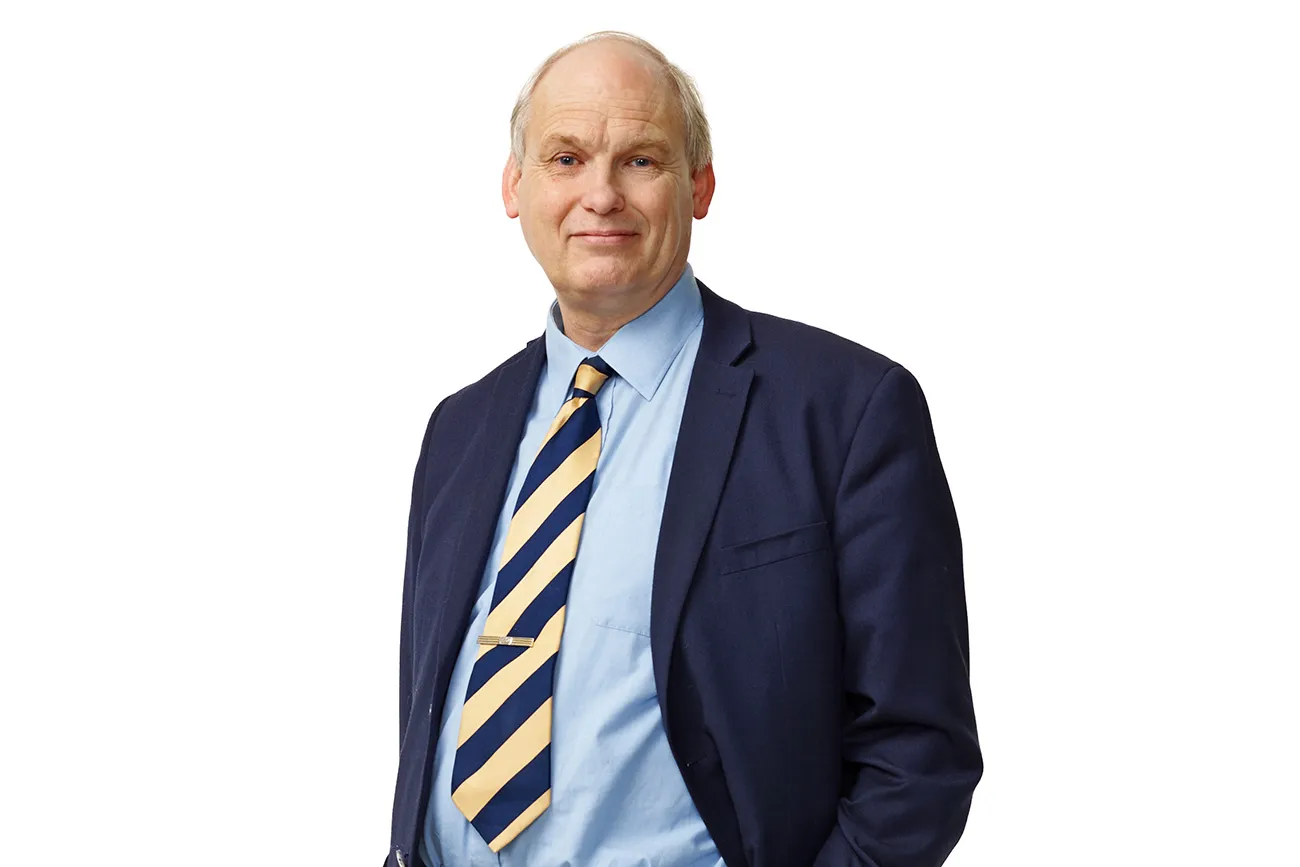
Hans Wouters, Healthcare Portfolio Manager at multi-disciplinary engineering company Unica, retired last January. Over the final four decades of his working life, Wouters saw hospitals change, with installers taking on an increasingly central role. “On the hot floors, installers need to take the lead, while a bespoke approach is essential in hospital construction. We are leading the way with innovative solutions for better care with fewer support staff, and by contributing our thinking at an early stage on how to combine technology
and building physics.”
For the building services sector, and therefore for a multi-disciplinary engineering company such as Unica, hospitals are an important market, with contracts worth tens of millions. The ever-innovative medical sector calls for increasingly advanced installations and buildings, and building physics and technology have always been closely intertwined. Today, traditional ‘E’ and ‘W’ categories are also being delivered as integrated services in other construction sectors; in hospitals, this has been the case for much longer. Wouters: “Providing integrated services to hospitals and healthcare institutions is central to what we do.”
Alongside traditional building services, Unica (part of the FourCare consortium, together with ENGIE Services, Trebbe and Van Wijnen) provides design consultancy, ICT and office automation, cleanrooms, sprinkler systems and security services. “And of course, we are fully up to date with the latest technologies in home automation, remotely controlled lighting, remote monitoring, personal alarms and nurse call systems: solutions to address the growing staff shortages in healthcare. We combine these with smart, sustainable technologies.”
ICT
In its technical solutions, Unica strives to deliver sustainable added value for its clients, says Wouters. “High-performance installations that are efficient, with the highest possible output and the lowest possible energy consumption. Think of aquifer thermal energy storage, which eliminates the need for chillers, or using solar energy for heating and electricity generation.” Hospitals are major energy consumers, so there is considerable scope to improve efficiency. “This can also be achieved with building management systems, sensors, smart meters and access control technologies: one solution for all systems.”
Rising energy prices make this all the more important. “As a building owner, you can use clear dashboards and real-time models based on big data to respond to changes. This enables comfortable, efficient and safe building management.”
There are challenges, too. “A well-functioning system can be secured at the front end, but at the back end, on the user side, the back door may be left open. Hospitals have become so dependent on ICT that hackers can bring all services to a standstill if it is not properly secured. That is precisely why integrated services are so important.”
The human touch
The hospital sector is continually being shaped by new guidelines and technologies, both internally and externally. What sets building services work apart? Wouters, who once worked as a radiology assistant, is clear: “What really makes the difference is understanding that other world. If you are scheduled to carry out work in the ICU and, on the day, discover that something serious has just happened, check with the right people. It may be better to do the work later. Those directly involved may not be pleased in the short term, but in the long term it will earn goodwill. Healthcare construction is always about long-term relationships. You need to have, or develop, a feel for that.” The same applies to winning work. “For some discussions, you need to speak to the Executive Board, particularly when it comes to funding, but medical specialist companies are becoming increasingly important. They are now jointly responsible for the hospital’s financial results. As a construction partner, you need to be willing to invest in people over the long term.”
Taking the burden off clients
Designing and building the hot floors, for example, is no longer possible without the central involvement of medical specialist companies, says Wouters. “The same applies to maintenance work: just put your head round the door and speak to the right person, and it can make a big difference. I first worked in a hospital in 1982, and I know people personally in most Dutch hospitals.” Investing in the relationship is just as important in return. “A hospital board often builds a new hospital only once, so there is a lot we can learn from each other. For example, it is common for the construction contractor to take the lead during the delivery phase. On the hot floors, however, installers need to lead, providing an integrated service that takes the burden off the client, from advice through to operation.”
Een zakelijke vraag aan Unica? Get in touch
Companies in this story
Keep following this
Get an email when a new story is published. No account needed.
- SubjectGeneral
- CompanyUnica
- CompanyVan Wijnen







