











Generating green biogas on site: a compelling story
Text Tamara BrouwersImage Circ Energy
Turning residual streams into energy
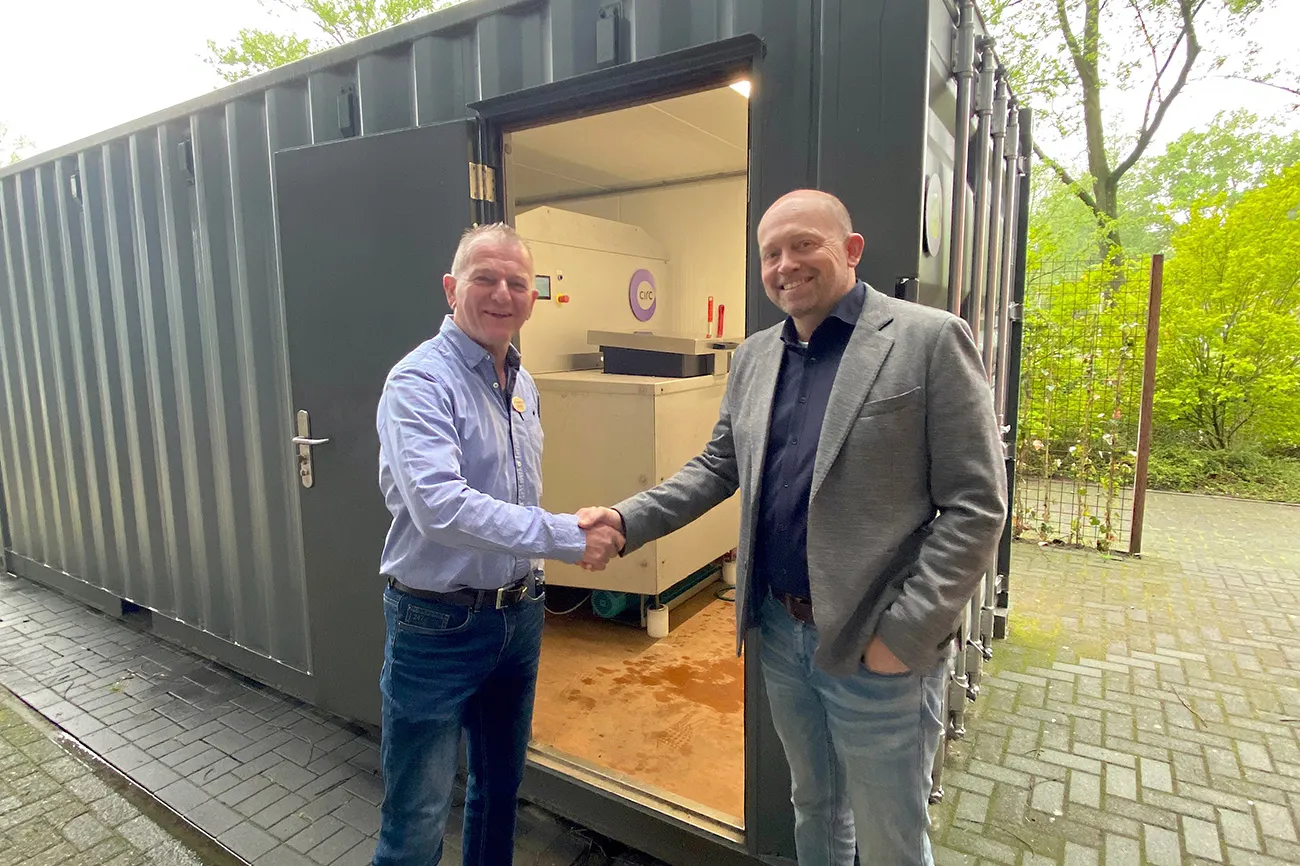
Converting residual streams into sustainable energy that can be used immediately in a care facility may sound like a utopian idea, but that is exactly what Circ Energy’s BioTransformers do. Enzymes convert food waste into usable BioGas and valuable BioWater. René Schers is one of the company’s founders. It was set up three years ago. “The principle of anaerobic digestion was already well known, but it can now also be used locally and efficiently,” he says. “We have developed a unique machine that can be used anywhere there is food waste and a need for energy. Our BioTransformers are therefore ideally suited to care facilities.” Circ Energy is no longer a start-up. It is now an established company with BioTransformers installed at dozens of sites.
From food waste to energy
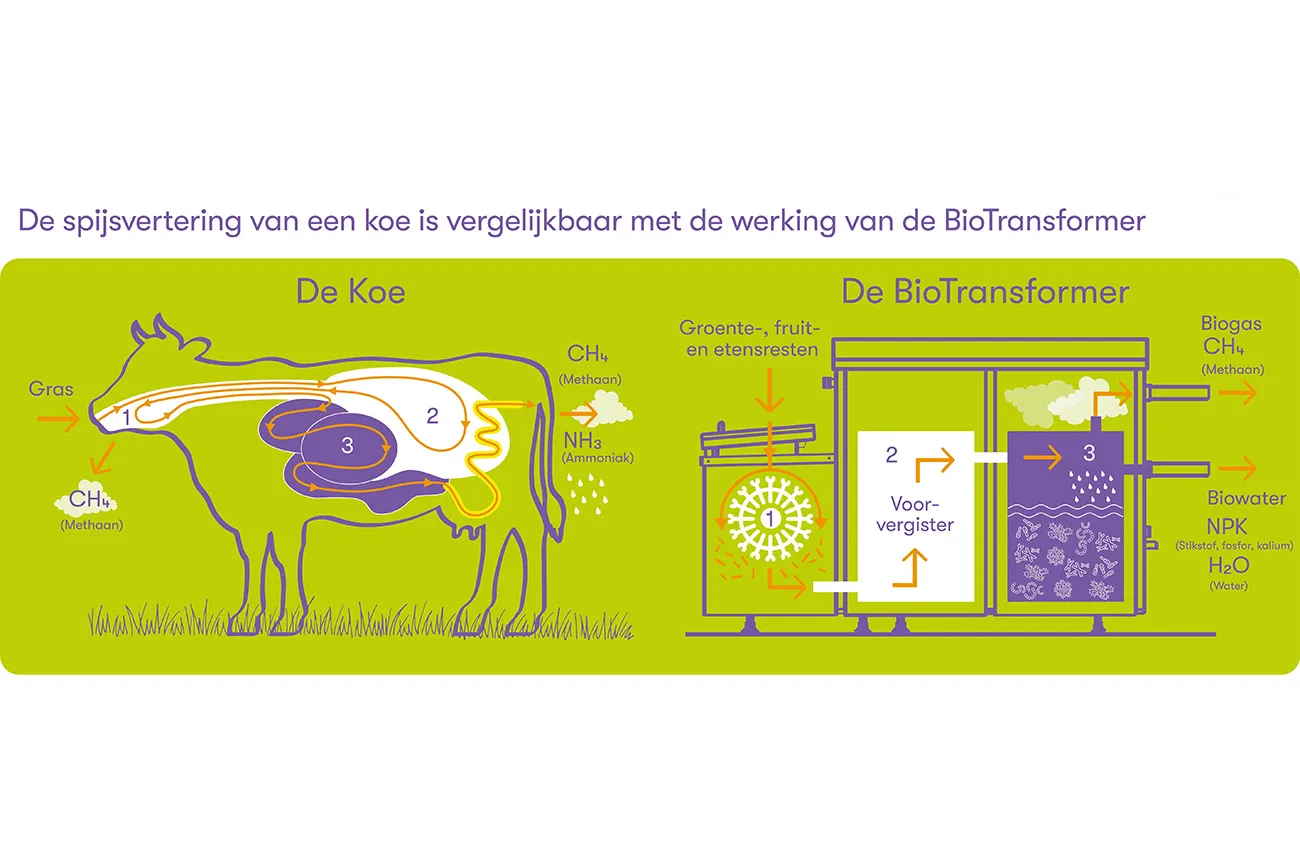
The principle behind the BioTransformer is simple. Food waste is converted into BioGas and BioWater in the machine. “Anything people can eat can go in. Our process uses enzymes to digest food waste, producing BioWater (plant food) and BioGas. This green alternative to natural gas can be used directly for central heating, hot water, cooking equipment or, for example, heating a swimming pool.” Anaerobic digestion is nothing new, but until now no digester suitable for local use on a small scale has been available to the care sector. The development of the Circ BioTransformer has changed that. Schers says: “We also optimise the process using smart software systems. Our advanced app shows how much BioGas and BioWater the BioTransformer produces and how much CO2 this saves.” Circ Energy’s BioTransformers are modular, so they can be adapted to suit the user. “We make machines with processing capacities ranging from 30 to 600 kilos of GFE. We always assess which model is most suitable for a prospective customer.”
Cutting emissions and costs
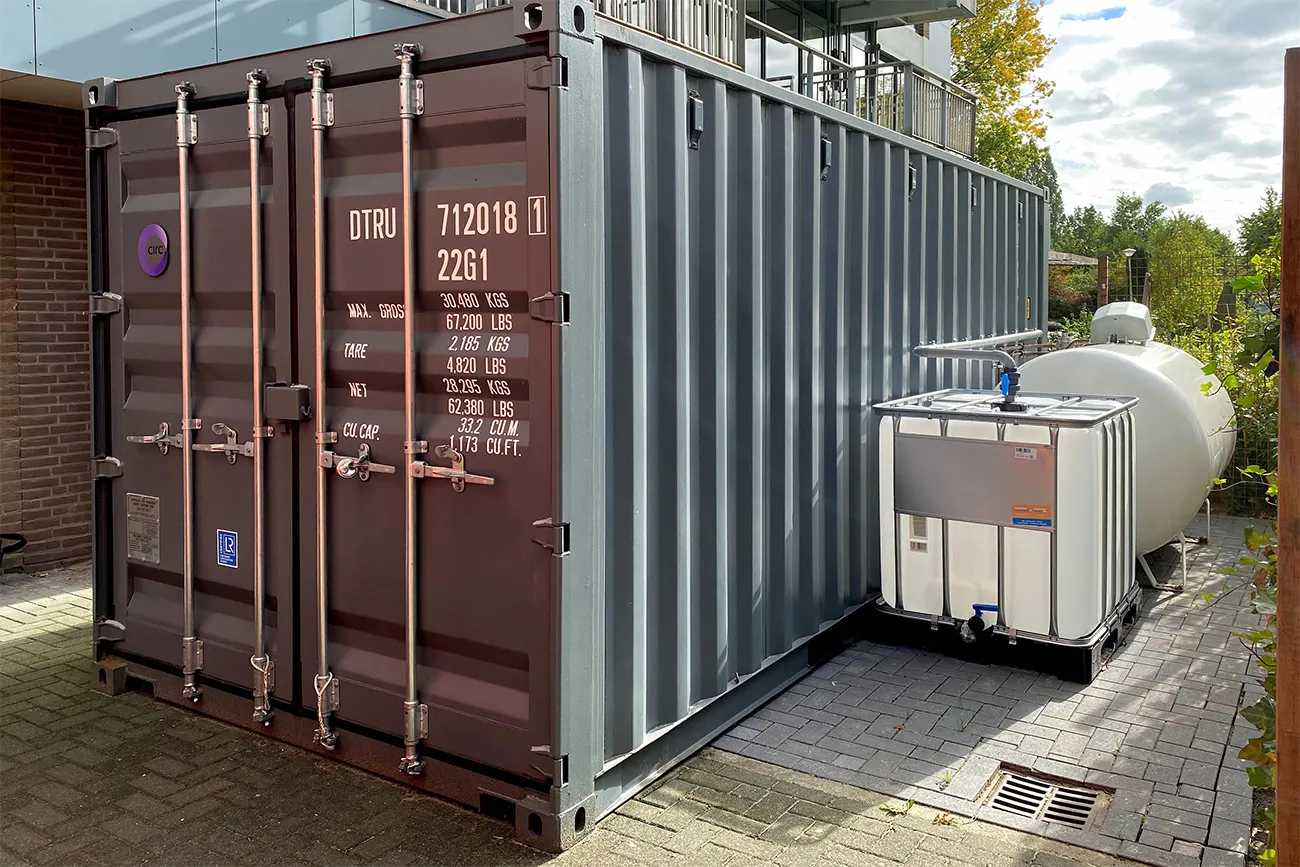
According to Schers, the BioTransformer is an attractive option for care facilities for several reasons. “The healthcare sector is generally a major consumer of energy, water and food. Five per cent of CO2 emissions in the Netherlands are caused by the care sector. Fortunately, care facilities are keen to become more sustainable, not least for their residents. After all, using residual streams to generate energy is a great story in itself. One kilo of GFE yields about 0.4 m3 of biogas. That is a lot! It makes you less dependent on natural gas and the capacity of the grid operator, for example at peak times. Fewer vehicle movements are also needed to collect waste, making the area around the site quieter.”
Schers says buying a BioTransformer also makes financial sense. “The payback period is always less than five years, and for larger machines it is around two years. Various grants can reduce the purchase cost, and leasing is also an option. If your organisation is off natural gas, you can also convert the biogas into electricity.”
Reducing waste
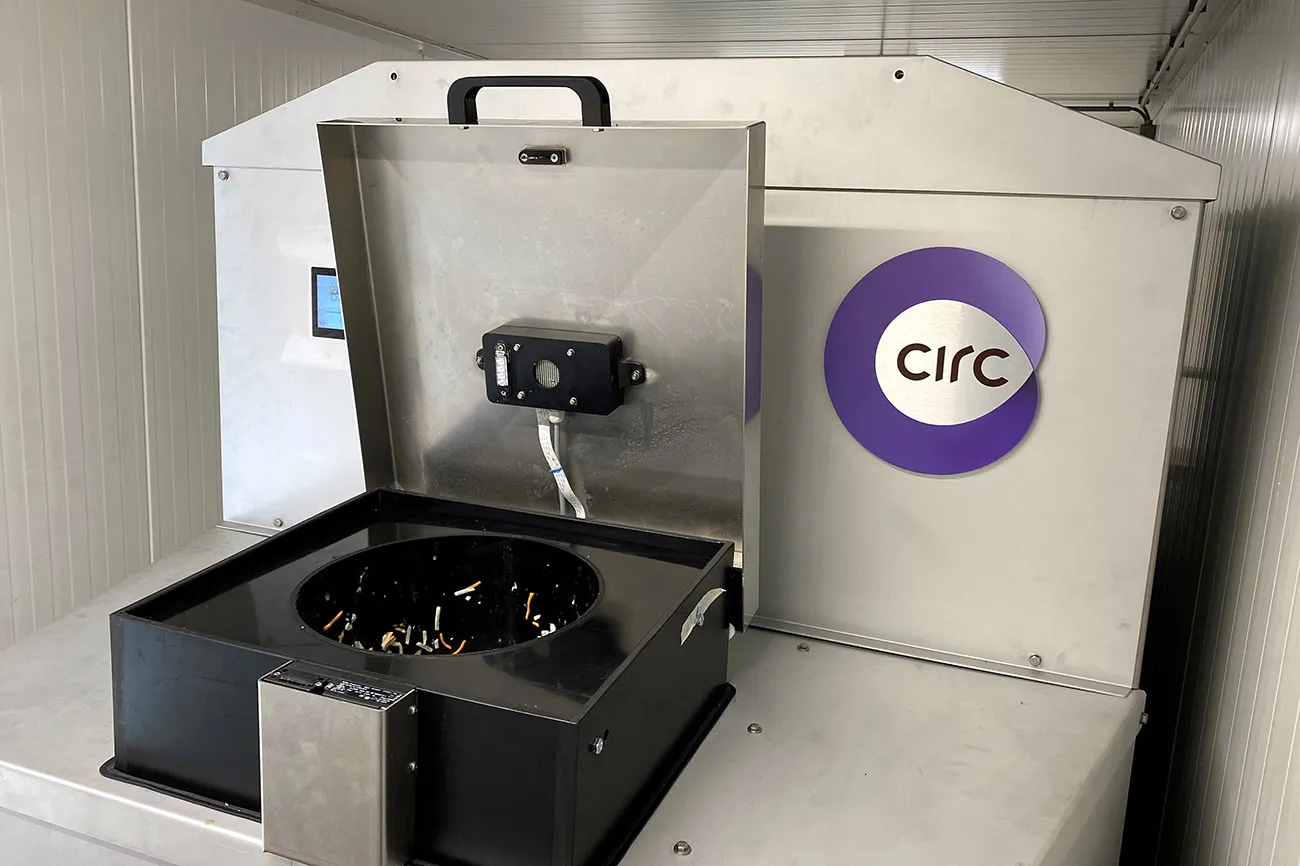
One care facility that uses a BioTransformer is Woonzorgcentrum De Koperhorst in Amersfoort. The idea to buy one came from facilities manager Robert Sakkers. “We give our residents as much choice as possible, so they can eat what they want, when they want,” he says. “Even so, De Koperhorst still produces about 40 kilos of uneaten food a day. That is why we bought our BioTransformer. It has smart software with image recognition that records the waste. This tells us which foods are thrown away most often. The kitchen can use this information to cut waste further by ordering more effectively. This helps us prevent many thousands of kilos of waste every year.”
De Koperhorst used a grant from the Toekomstfonds voor Duurzame Ontwikkeling to buy the BioTransformer. The BioGas produced is used directly by blending it into existing boilers, replacing some of the natural gas they consume. De Koperhorst uses the nutrient-rich BioWater for its landscaping. These measures have helped the care facility hold the bronze Milieuthermometer Zorg certificate since January 2021.
Question about this story? Ask your question
Keep following this
Get an email when a new story is published. No account needed.
- SubjectGeneral







