











Lifestyle changes nearly halve the chance of a second procedure for atrial fibrillation
Adopting a healthy lifestyle before undergoing ablation for atrial fibrillation can make the difference between one successful procedure and needing a second treatment later on. Research at Catharina Ziekenhuis shows that patients who improve their lifestyle before catheter ablation are up to 45 per cent less likely to need a second procedure. In some cases, lifestyle changes even mean that treatment is no longer needed.
Ablation is a treatment used for severe heart rhythm disorders when medication is not working well enough. During the procedure, electrical pulses are used to disable the heart muscle cells that cause the arrhythmia. Catheters are inserted through a vein in the groin.
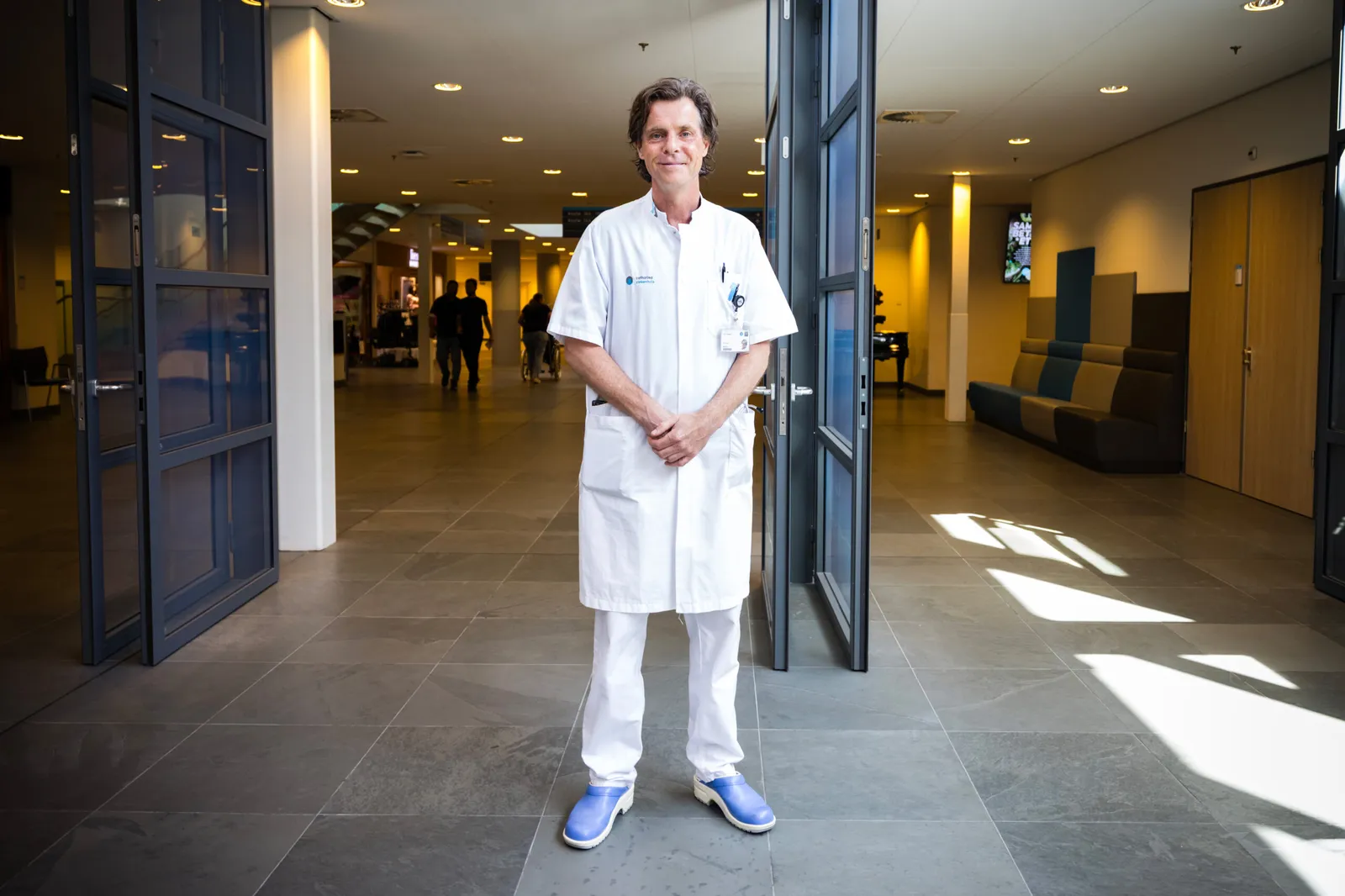
Cardiologist and professor Lukas Dekker initiated the study, which was funded by ZonMw. “We wanted to know whether improving lifestyle before this procedure contributes to a better treatment outcome. The answer is an unequivocal ‘yes’,” says Dekker.
People with atrial fibrillation have an irregular heartbeat that is often too fast as well. “Ablation relieves symptoms after a first procedure in around 70 per cent of these patients. The remaining 30 per cent need a second procedure. In the group whose lifestyle we addressed first, as many as 82 per cent of procedures were successful straight away. And in some cases, patients opted not to undergo a procedure because the arrhythmia had disappeared.”
Two groups, one clear outcome
The study divided 150 patients referred from other hospitals for ablation into two groups: one received usual care and was placed directly on the waiting list for ablation. The other first received up to six months of lifestyle support from a nurse specialist.
The team looked at personal risk factors such as overweight, high blood pressure, alcohol consumption and sleep apnoea. “We developed a decision tree at the time in collaboration with Philips. It proved very valuable. This enabled us to give each patient the best advice on how to approach lifestyle changes.”
The approach was pragmatic and tailored to what was achievable for each patient. Dekker says: “Not everyone can stop smoking, lose weight and exercise more all at once. So we looked for the areas where each patient could make the greatest gains, while setting a realistic goal.”
Results: one procedure instead of two
The patients were followed up one year after the procedure. The results showed that the lifestyle group had a much lower chance of needing a repeat procedure. Whereas around 30 per cent of patients normally need a second treatment, the figure fell to around 18 per cent in this group.
Alongside the medical benefits, the approach also improved patients’ quality of life. Moreover, some patients were able to avoid a procedure altogether as a result of the lifestyle intervention. This included people with severe sleep apnoea whose atrial fibrillation disappeared after treatment. “These are very valuable insights that we did not expect beforehand. Sleep apnoea was not being considered enough as an underlying cause of atrial fibrillation.”
Structural change on the way
The results are so convincing that Dekker is now calling for a structural change to the care pathway. “We want to do this not only here at the hospital, but also raise awareness among referring clinicians and GPs. There is a great opportunity to support patients at an earlier stage.”
Work is under way to establish a new lifestyle clinic within the hospital, and discussions are taking place with lifestyle institutes and Nederlands Hart Netwerk about rolling out the approach more widely. “We need to move away from a one-size-fits-all approach. For some people, a procedure only makes sense after, for example, their sleep apnoea has been treated. But the main question is who should take responsibility for this lifestyle treatment. During our study, we discovered that it takes a lot of time, but also pays off. Our nurse specialist devoted a great deal of time to it.”
A wake-up call for patients and healthcare professionals
According to Dekker, the point at which a patient is referred for ablation is an ideal opportunity to raise awareness. “That is the moment when you can make someone realise how important lifestyle is. Not by wagging a finger, but by explaining the urgency of the treatment.”
Although the study has not yet been fully completed, with 20 of the 150 patients still being followed, Dekker expects the final results to reinforce the picture. “The difference is already significant. And that is good news for patients and for healthcare.”
Question about this story? Ask your question
Keep following this
Get an email when a new story is published. No account needed.
- SubjectGeneral







