











No compromises for royal supplier of emergency generators: security of supply comes first
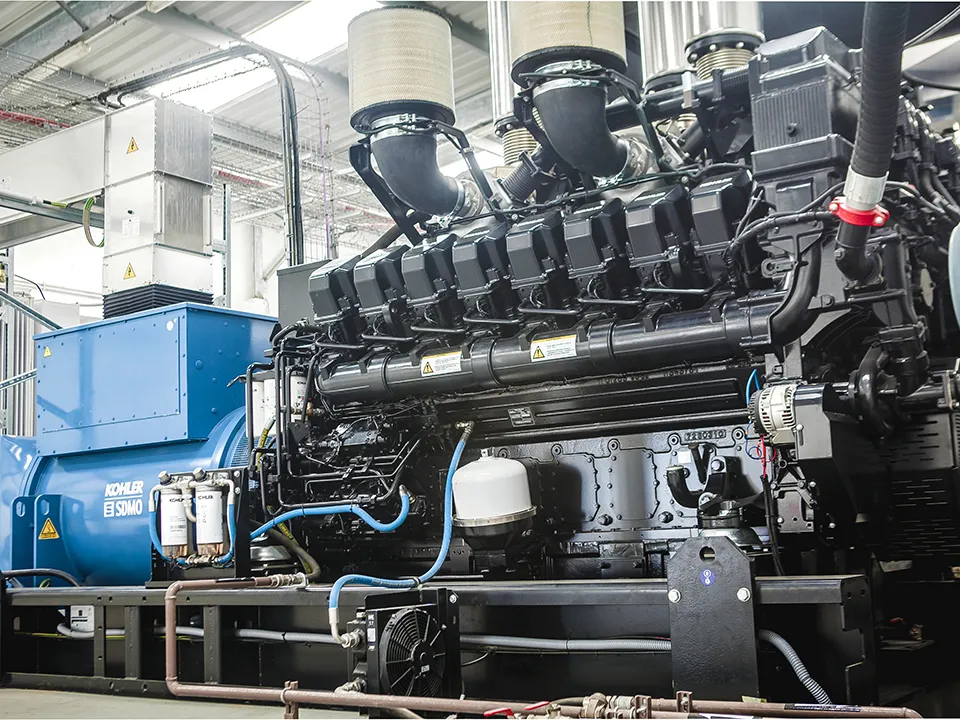
Government buildings, data centres and, above all, hospitals cannot do without emergency power. As society becomes increasingly electrified and digitalised, and demand for energy continues to grow, it is essential that critical functions are well prepared to withstand grid failures for extended periods.
“That is still achieved exclusively with diesel-powered emergency generators,” says Jeroen Eeuwijk, general manager at Koninklijke Van Twist (KVT).
If a company is entitled to use the designation ‘royal’, you know it has a rich history. Koninklijke Van Twist (KVT) has been in business for more than 180 years and is now led by the sixth generation of the Van Twist family. The Dordrecht-based company has been active in emergency power since the 1960s and is one of the three market leaders in this segment in the Netherlands. Eeuwijk: “As well as being ‘royal’, we are also a ‘purveyor to the royal household’. The Ministry of Defence is an important customer, and we also supply the German Bundeswehr, for example. This means regular, rigorous audits, but they keep us on our toes.”
No biodiesel
Although sustainability is gaining ground in many sectors, emergency power systems still run exclusively on diesel. Eeuwijk: “These machines are designed to remain idle almost all the time. If you use biodiesel, diesel bacteria can multiply in the tank because the fuel remains there for a relatively long time. That is why we prefer to use a product that contains no biodiesel. There are no viable alternatives yet, although research is under way. Fuel consumption and emissions are not the issue either. The primary function is security of supply.”
The best machines
“That is particularly true of hospitals, because if the power fails there and there is no back-up, people simply die,” adds sales manager Mark Scheurwater. “There can be no compromise on the quality of emergency generators for hospitals. That is why we import the best machines and ensure they are fully modified, mechanically and electronically, to meet the customer’s requirements. Each hospital decides which strategy to adopt. It might choose a central emergency power system or several smaller ones. Our customers tell us how long the emergency power supply needs to last and at what capacity. Together, we look at the capacity of the UPS systems (Uninterruptible Power Supply; ed.) and determine how many batteries are needed, and what size, to take over the initial power supply in the event of an outage until the generator comes online. Since the start of this year, KVT has been supplying 4.5-megawatt generators, a multiple of the capacity available until recently. This is a very interesting option for data centres and hospitals.”
Emphasis on maintenance
Installing an emergency power system is one thing, but professional maintenance may be even more important. Eeuwijk: “If a hospital’s emergency power system fails during a grid outage, you have a major incident and are heading towards an evacuation. If it turns out to be because of a twenty-euro battery, something has gone seriously wrong. We have never experienced this, but a good maintenance contract helps prevent it. That is also where our greatest strength lies. KVT offers tailored contracts for its own installations, but can also provide maintenance independently of the manufacturer for all types of emergency generators and UPS systems. Standing still means falling behind. As well as annual scheduled maintenance, we therefore recommend running a monthly load test. We train our customers to do this themselves, but of course we can also take care of it if needed. Our preventive maintenance covers more than just the diesel generator: we also inspect the entire fuel supply, storage tanks and electrical installation, with or without the legally required SCIOS inspections. KVT takes care of everything. With our extensive service operation, we are available 24/7, 365 days a year, with short response times.”
“We are proud to carry the designation ‘royal’,” concludes Scheurwater, “but to all ninety KVT employees, the customer is the real king. And at a competitive rate, because we work without subcontractors and can offer attractive pricing for our complete packages. Once again, without compromising on quality. Security of supply comes first.”
Question about this story? Ask your question
Keep following this
Get an email when a new story is published. No account needed.
- ThemeSafe and reliable healthcare buildings
- SubjectGeneral







