A breath of fresh air in the operating theatre
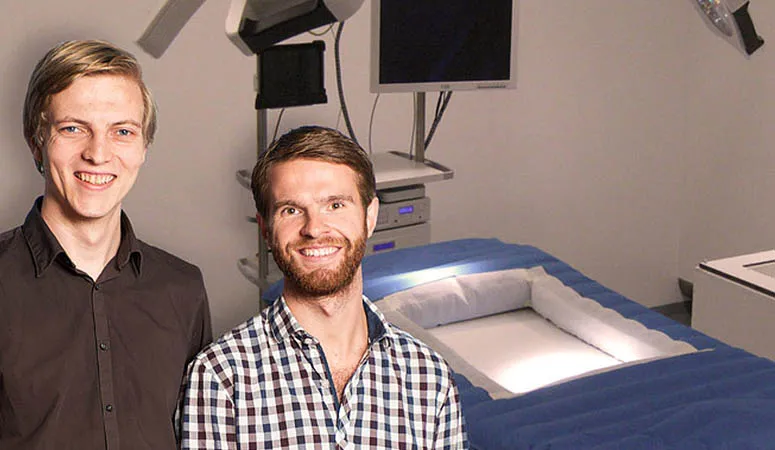
The Netherlands is a frontrunner when it comes to clean air in operating theatres. Yet three per cent of patients undergoing surgery develop a bacterial infection. Jelle Loogman and Ivo de Visser, both architecture students, believe that figure can be reduced. They hope their new ventilation system will be brought into use when the regulations governing operating theatre ventilation change soon.
“It takes a moment to get used to seeing someone’s shoulder laid completely open, and we weren’t even standing right over it,” says Jelle Loogman with a shudder. To get an idea of the current operating theatre ventilation system, he and fellow student Ivo de Visser visited several hospitals. As well as being shown around, they were allowed to observe a number of operations. This inspired them to design an innovative air system. Ivo: “There’s now, as it were, a shower above the patient, blowing clean air down from the ceiling and extracting it again at the sides. So the area above the wound is constantly supplied with clean air. But the question is whether this method is really ideal. The air first passes objects that are relatively dirty, such as an operating light and a doctor at work. How clean is it by then?”
A local approach
The hospital visits and an extensive literature review led them to take the opposite approach. Rather than making the entire room as sterile as possible, they focused on a very local area. Jelle: “Doctors are quick to worry that something in their working area might change for the worse, so that was something we had to take into account. The solution lay in the warming blanket used to prevent hypothermia during lengthy operations.” The warming blanket was converted into a ventilation system that continuously blows ultra-clean air in from below. The instrument table can also be kept clean with a separate system based on the same ‘trick’.
Prototype
To see whether their idea worked, Jelle and Ivo built a scaled-down rig, where they took numerous measurements and varied the air speed and temperature. After the first, highly positive results, they soon moved on to a prototype. But getting there was no easy matter. “We needed an air mattress that we could cut a hole in and attach air-permeable fabric and air supply and extraction hoses to. One type of mattress was full of talcum powder, while the plastic used in another type wasn’t suitable. In the end, we managed to find one with help from a camping shop, although they did look a bit surprised at our list of requirements,” says Ivo with a laugh.
Potential
The air mattress prototypes have now been extensively tested in a fully equipped mock operating theatre at Interflow, a clean-air specialist. There is, of course, still a lot to adapt, but both students believe their system has considerable potential. Jelle: “Doctors have more freedom of movement because they don’t have to stay within the bounds of the ‘clean-air shower’. That’s a particular advantage for major operations involving lots of instrument tables. The ventilation system could also be used outside the operating theatre, for example for minor operations or in a field hospital.” Project partners Interflow and Royal HaskoningDHV have already expressed interest in a follow-up study to investigate whether the system could be brought to market. Ivo would like to stay involved, while Jelle is still unsure and can also see himself working for a consultancy. Above all, though, the ventilation pioneers are proud of how far their air mattress has come and that they continued to believe in their innovative idea.
Question about this story? Ask your question
Keep following this
Get an email when a new story is published. No account needed.
- ThemeSafe and reliable healthcare buildings
- SubjectInteriors