From functional to user-centred design
Text Robert Kromhof Beeld Ryunosuke Kikuno, Steven Hylands en Theo Kelderman
Putting residents’ experience centre stage
In many sectors, it is standard practice to ask customers how they found a purchase. Even after a cup of coffee, people often receive an email that same evening asking about the service and taste. This feedback helps improve the product and service. It is strange that this does not happen with the most expensive product a customer will ever buy or rent: their home. Nobody asks how residents find their home, even though every resident is an expert through experience and tests the building every day. The reason residents are not involved is easy to explain. The construction industry is a seller’s market. People are queuing for a home. The difference between a home and a cup of coffee is obvious. Coffee is available everywhere and you can live without it, but not without a home.
A history of standardisation
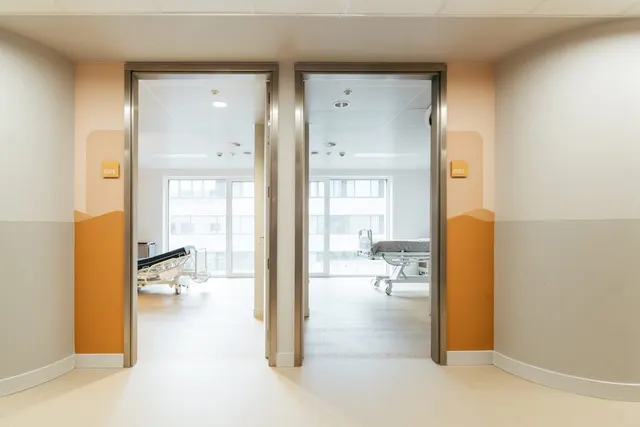
Until 2009, the government agency Bouwcollege determined what healthcare buildings should look like. Its top-down guidelines called for buildings to be plain and functional. They were designed more around staff, to help them work as effectively as possible, than around future residents. Residents shared rooms in groups of four, just as in a hospital. Care providers received no funding to build unless they complied with the guidelines. Standardisation made it possible to build at ever lower cost. This explains why all hospitals looked alike. The same applied to nursing homes and care homes for older people. Ultimately, small-scale living broke the mould from the bottom up. Greater attention was paid to residents, and Bouwcollege was abolished.
Residents are not involved
Yet future residents still have little influence. Countless parties stand between them and the building: planners, urban designers, clients, architects, construction project managers and consultants, from those specialising in sustainable building services to bat counters. Legislation and regulations also play a major role. Local residents living near the construction site have a say too. Ultimately, all these parties shape healthcare buildings. And there is a good chance that none of them will ask residents a year later how they experience their home, even though their websites often claim to put residents first.

Innovation comes from suppliers
Many people think architects and contractors are the great innovators. In reality, the most important innovations come from suppliers. The lift was invented by Elisha Otis, enabling developers to build upwards. After 1778, chamber pots no longer had to be emptied, because Joseph Bramah invented the flushing toilet. Central heating and even the rollator also originated with suppliers. Suppliers engage with both construction industry professionals and residents. This enables them to respond to current and future needs. They gather crucial information that can be used to make improvements.
Breaking down professional silos
Designers and consultants receive hardly any training in user research. They often focus on their own disciplines rather than the wellbeing of future residents. Criticism from other construction industry professionals or members of the public is quickly dismissed as uninformed. Yet residents are the only people with first-hand experience of testing the building.
The path to user-centred design
It should start with the training of designers and consultants. They are not trained to research customer satisfaction. For them, the building is the end goal. Once it is finished, they move on to the next one. Design competitions, too, are usually about impressive images of the building, not the experience of future residents. Architects are still trained as artists, not as service providers. A glance at design trade magazines is enough to see that residents’, maintenance staff’s and suppliers’ views of buildings are absent. The focus is mainly on visionary buildings and celebrated architects. Originality takes centre stage, not residents’ experience.
No feedback
If a supplier brings a poor product to market, all parties will penalise them. Suppliers must continually improve their products to maintain their place in the construction industry. Unfortunately, the same does not apply to designers, consultants and policymakers, because users have no voice. This could change if training courses focused on user research, interview techniques and collaboration with other disciplines. Making a post-occupancy evaluation mandatory after a year would also be a good step.
Evaluating and learning from residents
This is possible if the client enters into a contract with the development parties, making them the guardians of the user perspective. Residents’ experience should be the overarching objective. That would prevent parties from retreating to their own disciplinary silos, and instead encourage them to challenge and complement one another. Hospitals could look at how hotel chains evaluate their temporary residents, with the aim of continually improving their spaces and services. Gathering this information can even lead hotel chains to develop new hotel concepts. There is also much to learn from suppliers, who develop innovative products by listening to all parties, including users. Many tools are already available to bring us closer to residents, such as customer panels, gathering user insights from reference projects, connecting suppliers with residents, virtual reality, or building a show home that residents can actually test.
User-centred development
It will be some time before user-centred development becomes the norm. Search for ‘Architecture’ or ‘Interior’ and Google returns endless images of buildings and interiors without people. Few people question this, even though residents are the only ones who form an intimate relationship with a building, sometimes for their entire lives. Yet it is not complicated. By systematically gathering and applying feedback from residents, we can build a future in which their experience truly takes centre stage.
Question about this story? Ask your question
Keep following this
Get an email when a new story is published. No account needed.
- SubjectInteriors