Operating theatres, intensive care and cleanrooms
Better acoustics mean better health and wellbeing for everyone
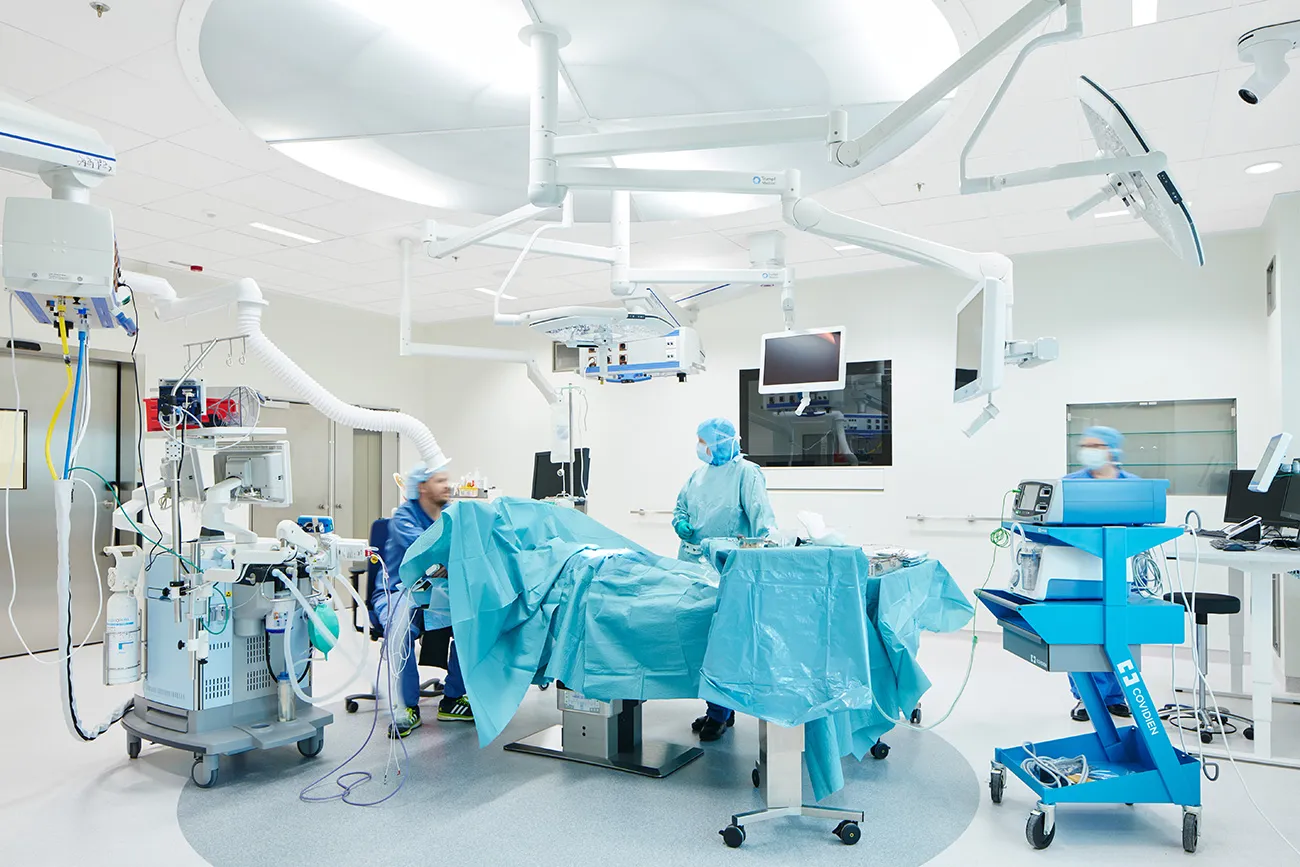
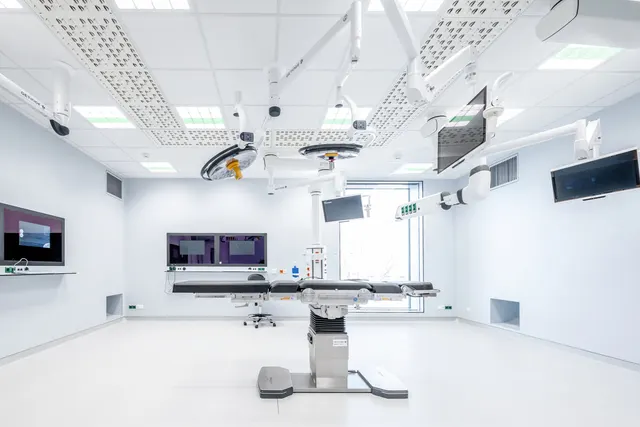
Operating theatres are the lifeblood of every hospital, and acoustics play a crucial role in them. Good acoustics can make the difference between an efficient, safe operation and a stressful, dangerous situation for both healthcare staff and patients. The positive effects of good acoustics in the operating theatre are a priority when it comes to improving the quality of care and safeguarding the health and wellbeing of everyone in the theatre. Ecophon offers complete solutions with acoustic ceiling and wall panels that help achieve this.
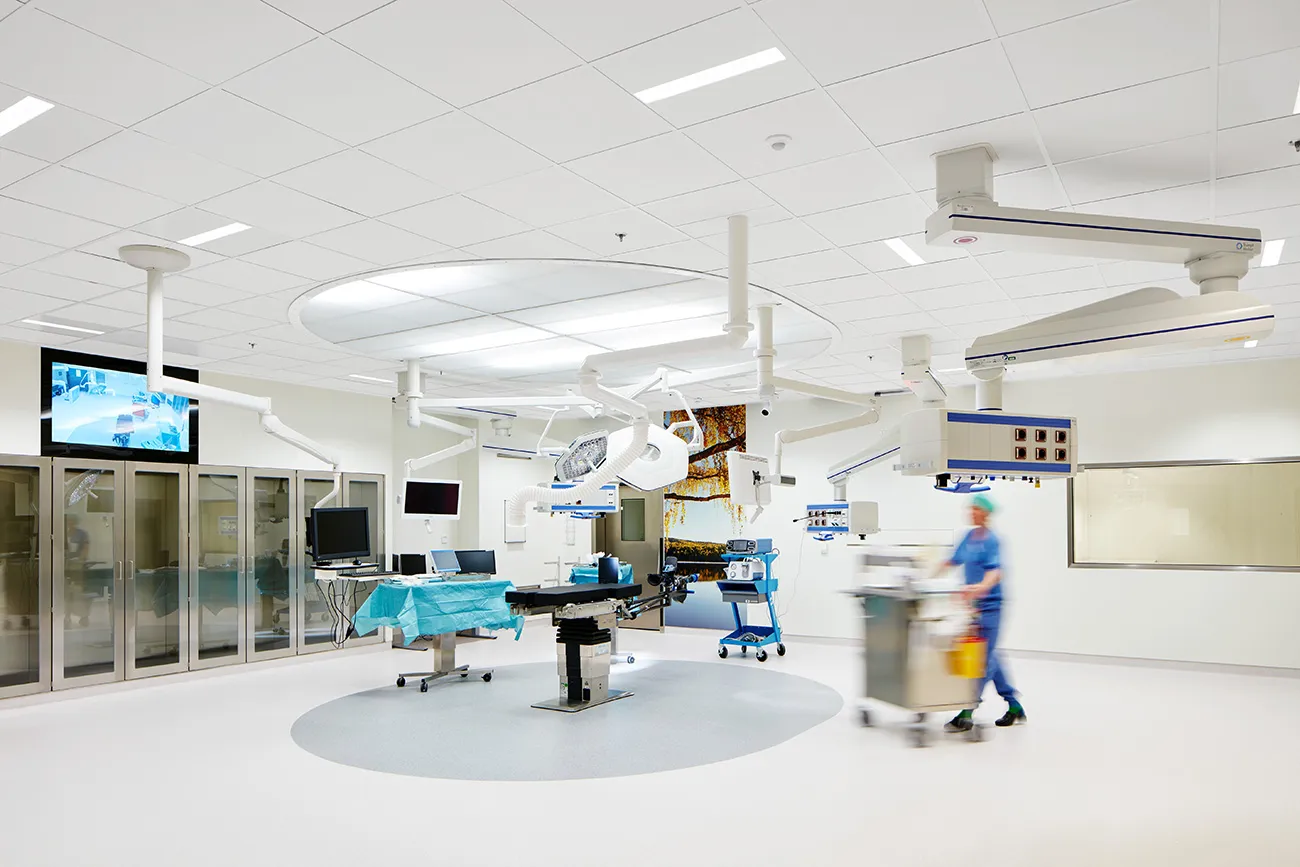
Excellent sound absorption
First of all, good acoustics can help reduce stress levels among healthcare staff. The sound of medical equipment and instruments can be very loud, placing healthcare staff under considerable stress. Good acoustics absorb sound more effectively, reducing staff exposure to high noise levels. This allows them to work with greater concentration, without being distracted from their critical tasks.
Clear communication
Good acoustics can also help improve communication in the operating theatre. It is vital that healthcare staff can hear and understand one another clearly, especially during an operation. Good acoustics prevent sound from becoming distorted or muddled, keeping communication between staff clear.
Protection from stress and anxiety
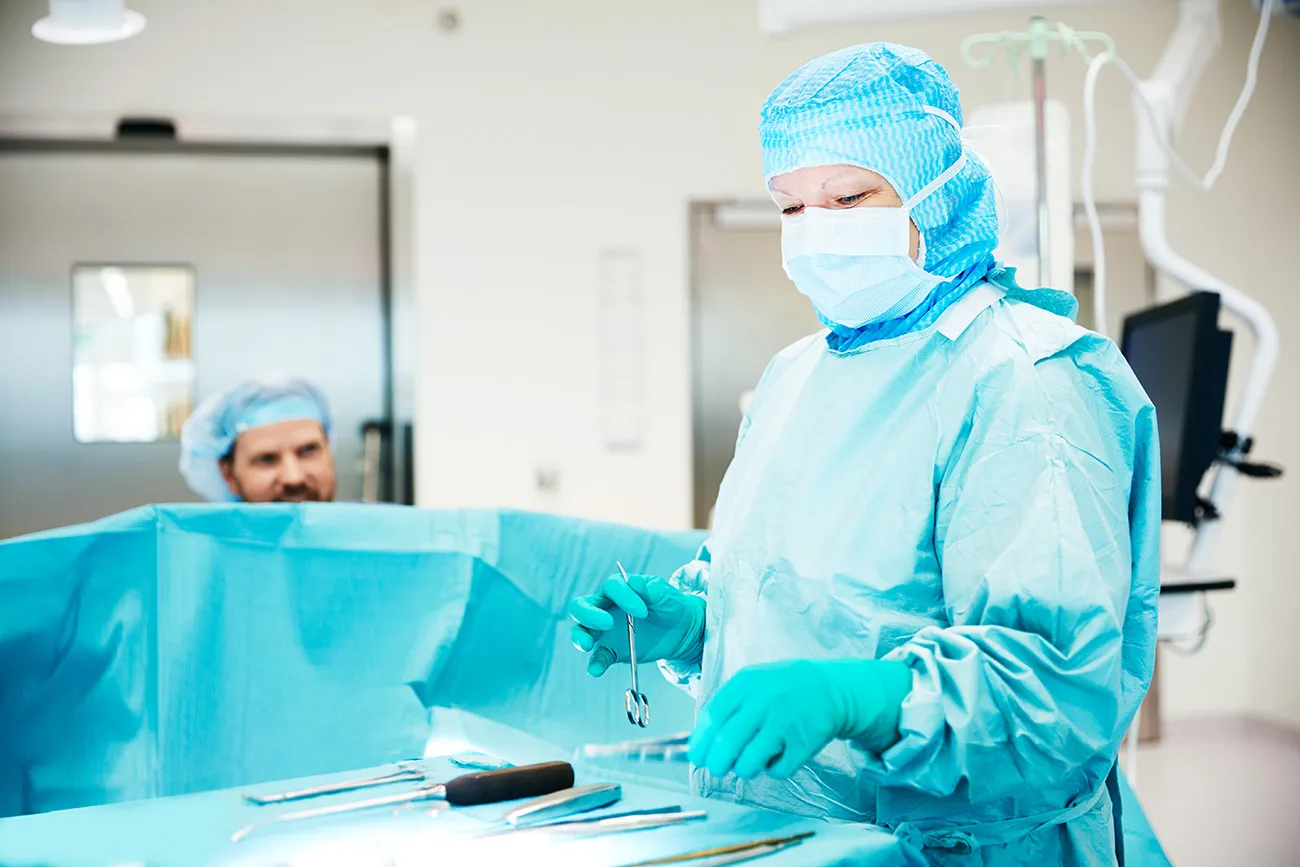
Finally, patients also benefit from a good acoustic environment. Good acoustics help protect patients from stress and anxiety. The sound of medical equipment and instruments can make patients anxious. Here too, good acoustics absorb sound more effectively, helping patients feel more comfortable in their situation.
For example, a study in Denmark found that healthcare providers felt communication improved when measures were taken to improve the acoustics. In addition, 90% of them found the acoustic environment less stressful when acoustic ceilings and/or wall panels were installed (1). A French study of medical staff (2) working in operating theatres found that 98% considered the environment noisy. Once again, noise is seen as a real barrier to communication. To achieve good room acoustics, staff need to follow general policy and also take individual behaviour into account. Technical installations also play an important role in creating a better acoustic environment and a better working environment for medical staff.
Demountable panels
An additional advantage of an acoustic suspended ceiling is the access it provides to technical installations in the ceiling void. These installations are easier to access thanks to the demountable panels. For this reason, hospital maintenance teams prefer this type of ceiling. Any maintenance or work in the operating theatre needs to be carried out quickly, to minimise disruption to the room’s availability and avoid causing inconvenience. A modular acoustic ceiling makes this possible.
Proven system
Ecophon offers a proven system for environments with stringent hygiene and clinical requirements. The complete Ecophon Hygiene systems meet the most demanding requirements in this area. The visible surface is available with an Akutex™ T, TH, HP or HS coating, while the back can be supplied with several types of glass tissue or a washable painted finish. The different products in this range allow surfaces to be cleaned and disinfected to varying degrees. Combined with Class A acoustics, this is the ideal solution for a healthy working environment.
With its solutions, Ecophon improves acoustics in the operating theatre and communication between healthcare staff. This means
less stressed staff working more efficiently, and consequently better quality care for patients. In addition, reducing noise helps reduce patients’ anxiety, enabling them to recover more quickly from an operation and lowering the risk of complications. Investing in good acoustics therefore reduces the cost of
healthcare.
Invaluable
In summary, good acoustics in the operating theatre are invaluable to both healthcare staff and patients. “So let’s work together to improve acoustics in our operating theatres,” says Ecophon. “This can be done by investing in sound-absorbing materials such as acoustic ceilings and walls. Together, we can improve the quality of care and reduce healthcare costs. Let’s take action now to improve acoustics in operating theatres and help create better health and wellbeing for everyone.”
References:
1) Mai-Britt Beldam, Impact of acoustics on staff performance in operation rooms. Internoise, 2019
2) Marie-Hélène Landreau, Le bloc opératoire: salle d’intervention ou salle d’interférence, Ecole IBO CHU Nice, 2021
Question about this story? Ask your question
Keep following this
Get an email when a new story is published. No account needed.
- ThemeSafe and reliable healthcare buildings
- SubjectOperating theatres, intensive care and cleanrooms