De Wever creates new residential complex in Tilburg
Text and images Sabine Bison
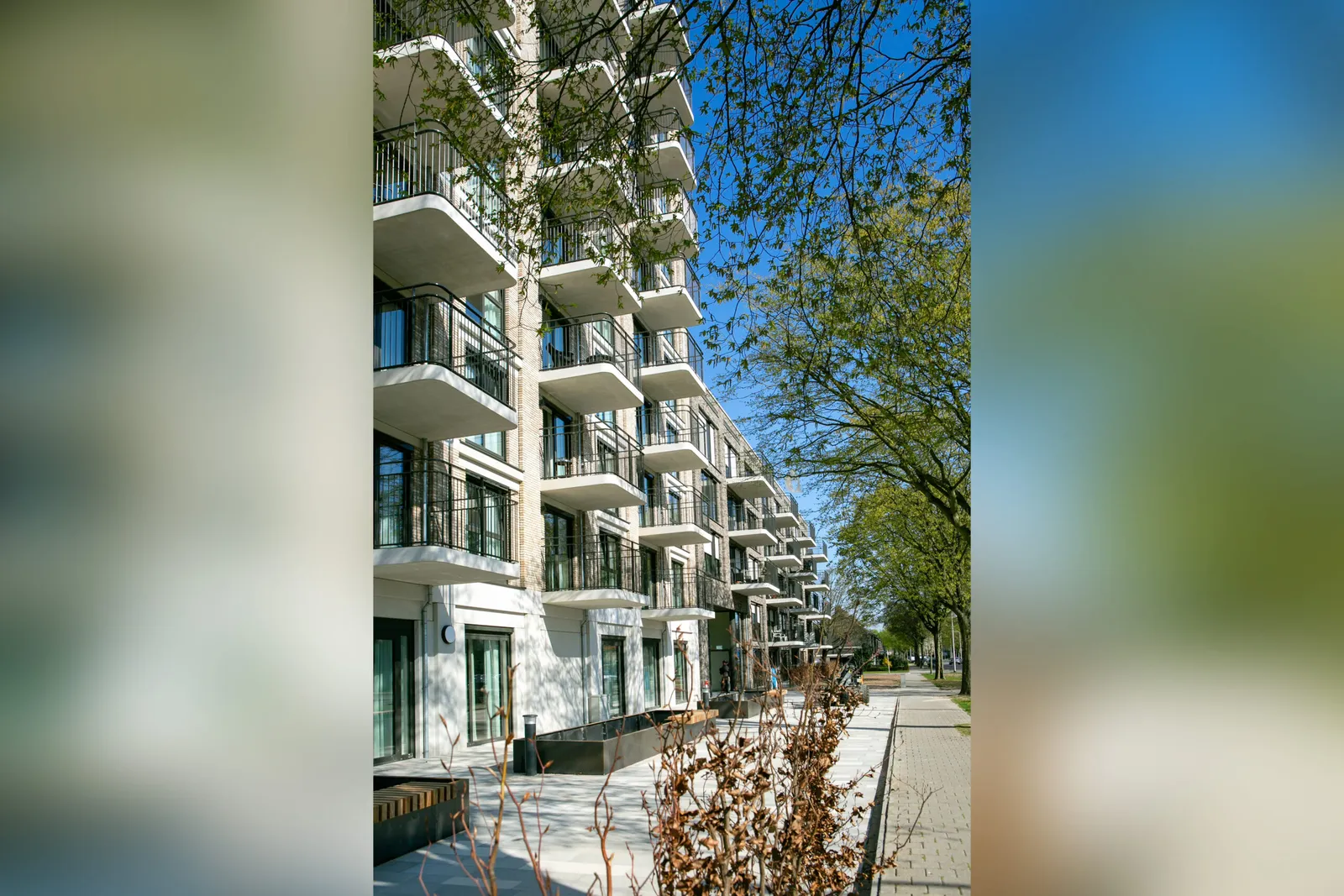
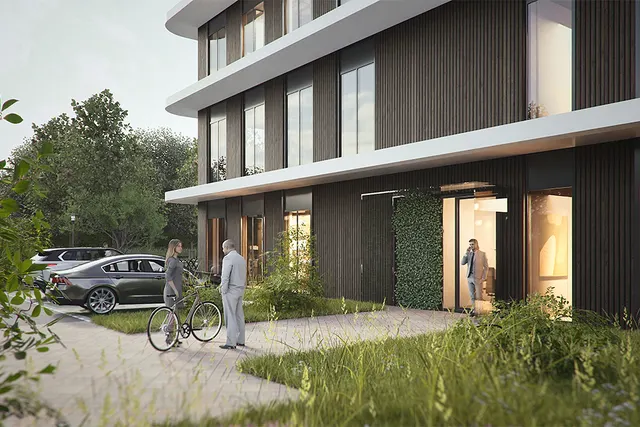
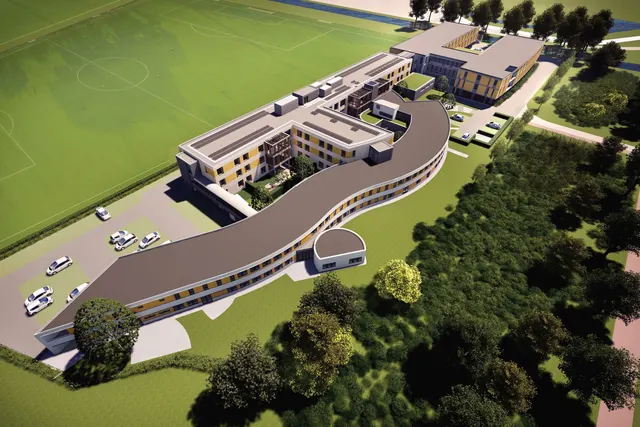
Recently, elderly care organisation De Wever opened a brand-new residential facility in Tilburg, comprising three distinct units. “Interdependence and inclusive living are reflected in both the design and the way we operate,” says site manager Lizette de Laat.
“We are not a traditional nursing home, but a residential centre where residents, their networks and the local community meet and make a difference to one another, with professional care and support provided where needed,” says De Laat. “Living together and supporting one another are the key principles. This is how we are putting a new approach to elderly care into practice. This place should truly feel like home, where you have as much control over your own life as possible.”
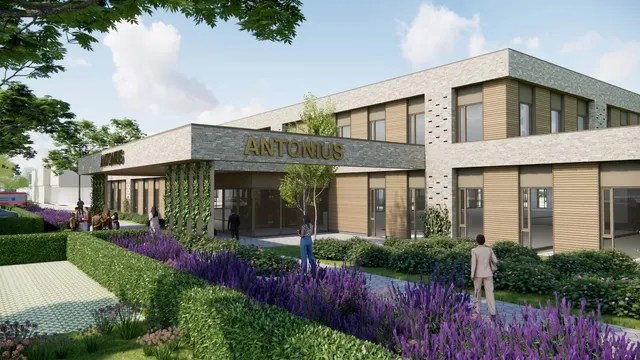
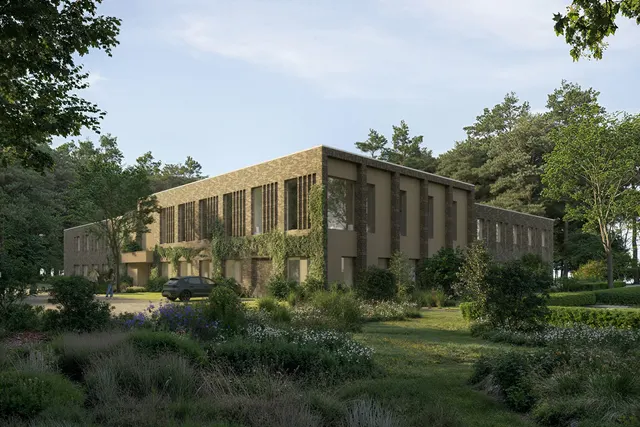
Gerard Snoeren, manager at De Wever Wonen, says: “We will soon be so short of hands that society will have to play its part. But what we consider even more important is that residents can lead their own lives independently for as long as possible. We encourage that as much as we can here. This residential facility consists of three units. Zandstaete offers 120 spacious, fully equipped care apartments of 50 m², each with a separate bedroom, private bathroom and fully fitted kitchen. Residents can cook for themselves, and guests are welcome to stay overnight too. Just like at home.” The Zandduinen residential complex houses 33 rental apartments for people with less complex care needs. “Many of the residents here are couples, where one partner is often beginning to experience frailty,” adds De Laat. “They can continue living together here for a long time, which is ultimately what the government is keen to encourage.” Hospice De Zandsporen is the complex’s third pillar. Snoeren says: “A hospice may not be financially viable, but we believe it is our social responsibility to ensure that it is here.”
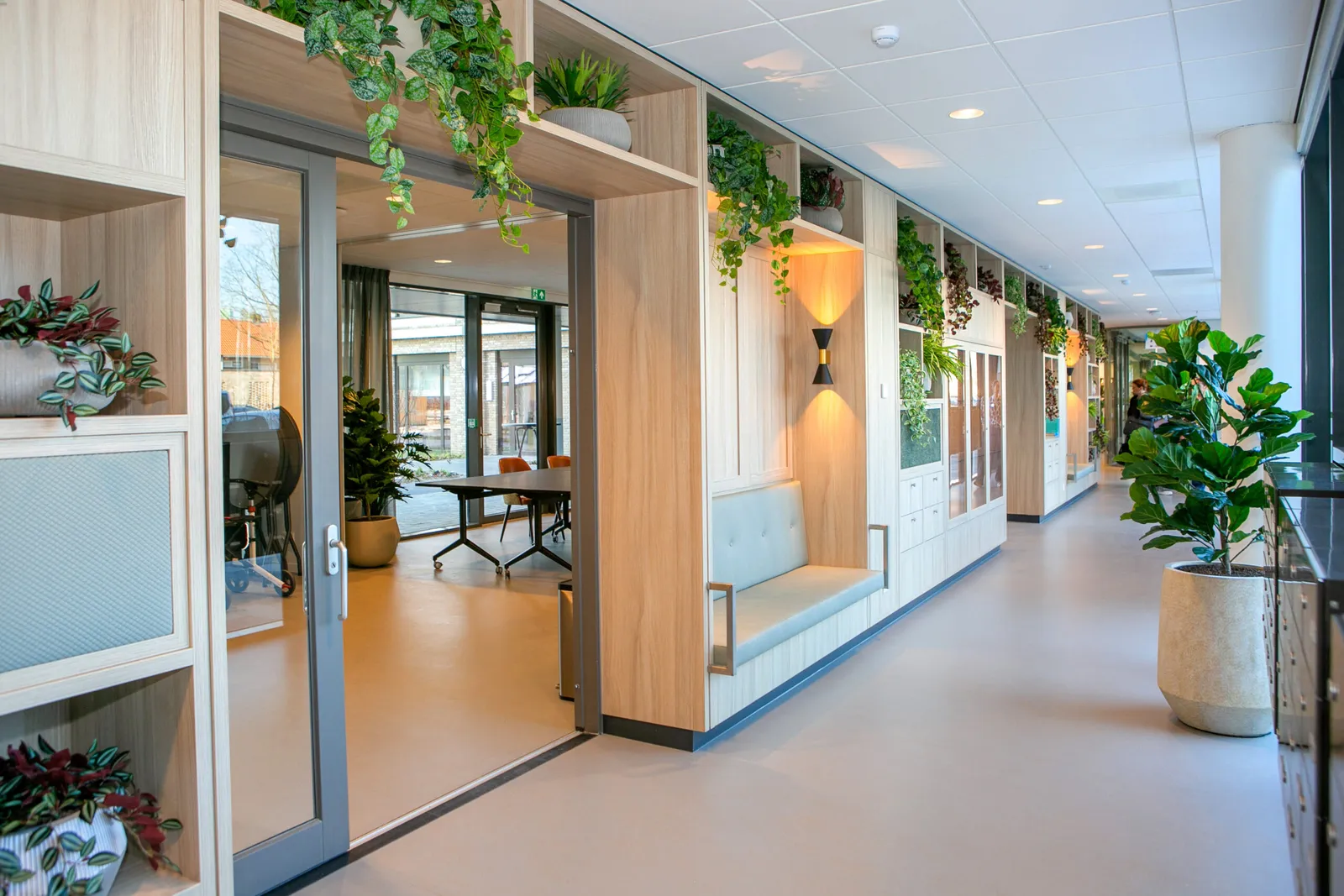
A new approach to elderly care
De Laat is clear about changing needs in care and housing: “The new approach to elderly care calls for a different way of thinking and doing things. At present, when you move into a care home, nursing staff often take control of your life. Here, we turn that around. We encourage people to do things for one another. For example, we deliberately chose to have an inclusive mix of residents, meaning that people with different care needs live alongside one another. Someone in the early stages of dementia, for instance, can close the curtains for someone with limited mobility.” Another unique feature is that fifteen apartments are occupied by Woonmaatjes, people without disabilities who are willing to take part in the residential community. “They might run an errand, share a cup of coffee or have a simple chat. In return, these Woonmaatjes can live here on favourable terms.”
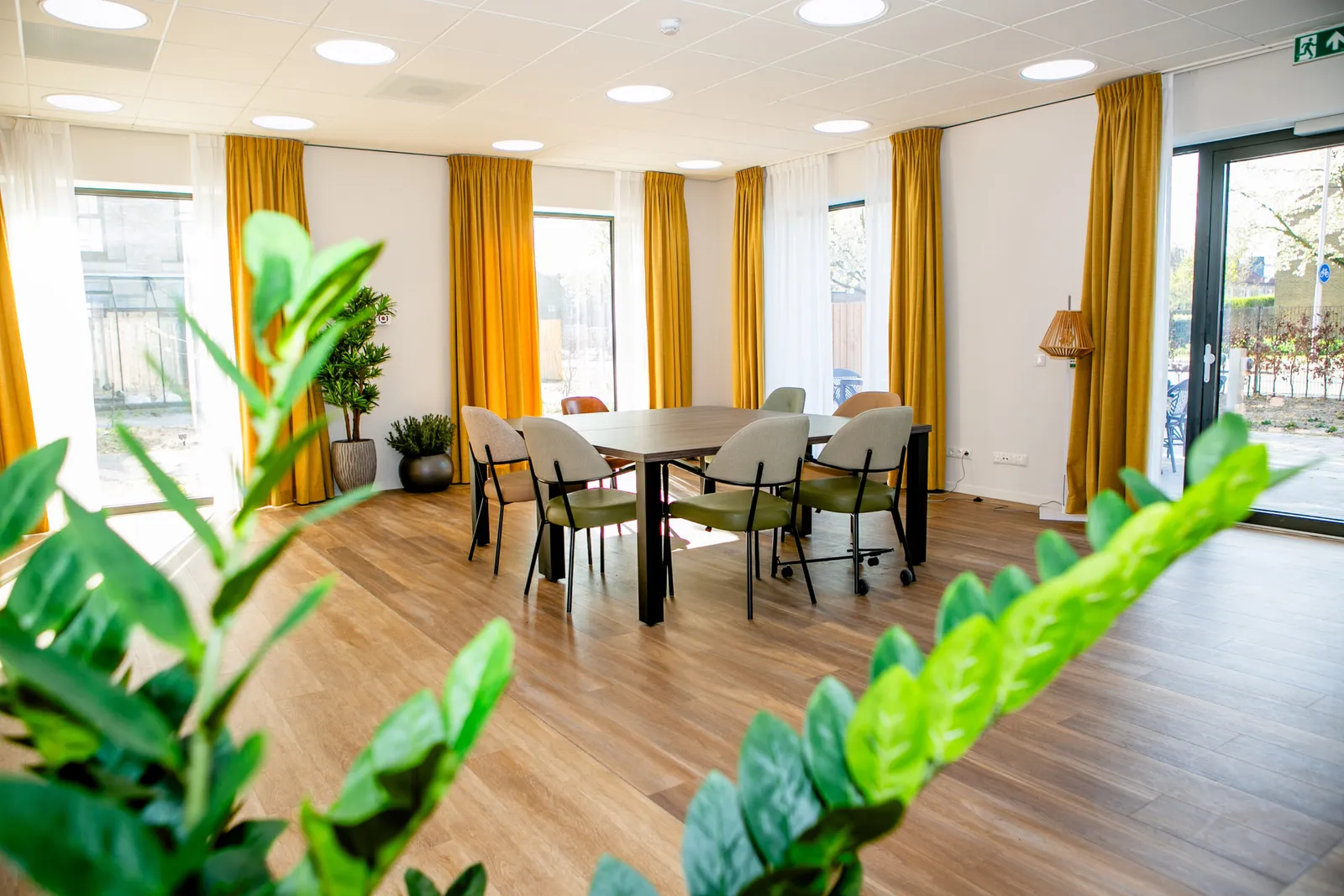
Living freely
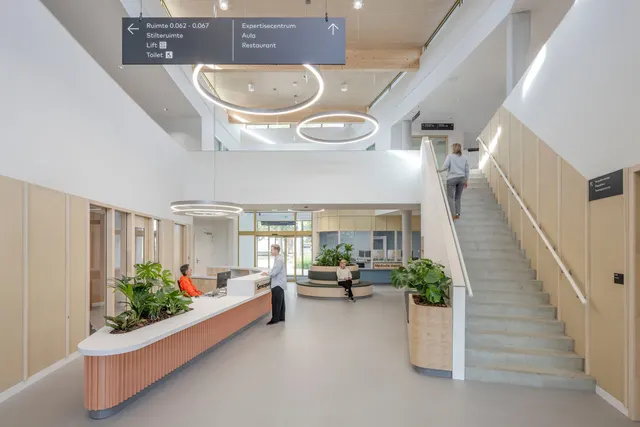
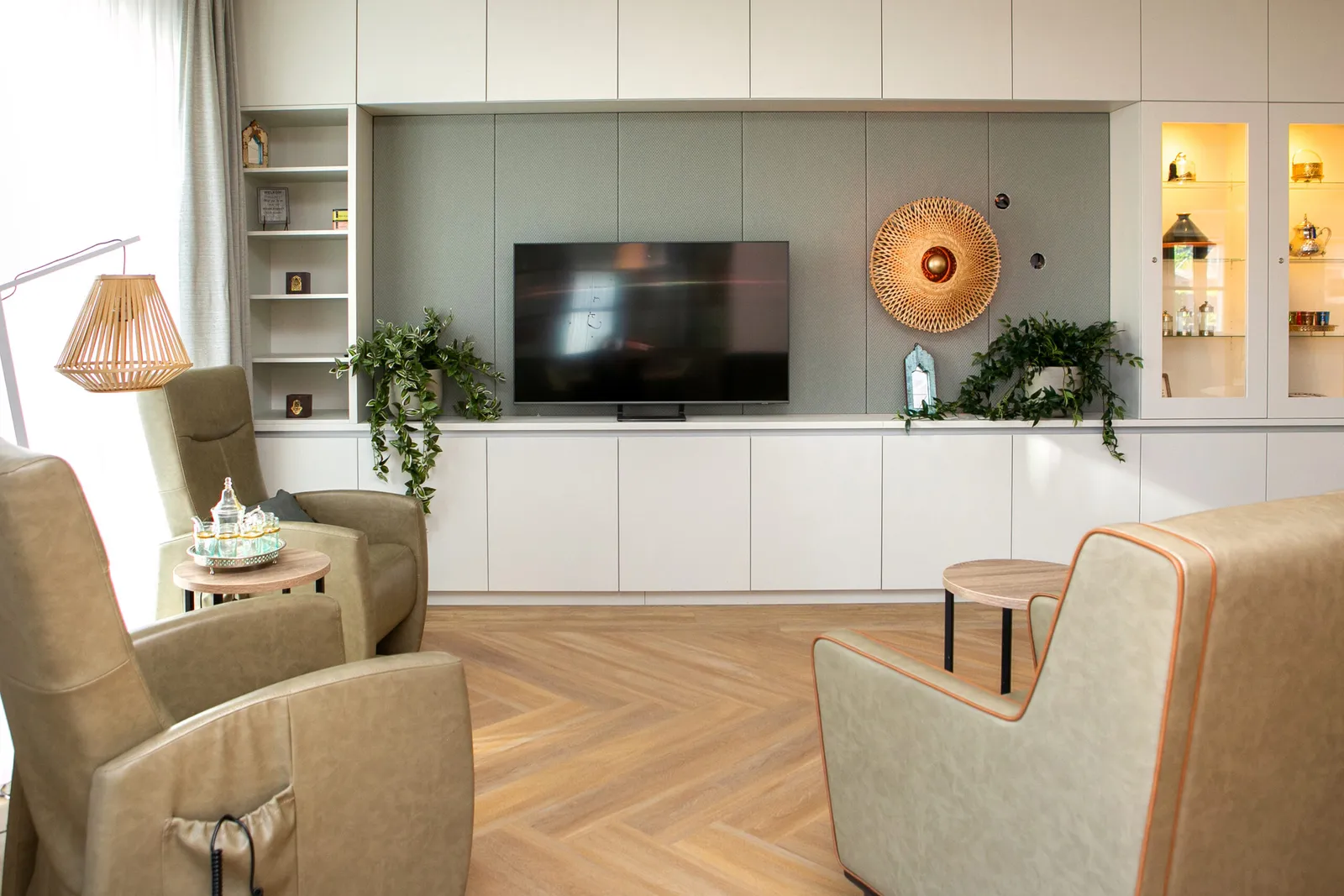
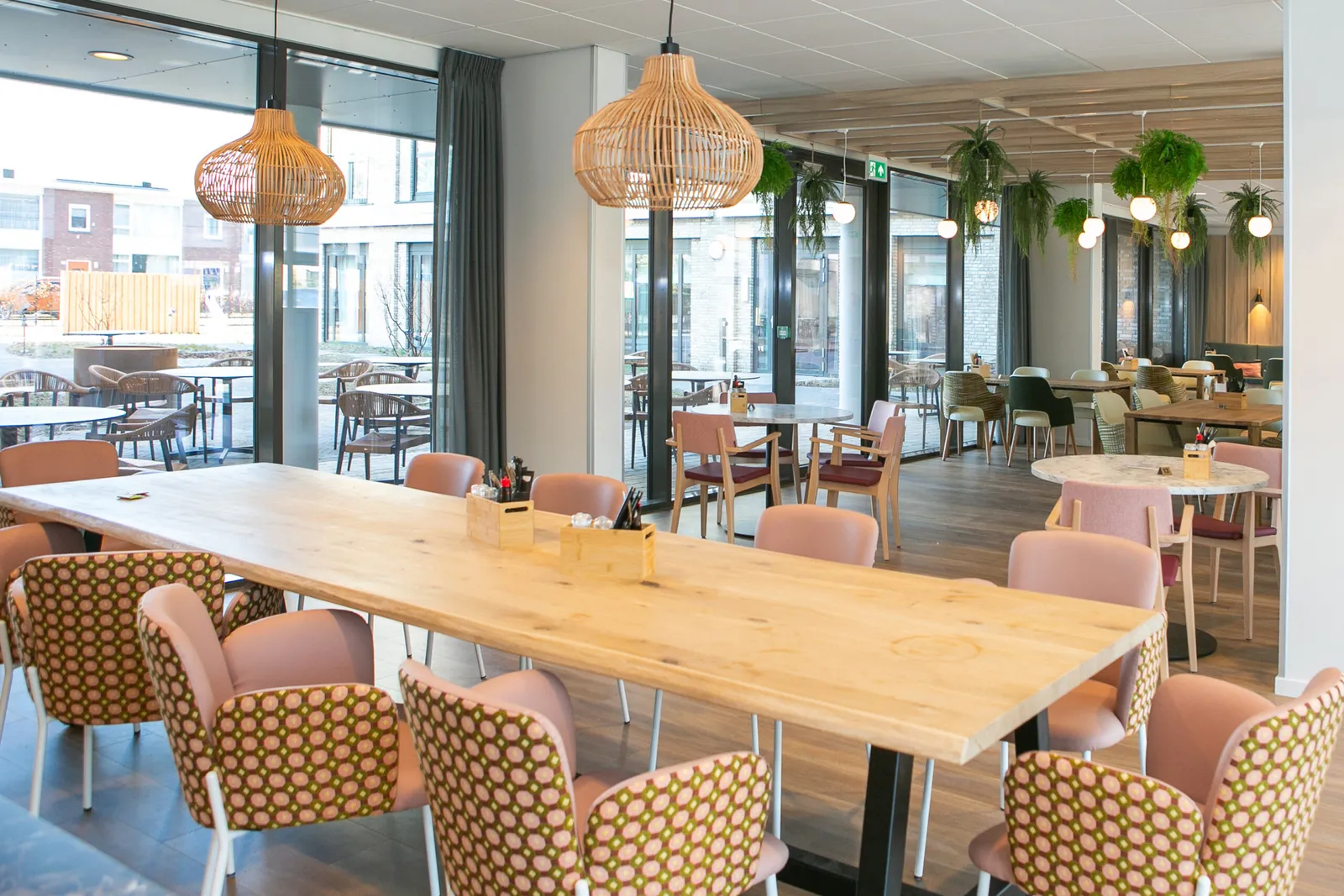
“We encourage people to ‘live freely’ in several ways,” Snoeren adds. “Residents can make use of a range of facilities, including communal rooms, gardens, a brasserie, a hair salon and a physiotherapy and exercise room. With its welcoming brasserie, Zandstaete is a meeting place for residents and people from the local community.” The complex is in a multicultural neighbourhood. “We reflect that diversity here too,” says Snoeren. “An Eastern-themed communal room and a halal kitchen are now in development. We want everyone to feel at home here.” The interiors also set the complex apart. De Laat says: “We are trying out a few things at Zandstaete. For example, there is no large De Wever logo on the building, and we have kept signs indicating that this is a care complex to a minimum. You do not have to behave differently here. You are simply at home.”
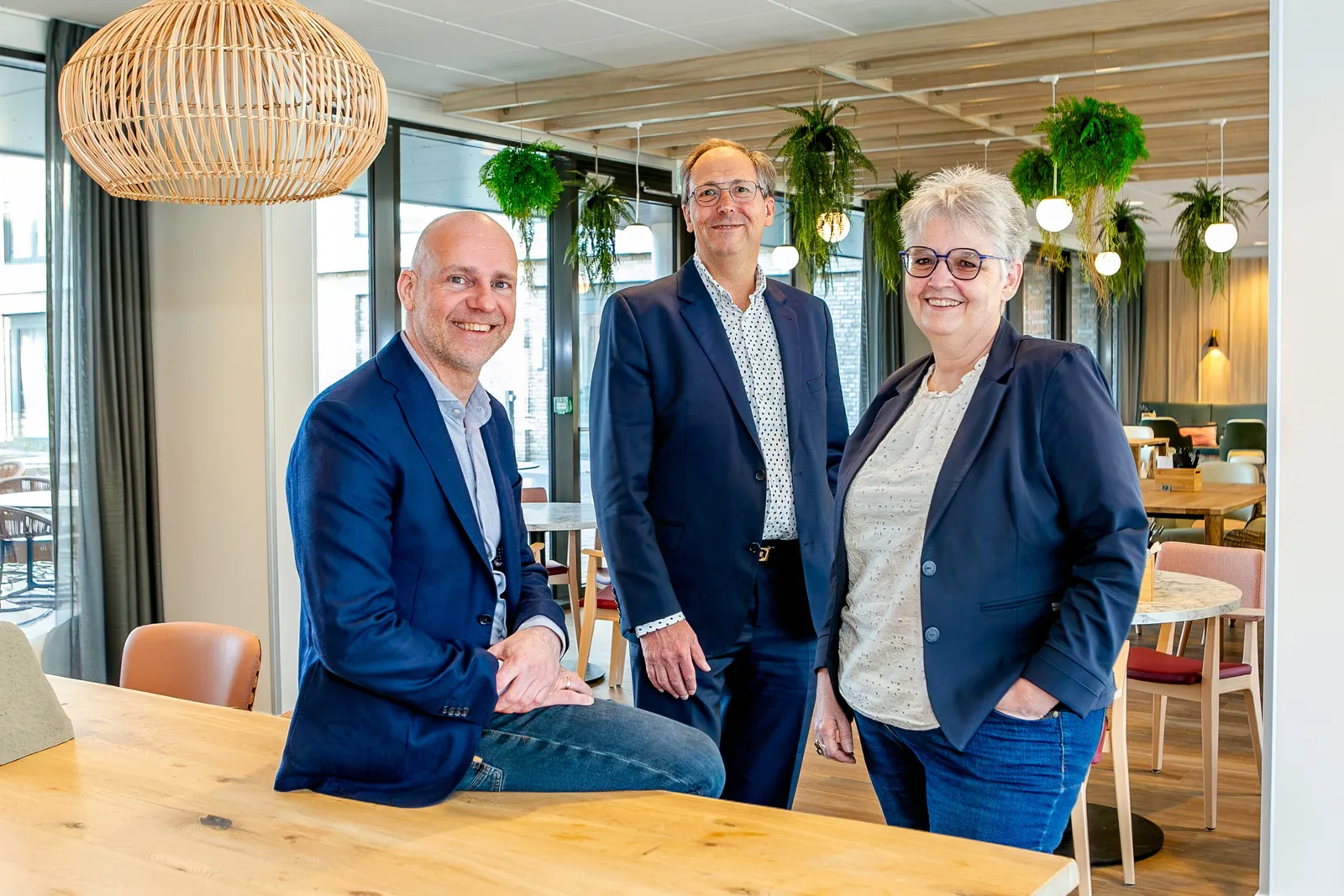
A complex build
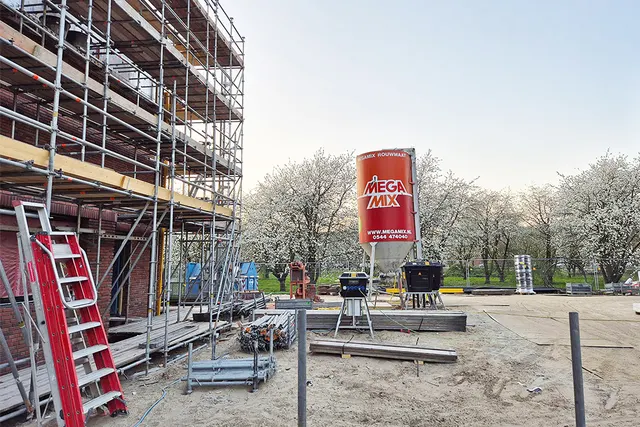
Zandstaete is the second project that construction company Huybregts Relou has completed for De Wever. Project manager Rob Toll, who was involved from the contract stage, says: “The complex meets all BENG requirements, is gas-free and has a modern thermal energy storage system. Sustainable materials were used wherever possible. We also took biodiversity and nature-inclusive design into account as much as we could. All in all, it was quite a challenging project. Construction of the three different units took place at the same time, with a team that still had to get to know one another, following De Wever’s multiple private tendering process.” To make the apartments future-proof and suitable for repurposing, they were all designed with generous space and built as individual units. Toll says: “Every home has its own technical installations, electric boiler and heat recovery ventilation unit. Shared bathrooms and large communal installations that carry a risk of Legionella are a thing of the past. The buildings have dynamic lighting that mimics the day and night cycle. Residents wear tracking devices so they can be located when necessary, but these also open the apartment door when someone approaches. A so-called freedom-of-movement zone has been installed at the exits.”
De Laat says: “Residents can move around freely throughout the facility and in the courtyard garden. The exterior door only locks automatically if there is a genuine safety risk.” The three are proud of the end result and of completing the build within the agreed timeframe. Toll says: “The whole process went smoothly. This was partly because De Wever had all the information in good order at the outset. An added benefit was that demolition of the old building took a little longer, giving us more time to coordinate all the details with the building services contractors. Good preparation pays off during the construction phase.”
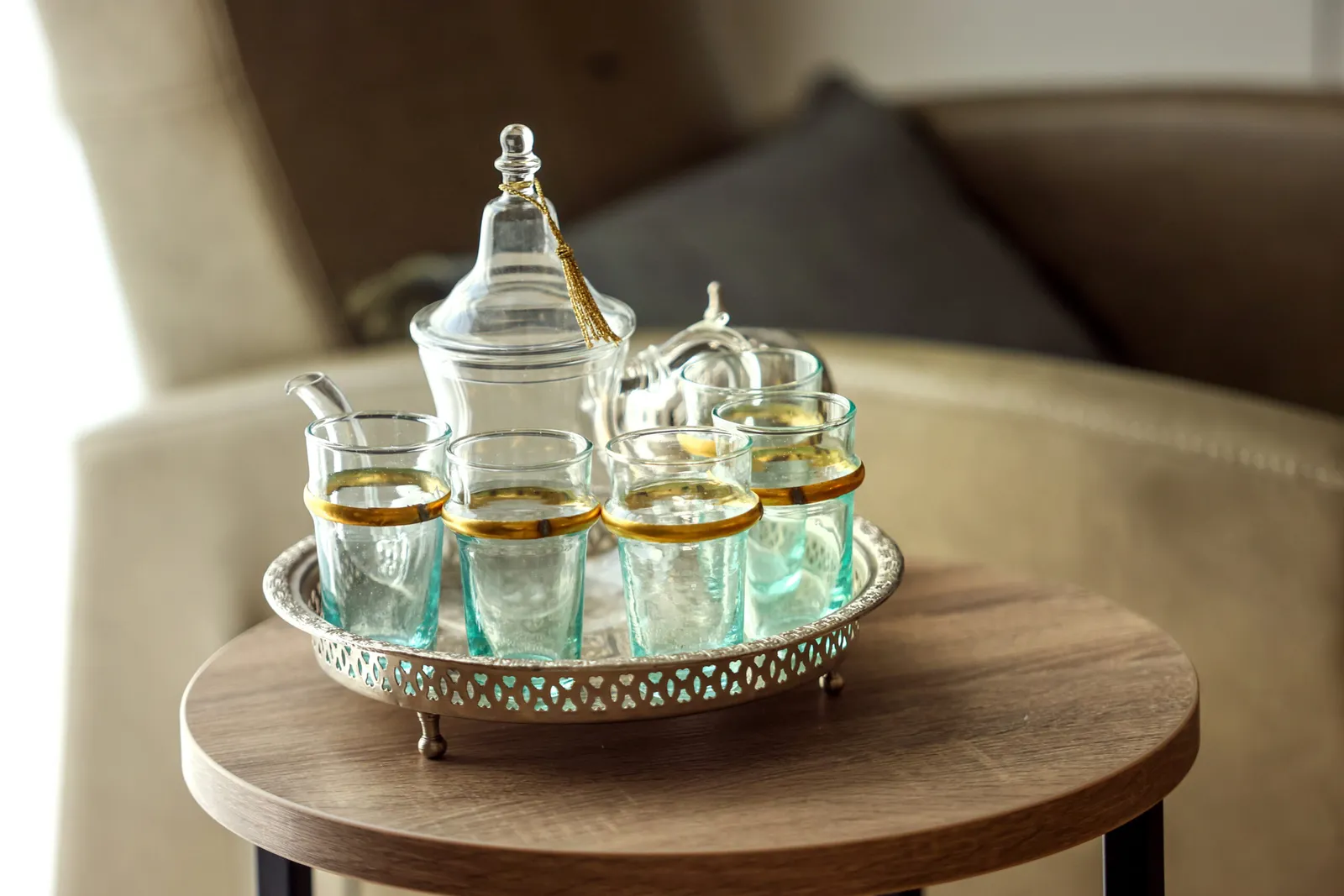
Advice
De Laat has one more important piece of advice for builders and other elderly care organisations: “Make sure everything is intuitive. The building, the installations, the rooms and the apartments should all be easy to use, even for people with cognitive impairment.” Snoeren adds: “And build as much as possible like a standard residential complex. Remove the care-home label to help it feel like home.” Toll concludes: “Building for the care sector is a specialism and requires a tailored approach. As a contractor, we are happy to contribute ideas or, if required, take care of the development phase to achieve the best result.”
Question about this story? Ask your question
Wie aan Zandstaete werkte
- construction companyHuybregts RelouIn this story
Keep following this
Get an email when a new story is published. No account needed.
- ProjectZandstaete
- ThemeHousing with care close by
- SubjectConstruction projects
- CompanyHuybregts Relou