Residential care & nursing homes
‘Green is an investment, not a cost’
Text Armand LandmanImage Tangram Architecten en Dolmans Landscaping Group
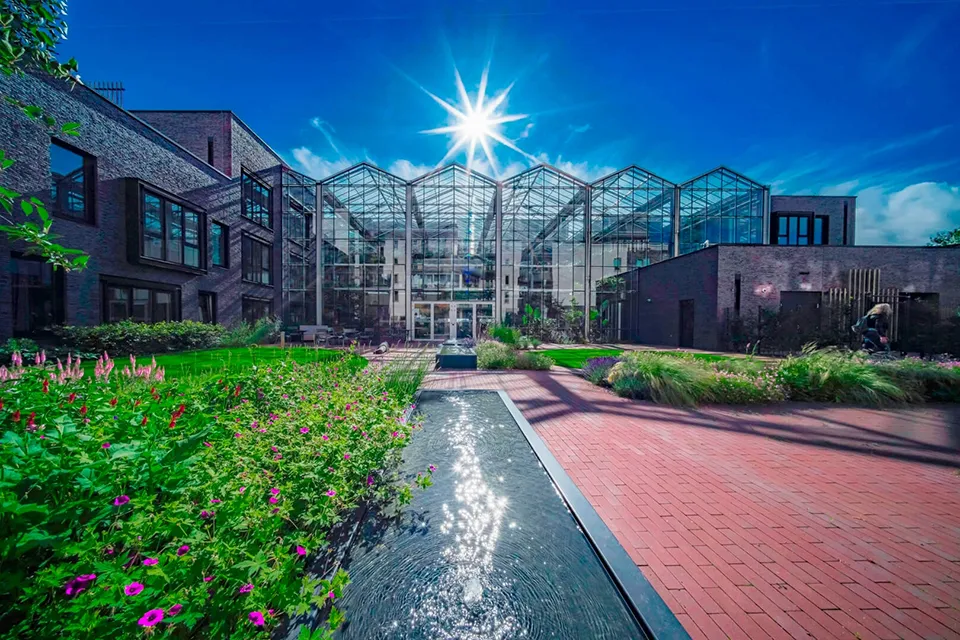
Green is good for people. That is no longer really up for debate. But to build green healthcare facilities, the proverbial fences between different disciplines first need to come down. A conversation with a construction company and a landscaping contractor reveals that green is still seen primarily as a cost, rather than an investment that delivers substantial returns. “No one has a garden, trees or a green façade on their balance sheet. But that is where we need to get to.”
Hospitals and healthcare institutions were built in leafy surroundings long ago. “But somewhere along the way, we took a wrong turn and started building grey giants with many storeys in cities,” says Math Luijten, Commercial Manager Healthcare Cure at Heijmans. “But I think anyone you ask would prefer to look out over a beautiful green landscape when they are in hospital.”
Luijten is joined by his Heijmans colleague Jan-Willem Burgmans and Buddy Wijnands of Dolmans Landscaping Group to talk to Greenpro, at the invitation of De Bloeimeesters, about greening healthcare, particularly hospitals. Although more and more stakeholders recognise the value and necessity of green in healthcare, examples remain scarce, despite both Heijmans and Dolmans now being involved in various projects. “As a construction company, we can tell you everything about building and technology,” says Luijten. “But at Heijmans, what we really want is for technology to support sustainability and improve the health of users. And for greening to be factored into healthcare building plans at a much earlier stage. At the moment, it is not being approached holistically.”
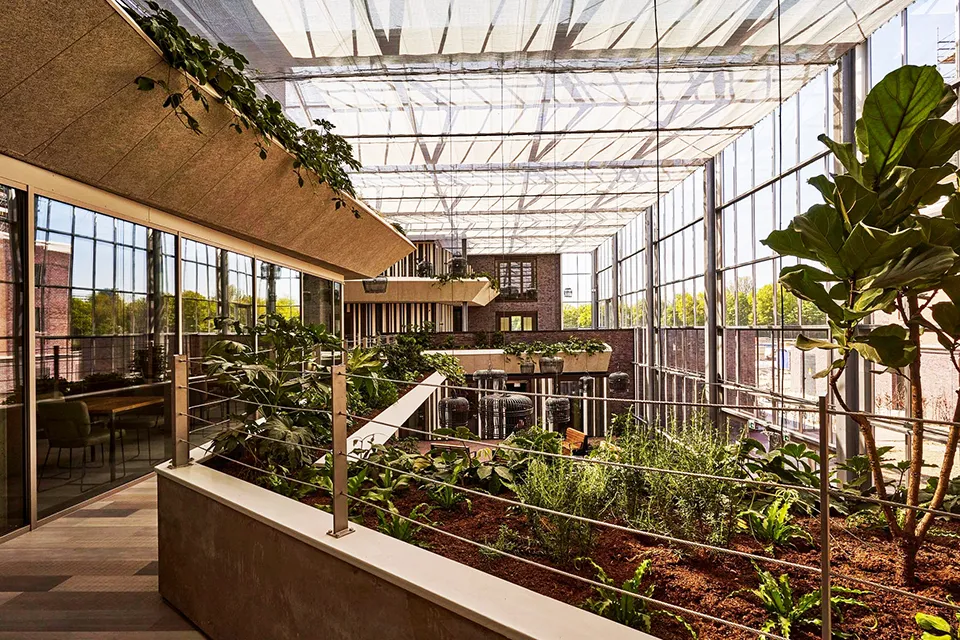
“That’s right,” says Burgmans, Heijmans’ Biodiversity Programme Manager. “Healthcare executives rarely issue an integrated brief. We are usually brought in on a very traditional basis for construction and technology. Take the European Medicines Agency (EMA) in Amsterdam, for example. From the outset, the architect considered staff wellbeing and gave green a prominent place in the design, not just as something to look at, but as accessible greenery that people could experience. Yet it was not considered holistically enough, with a landscaping contractor and landscape architect involved too. As a result, the atrium, with all its planting, has to be lit additionally, which means a higher energy bill. What we at Heijmans learned from that project is that all areas of expertise need to come together much earlier. Ultimately, we want natural solutions, whereas at present we often opt for a technical one. And no, that really isn’t more expensive.”
Cost or investment?
“Green does not make any construction project more expensive. As far as I know, paving is always more expensive than a lawn,” says Wijnands. “The real question is: are you prepared to invest in an environment that is healthier, both for patients and healthcare staff?” Burgmans agrees. “Exactly! You are not spending money, you are investing in green because it also delivers benefits. Those benefits are rarely taken into account at present. Besides, what are you comparing the costs with? The cost of maintaining technical installations? I’d be very interested to know which costs more.” Wijnands nods in agreement. “And we don’t know its value because green doesn’t appear on any balance sheet. Take public space: sewerage is an asset on the balance sheet and is depreciated over a number of years. But no one has their trees or green façade on the balance sheet. Yet once you start assigning something a value, you are also prepared to invest in it. And as long as it is seen only as a cost, that won’t happen.”
Integration
Wijnands does not need long to consider whether landscaping contractors might be too modest about getting a seat at the table earlier in healthcare construction projects. “I think they are. Most landscaping contractors are perfectly capable of building a car park or laying paving, either on their own or with a civil engineering contractor. But we are rarely invited to bid for such work. Perhaps we need to be more proactive. But you shouldn’t ask us to build an entire hospital or healthcare facility. We depend on the large contractors for that, and on whether they bring us in early enough.”
Fortunately, Luijten sees a shift under way. “At Heijmans, we increasingly talk about partners in a construction team, rather than clients and subcontractors. And partners want the best for each other: they help one another and involve one another. So, if you ensure an integrated approach at the selection stage of a construction project, we will look for suitable partners to help us deliver it. More than ever, we will need to bring our knowledge and expertise to the table and showcase them. That top-down approach is no longer appropriate.”
Burgmans also believes that the old-fashioned approach to tendering and briefing does not deliver the right results. “I believe much more in partnerships and challenging each other. So rather than drawing everything in minute detail, just ask for more biodiversity. A partner like Dolmans knows perfectly well how to deliver that.”
Wijnands: “The key is to assess each other as equals and share responsibility. I have said before that a client could perfectly well entrust me with responsibility for, say, 10 or 20 years of green-space maintenance. I would then think very carefully about the best way to do it and come up with a different solution than if I were simply asked to create a garden. There is nothing wrong with letting the market respond to your needs.”
A symbiotic approach to health and wellbeing
Charlot ten Dijke, architect and director at Tangram Architectuur en Stedelijk Landschap, and Ineke van der Ham, Professor of Technological Innovations in Neuropsychology at Universiteit Leiden, explain why greening is essential for the healthcare sector.
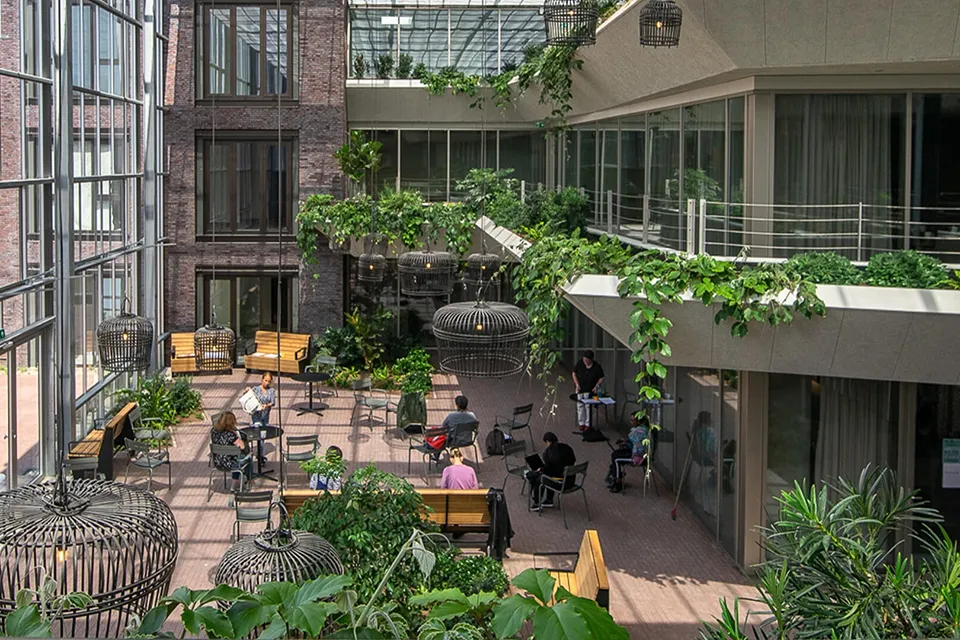
According to Ten Dijke, the healthcare sector needs to rethink how its spaces contribute to healing and wellbeing. “We need to learn more, because otherwise we cannot create good healthcare buildings,” she stresses. Her approach incorporates green, natural elements that “make an incredibly positive contribution to society as a whole” and help create a relaxing atmosphere for residents and staff alike. She explains that integrating natural elements such as water, greenery and light not only enhances a building’s aesthetic value, but also plays a crucial role in promoting residents’ health and wellbeing. “Our buildings, designed with green spaces and natural light, provide a peaceful environment that reduces stress and speeds up residents’ happiness and recovery.” She is convinced that well-considered architectural design can directly contribute to a better quality of life for residents.
Working memory
Professor Van der Ham points to the scientific evidence underpinning this approach. “Green environments reduce stress and improve working memory,” she explains. She also emphasises the importance of sightlines in healthcare facility design, helping residents find their way around more easily and become familiar with their surroundings. “Studies show that green environments and natural light are essential components of mental and physical health,” she adds. Her research supports the design philosophy of Tangram Architecten: that a well-designed healthcare environment promotes general wellbeing and may even reduce reliance on medication, although there is not yet conclusive evidence for the latter.
Integrating green into healthcare buildings is not merely an aesthetic choice, but an essential part of architecture that takes users’ needs into account. “Since our practice was founded, we have designed our buildings with greenery because we put people at the heart of our designs,” says Ten Dijke.
Natural elements
A recent publication by Tangram Architecten takes a closer look at the importance of nature and architecture in the construction of healthcare facilities. The booklet, entitled ‘Met Zorg Ontworpen’, highlights the positive impact of natural elements on the wellbeing of residents and staff in healthcare settings. It also covers the economic benefits of green healthcare architecture. By using sustainable materials and energy-efficient designs, healthcare institutions can save money in the long term. “Sustainable practices not only reduce the ecological footprint, but also contribute to the financial health of healthcare institutions by lowering operating costs,” Ten Dijke explains. This approach shows that financial and environmental sustainability can go hand in hand in the healthcare sector.
One important question is whether this approach is economically viable. Van der Ham confirms that it is: “There are clear indications that a green environment not only benefits health, but also saves money in the long term, for example through lower use of healthcare services and higher staff productivity.”
Zuidoever: a model of innovative healthcare architecture
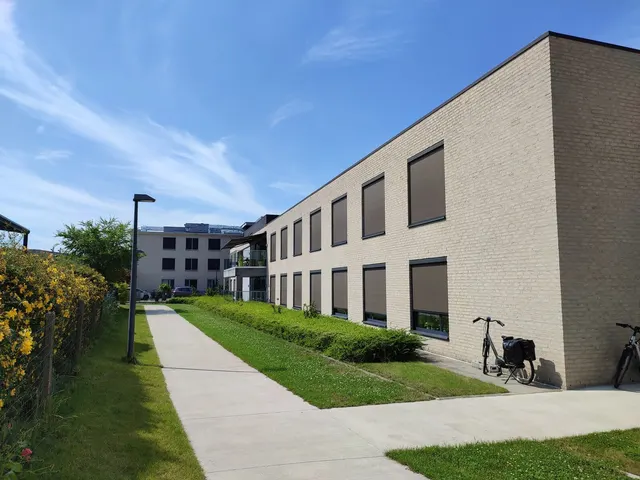
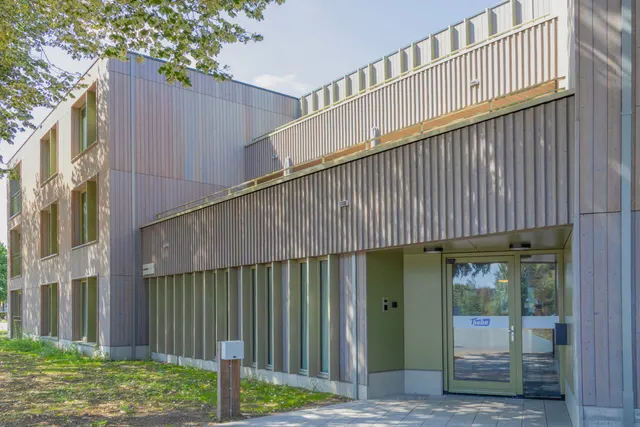
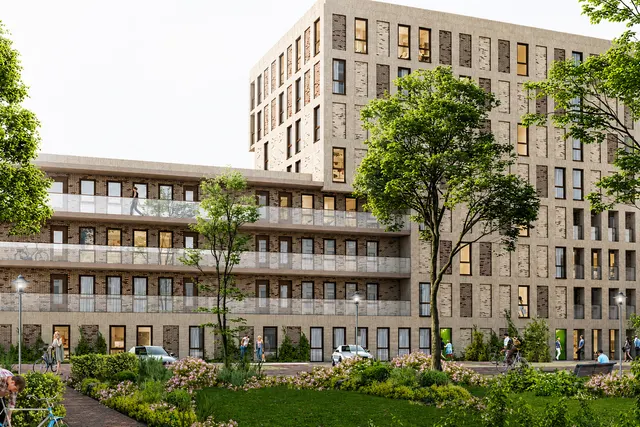
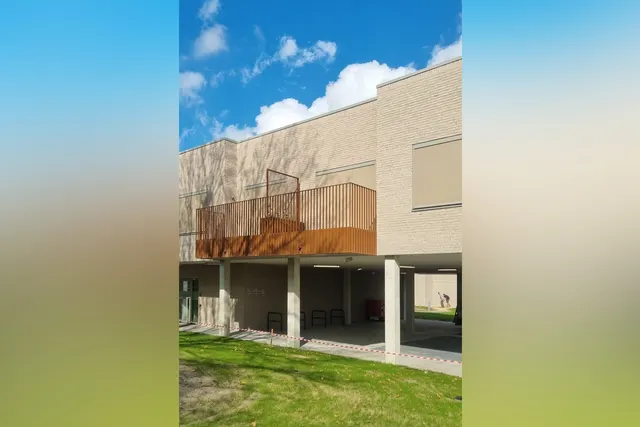
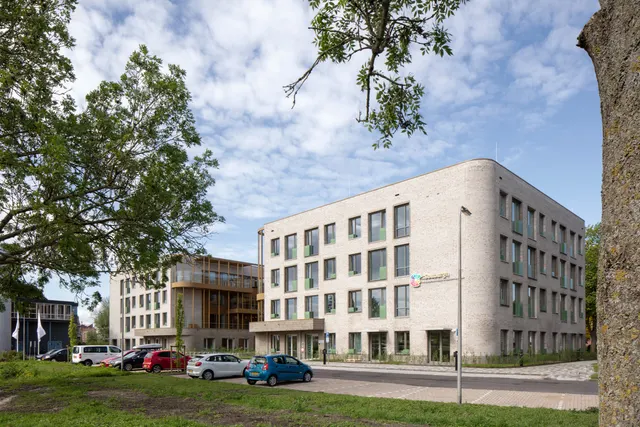
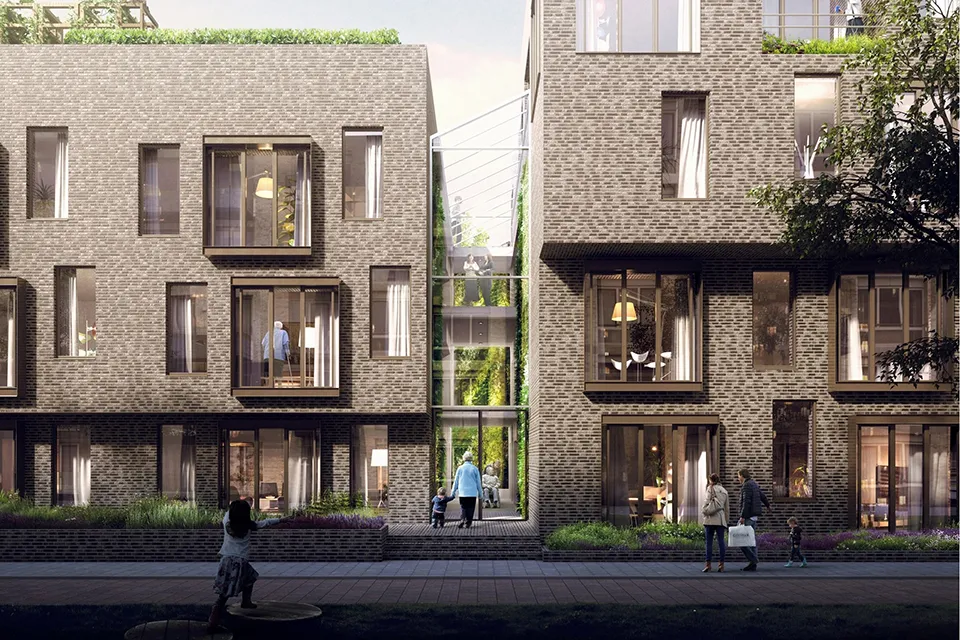
The Zuidoever project, a residential complex designed by Tangram Architecten, comprises 54 rental apartments for older people with care needs on Amsterdam’s Zuidas. It is a prime example of how integrating nature and architecture can create a healing environment for older people. The project embodies a vision of creating spaces that are not only aesthetically pleasing, but also contribute to residents’ wellbeing and health. Charlot ten Dijke describes how Zuidoever was designed with large windows and natural light that blur the boundaries between indoors and outdoors, helping residents feel more connected to the natural environment.
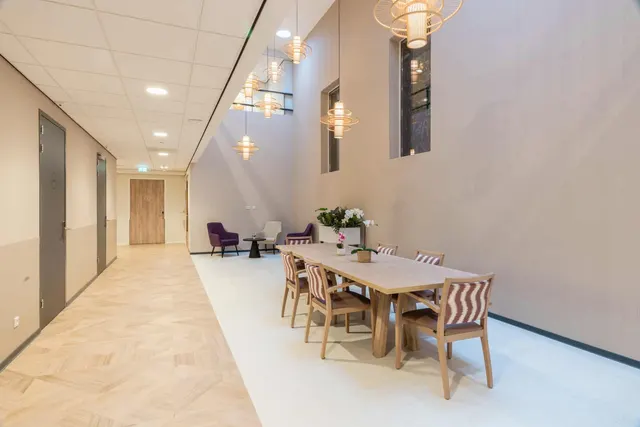
Special attention has been paid at Zuidoever to the communal spaces, which are designed to encourage social interaction and activities, helping to reduce loneliness among older people. These spaces are located so that they are easily accessible from different parts of the building, making them natural meeting places for residents. The project has no corridors, only communal living spaces. It also highlights the importance of flexibility in design, so that spaces can be adapted to residents’ changing needs over time.
Zuidoever shows how considered design can help improve quality of life by providing an environment that is not only safe and functional, but also aesthetically enriching and socially stimulating. The project has since become a beacon of innovation in healthcare architecture, applying the principles of nature integration and human-centred design to create a sustainable, supportive living environment for older people. As a neuropsychologist, Ineke van der Ham is closely involved in evaluating the project and conducting follow-up research. She praises the green sightlines throughout the complex: “They are very important for older people’s awareness of their surroundings and orientation. They also provide a sense of calm and security.”
Question about this story? Ask your question
Keep following this
Get an email when a new story is published. No account needed.
- SubjectResidential care & nursing homes