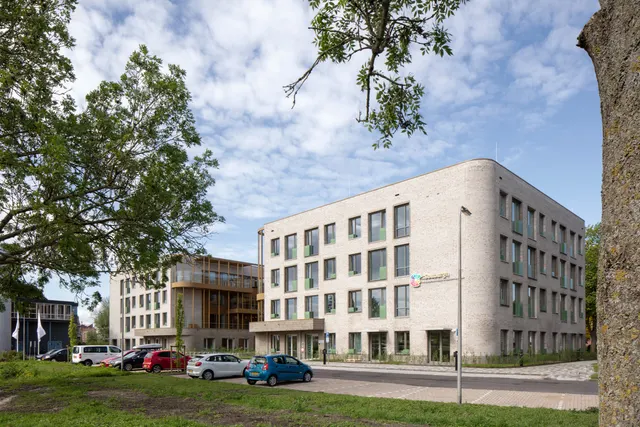
Residential care & nursing homes
‘Investing in language skills and support in asylum centres can help tackle staff shortages in healthcare’

The healthcare sector does not support bringing in migrant workers to address staff shortages, as former Minister of Health Fleur Agema recently proposed. Housing and the language barrier are the main obstacles, according to a survey by NU.nl.
The focus should instead be on people who are already here, such as residence permit holders, as the sector itself also points out. Our support for programmes such as Newcomers in Their Strength and the BIG Coalition through the Goldschmeding Foundation has shown us that good support is crucial for people from outside the EU. It takes time, commitment and collaboration. Fortunately, there are organisations that do this well, but it is not a quick fix.
People who already hold qualifications also face barriers: language, BIG registration and the lack of suitable infrastructure. In Newcomers in Their Strength, we have seen that a reasonable level of language proficiency is essential before someone can start working in healthcare.
The Netherlands should therefore invest in effective support and early language learning for those who need it, preferably while they are still in an asylum centre. Newcomers who learn the language and find work sooner can also find housing sooner and support themselves sooner. This benefits not only newcomers and the healthcare sector, but also the government and society as a whole. An impact analysis conducted by Social Finance NL for the Newcomers in Their Strength project found that every euro invested generates almost €2.50 in returns. These include higher incomes, lower recruitment costs and savings on benefits.
Question about this story? Ask your question
Keep following this
Get an email when a new story is published. No account needed.
- SubjectResidential care & nursing homes