











‘Continu encouraging each other to improve’
Text Sabine BisonImage Dijkxhoorn bouwgroep

Climbing the CO2 Performance Ladder together
With a liveable future in mind, it is vital to make operations more sustainable as quickly and extensively as possible, and to work circularly. Dijkxhoorn bouwgroep appointed Hidde Luzac as full-time Innovation Manager to strengthen this mission and achieve a higher level on the CO2 Performance Ladder. How is he doing this, and what can you do yourself?
Making a difference
Luzac: “Our business activities include refurbishment, renovation and transformation. We do this with our team of skilled tradespeople and technicians, and we also have our own in-house furniture workshop. Our projects are generally built to last. This makes us, as a sector and as a company, particularly well placed to make a difference. Our ambition is to build extensively using modular, circular and bio-based methods. We aim to be at the forefront in this field, which is why we invest heavily in innovative solutions.”
Moving up the ladder
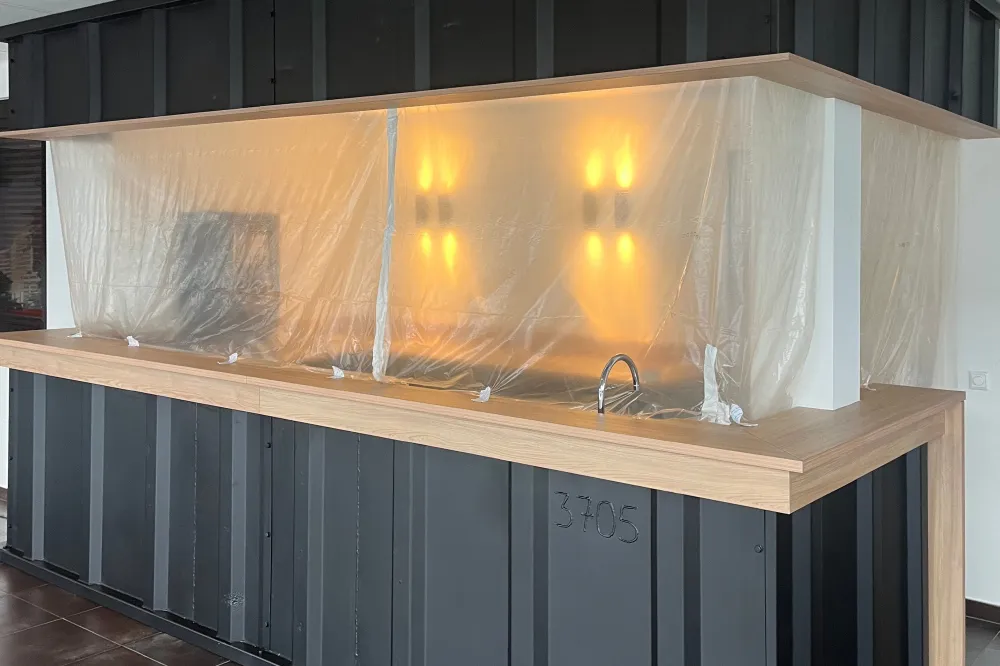
Level 3 on the CO2 Performance Ladder has been achieved. Dijkxhoorn bouwgroep meets all the requirements for reducing CO2 emissions, including the use of solar panels, electric cars and material reuse. Over the past year, the company has worked hard to reach level 5. “This means encouraging yourself, the sector and the entire supply chain to keep improving and reducing CO2 emissions,” says Luzac. “In our case, this led to the design of an innovative product: the Circulaire Bar. In collaboration with an interior-building partner, we made this piece of furniture using, among other things, recycled ceiling tiles, sheet material and panels from old sea containers. The bar can be made to measure and serve various functions. You can choose a natural look or a modern, painted finish, depending on your taste and what suits any existing interior. Another innovative collaboration has begun with an agricultural partner. They grow industrial hemp, whose fibres we will process into bio-based insulation material. From field to building, what could be better? We will work with a social enterprise on this process. Our partner also grows Zonnekroon, a prairie plant. This is still experimental, and we are investigating whether we can also turn it into bio-based material in the future.”
The right partner
There are a number of conditions to consider when setting up this kind of supply-chain collaboration. “You need to find the right, motivated partner and the right space,” says Luzac. “You need a suitable place to store materials for reuse and make sure they move on again at the right time. If your storage and logistics are not in order, it will not work. The same applies to communication. A holistic project involves so many more parties, products and processes that communication has to be excellent. Our drive to seek out these collaborations can also be traced back to our vision, which is based on three pillars: social responsibility, innovation and sustainability. Of course, we also see the business potential.”

Making things more sustainable can be daunting
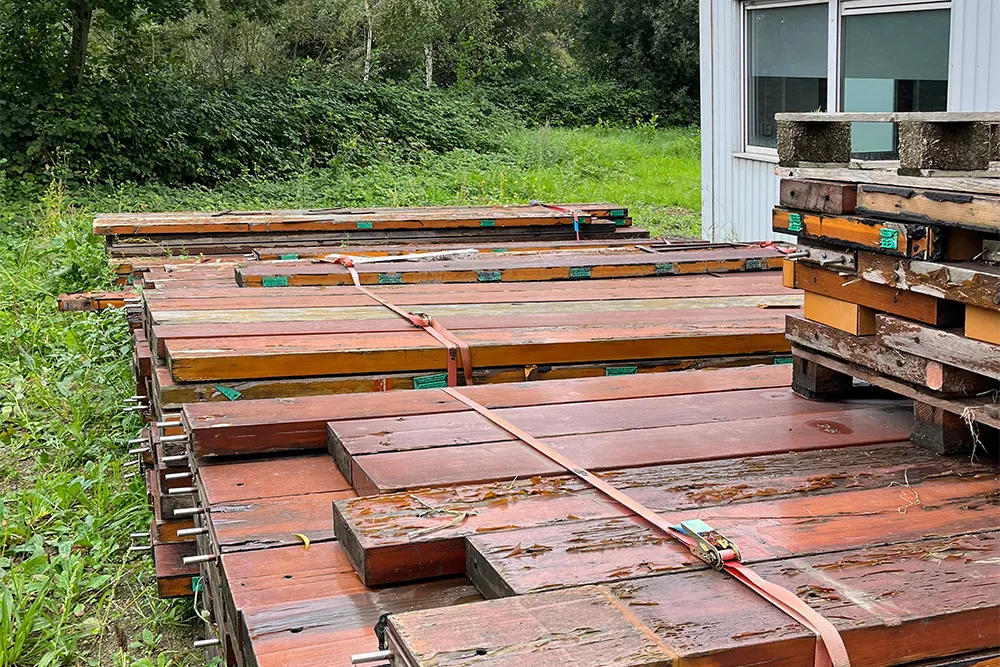
In practice, companies in the healthcare sector are keen to make their projects sustainable, but at the same time find the prospect daunting. Luzac explains: “They often do not know what options are available and fear costs will rise. Compared with other industries, it is also somewhat harder for healthcare organisations to make their operations more sustainable, simply because stricter rules apply, for example in the area of hygiene. We guide these organisations through the process step by step, helping them choose more conscious, sustainable and circular solutions wherever possible, while ensuring they are attractive and affordable. We are currently involved in a refurbishment project where a substantial number of old façade beams were left over. Together, we came up with the solution of sawing them up and turning them into new wall panels. This is a perfect example of what you can do together to make the world a little more sustainable and climb the CO2 Performance Ladder.”
Dijkxhoorn bouwgroep is a medium-sized construction company specialising in new-build and refurbishment, renovation and transformation projects. It works for public authorities, businesses and private clients, with a focus on organisations in the healthcare sector. Its main area of activity is the region around The Hague, Delft and Rotterdam. Its in-house furniture workshop enables it to deliver bespoke work, including sustainable solutions, quickly and flexibly.
Question about this story? Ask your question
Keep following this
Get an email when a new story is published. No account needed.
- ThemeSustainable healthcare buildings
- SubjectGeneral







