











Fire-safe living: illusion or choice?
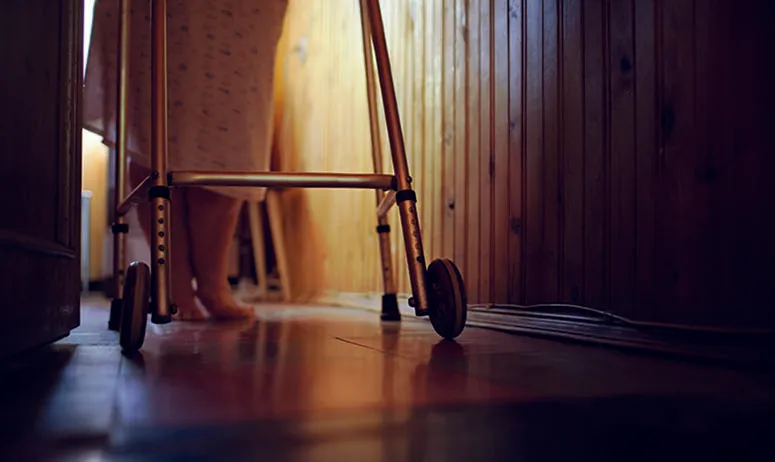
A number of recent fatal fires in residential complexes for older people have once again put fire safety firmly in the spotlight. It is hardly surprising that older people are the focus of attention. In 2014, almost half of all fire fatalities were over the age of 65. Smoking and cooking appear to be the main causes of fires in this group. The risk is increasing as care homes close and older people become more reliant on themselves than before.
In residential fires, smoke is the main cause of fatalities. It is hot and toxic, and obscures potential escape routes. The recent fire at the Neerbosch-Oost residential complex, which claimed four lives, made it painfully clear that a fire outside the complex itself can also lead to many casualties. In this case, a fire in a cafeteria filled the central stairwell with smoke.
Current building regulations do not address this type of fire, and the Building Decree 2012 does not always offer a comprehensive solution. As a result, even those who comply with the regulations and hold the required permits may still fail to provide a safe living environment. More is simply needed. The right solution requires alignment with the intended use of a home or residential complex. It is also very important to distinguish between new-build and existing buildings. With new-build projects, it is usually known who the building is intended for; in existing buildings, the profile of residents can change significantly over time.
Additional measures for new-build projects
Because the intended resident group is often known for new-build projects, EGM adviseurs always aims to provide bespoke solutions. The Building Decree 2012 is a useful tool in this respect. When applying for an environmental permit, it allows a distinction to be made between a residential function, a residential function with care, and a healthcare function with beds.
Of course, the choice of function should be irrelevant to future residents; it should not result in differences in matters such as living comfort, safety and energy efficiency. In practice, however, applying this distinction does lead to differences in safety, health and energy-efficiency requirements. These differences relate to functional requirements, performance requirements and calculation methods.
To eliminate such differences, the client can introduce additional measures beyond those required by building regulations. For example, shared circulation spaces can be divided into more fire compartments. This allows residents to reach a safe zone sooner, without immediately having to use the stairs to get to the ground floor. Stairwells with greater fire resistance than required minimise the risk of smoke entering them. Flat entrance doors fitted with self-closing devices activated by smoke detectors, and the use of genuinely smoke-resistant doors, are also measures that go beyond the Building Decree and improve the safety of older people.
Existing buildings
Unlike in new-build projects, it is harder to anticipate the need for additional provisions in existing buildings. The profile of residents can change considerably over time. EGM adviseurs emphasises one key principle: the greatest risk of fire is still inside the home itself. Effective measures, regardless of the type of resident, include reducing the likelihood of a fire, minimising its impact and alerting residents as quickly as possible. EGM adviseurs also sees opportunities to make older people’s homes safer by preventing short circuits, using smoke detectors and installing sprinklers.
Preventing short circuits
Alongside smoking and cooking, short circuits are a major cause of residential fires. Advice and the use of less flammable mattresses and furniture can make a significant difference, especially for older people. Home-care staff often visit older people in their homes and are well placed to spot potential problems. Landlords can also play a part in raising awareness, for example by running exercises with residents. This helps residents understand the need to leave their home as quickly as possible in the event of a fire.
Smoke detectors
Installing smoke detectors is not yet compulsory in existing homes for older people. In new homes, where this requirement does apply, detectors must be installed in the areas between the bedroom and the exit. EGM adviseurs believes this requirement should also apply to bedrooms. If a smoke detector goes off in the hallway at night but the bedroom door is closed, there is no guarantee that someone with hearing loss will notice the alarm. If there is also a smoke detector in the bedroom, the chances of waking the resident are much greater.
Sprinklers
Every second counts in a fire; smoke can completely block an escape route within minutes. It is therefore advisable to alert residents as early as possible. An even safer option is to fit older people’s homes with a sprinkler system connected to the mains water supply. This system is not primarily intended to extinguish every fire; its main purpose is to reduce smoke production and lower the temperature of the smoke. Both effects significantly improve the chances of survival in a residential fire.
Conclusion
As we have seen, there are many additional ways to create a safer living environment in both new-build and existing buildings. In new-build projects, additional measures are easy to implement. In existing buildings, this is more difficult, but not impossible. EGM adviseurs therefore regards measures beyond the Building Decree as a starting point when beginning the design process for housing for older people. Our many years of expertise enable us to help develop solutions tailored to residents at an early stage. •
Would you like to know which measures you need to take, in terms of building design, building services and behaviour, to make your building fire-safe? Contact EGM adviseurs: Pim van der Vliet, 078 633 07 50 or egmadviseurs@egm.nl.
Question about this story? Ask your question
Keep following this
Get an email when a new story is published. No account needed.
- ThemeHousing with care close by
- SubjectGeneral







