











‘Make wayfinding an integral part of the design’
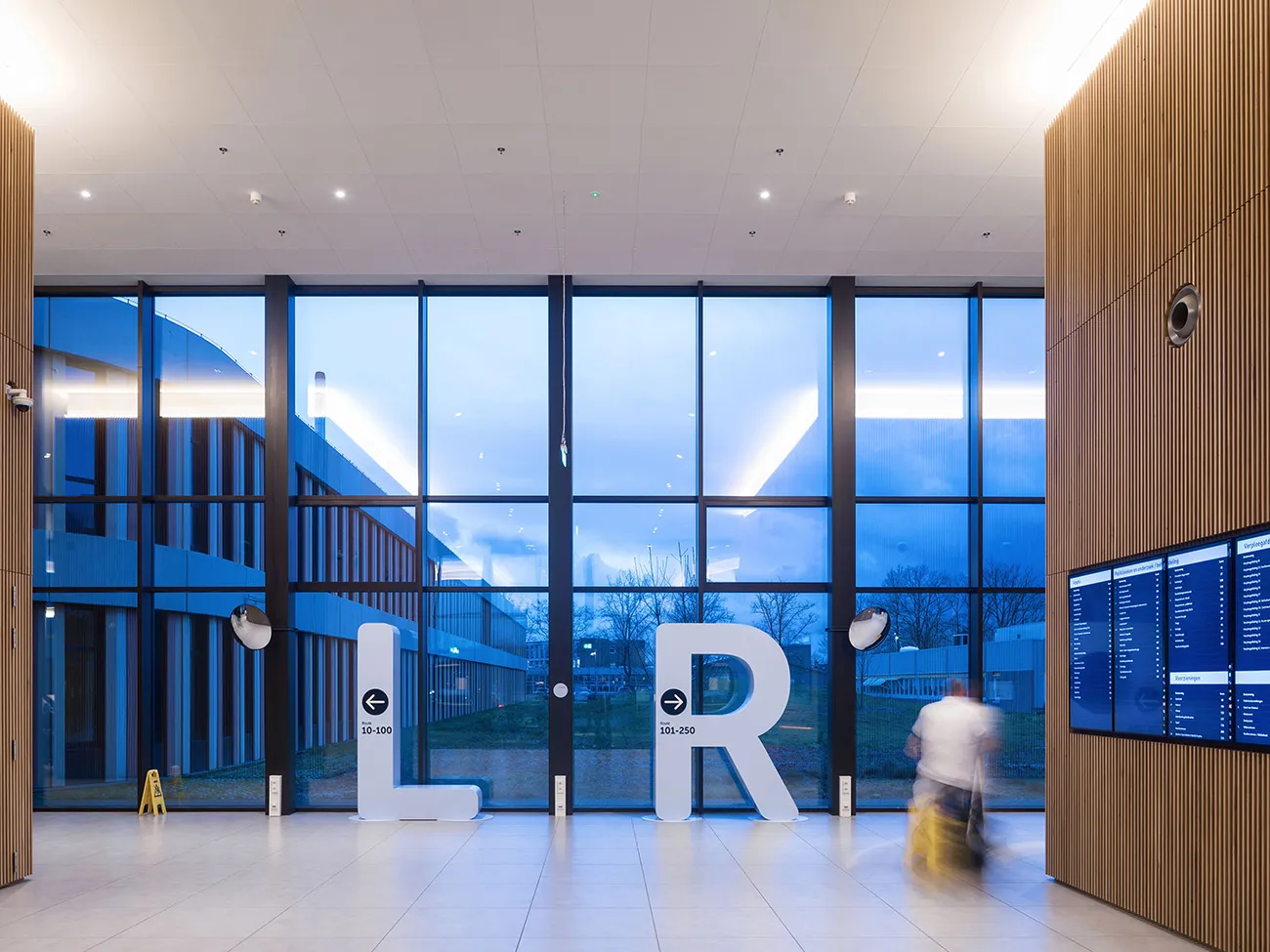
In large public buildings, such as hospitals, orientation and helping people find their way are crucial. Wayfinding is the term for this. This aspect often does not receive the attention it deserves, says Rob Wehkamp, Managing Director Benelux at ID-LAB. “A hospital is often a production facility designed to support the care process. That does not always align with the patient’s experience. We try to bring these two perspectives together.”
Taking all perspectives into account
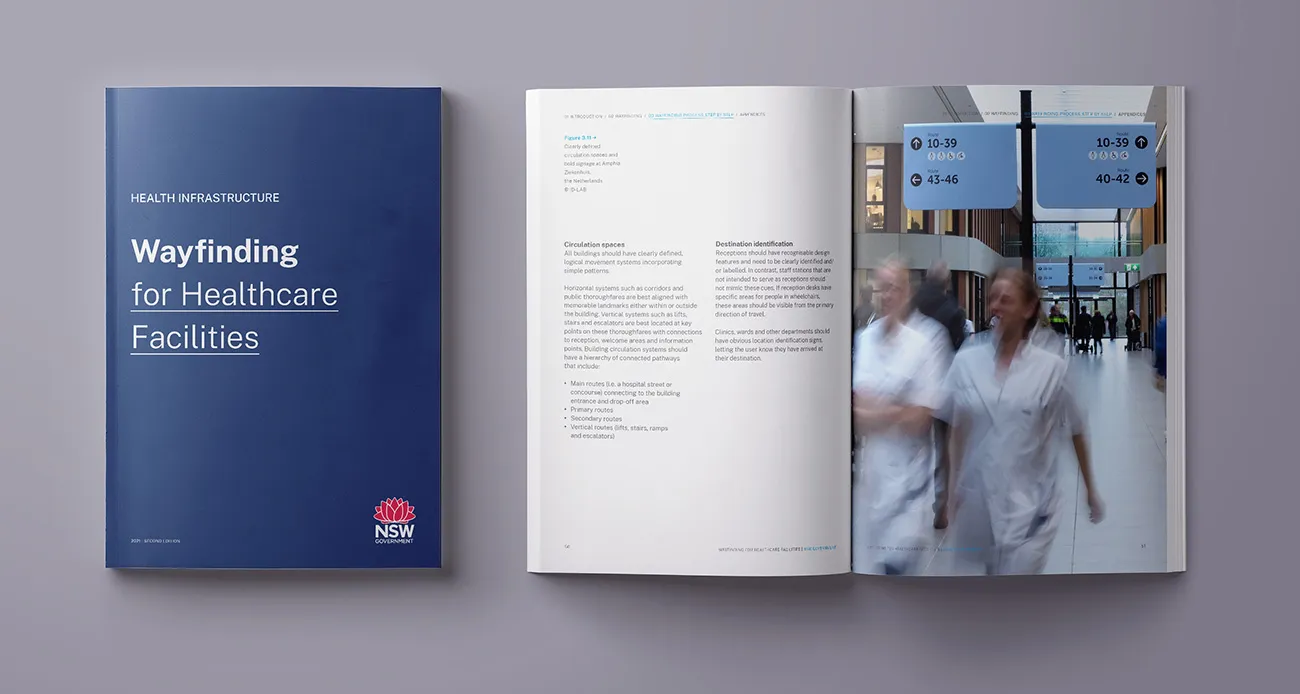
Australia is more advanced than Europe when it comes to wayfinding. “If an architect is invited to tender for a public building there, they are required to engage a wayfinding consultant,” Wehkamp explains. “It is not a legal requirement, but if you do not, your chances of winning the contract are slim. That is why they are much further ahead in integrating wayfinding into designs for public buildings. We are keen to bring that knowledge to the European market.”
An integral part
ID-LAB is a consultancy and design practice founded in Australia. It now has an office in the Netherlands serving Northern Europe, and one in France serving Southern Europe. Its portfolio now includes seventy hospitals, eight of them in the Benelux. A recent project is the new Amphia Ziekenhuis in Breda, where ID-LAB was responsible for the wayfinding design. Wehkamp: “For a project of this scale, you develop a wayfinding strategy together with nursing staff, specialists and other stakeholders, ensuring that the end result fits the processes taking place in the hospital. As far as I know, this is the first time in the Netherlands that wayfinding has been part of a hospital’s design process so early and so intensively. The design of the entire system is aligned with the architectural design by Wiegerinck and has been extensively tested with visitors, including people with visual or other impairments.”
Emergency route
“If we are involved early, we can even propose architectural or structural changes that have a much greater impact on wayfinding than a whole array of signs,” says Wehkamp. “For example, rotating a lift entrance by a quarter-turn can make the entire route much more logical. Or take the route to the emergency department, which is not adequately signposted at many hospitals in the Netherlands and Belgium. I think it is crucial that people who need emergency care can find the right way immediately, especially at night. At AZ Zeno in Knokke-Heist, for instance, we installed red gates that make the correct route to emergency care unmistakable.”
A greater role
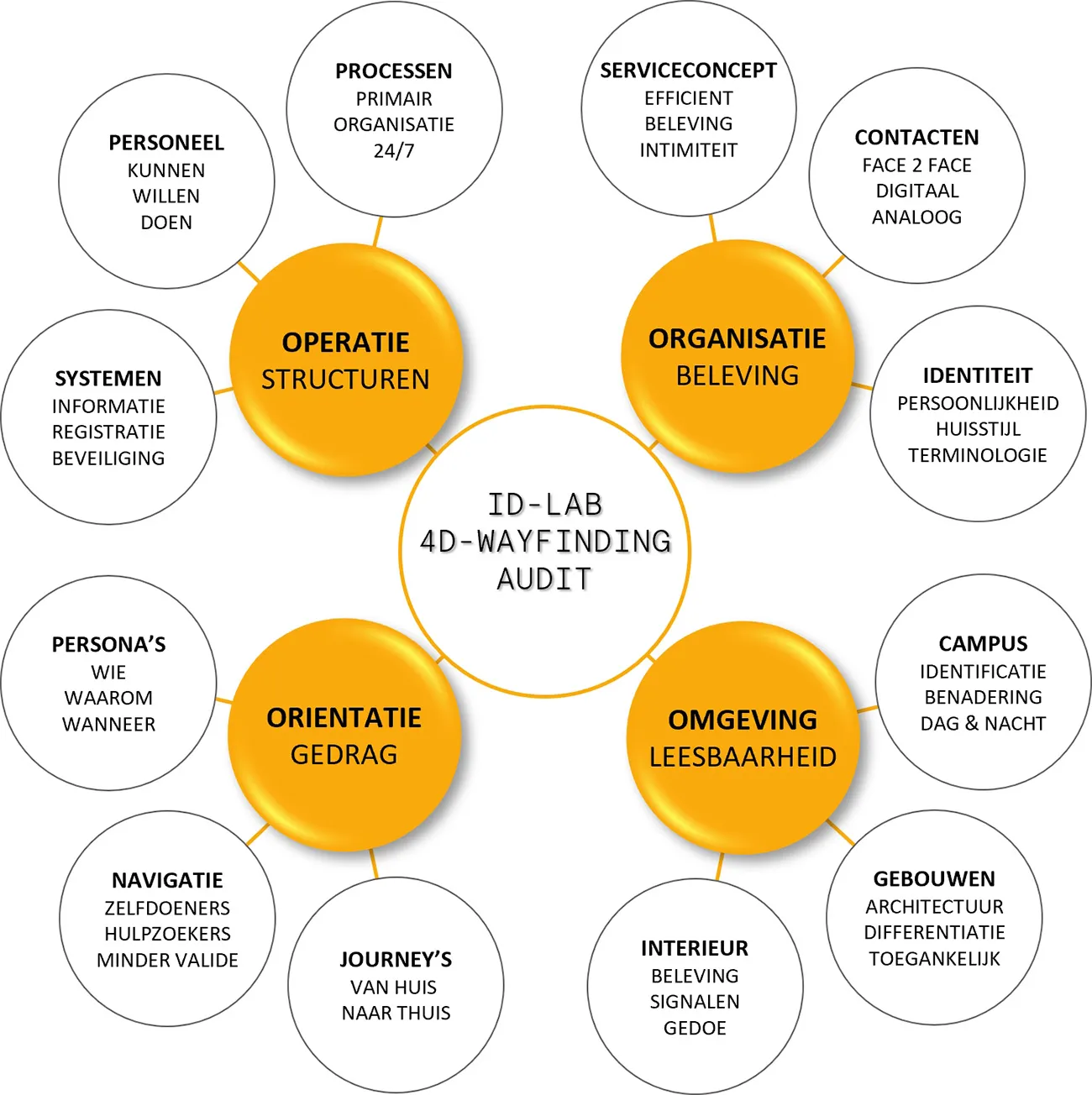
ID-LAB’s approach is based on the 4D Wayfinding Model. Wehkamp: “Signage suppliers tend to focus on the environment and orientation, while graphic designers focus more on organisation and orientation. We take all perspectives into account, with particular attention to operational processes. This gives wayfinding, which plays a much greater role than many people realise, the attention it deserves and makes it an integral part of the hospital that also works well in practice. In that respect, every hospital is different.”
At the request of the NSW Health Department in Australia, ID-LAB has produced a publication on this subject: Wayfinding for Healthcare Facilities. “It explains why the design and management of signage in healthcare facilities must always take the user into account. It also provides a framework for understanding good signage practice and includes a step-by-step guide to effective signage. Interested parties can request a free copy from us.”
Een zakelijke vraag aan ID-LAB Europe? Get in touch
Companies in this story
Keep following this
Get an email when a new story is published. No account needed.
- ThemeHealing environments
- SubjectGeneral
- CompanyID-LAB Europe







