











New pumps help UZ Brussel with ambitious energy project
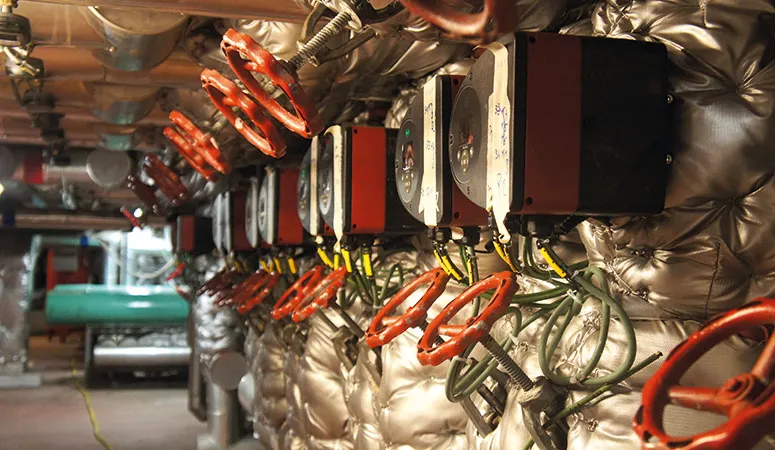
UZ Brussel aims to achieve the same energy consumption in 2022 as in 2012, while the hospital is set to grow by 40 per cent. An ambitious project, then, with an impact on every part of the hospital. A key part of the plan is the installation of 217 new pumps, all supplied by Grundfos, the market leader in pumping solutions.
It is only natural that the pumps were also reviewed as part of UZ Brussel’s ambitious master plan. After all, they account for a large share of the building’s energy consumption. Despite the presence of other major energy users, such as MRI machines and X-ray scanners, they currently account for no less than 12% of electricity consumption. Jimmy Van Moer, responsible for the hospital’s Masterplan Energie en Engineering: “It all began with the renewal of our building management system. When we got to the pumps in that process, we realised it would be better to replace the ageing pumps with new units rather than adapt the BMS to the old equipment. That is why we are replacing so many of them at once.”
Short payback period
For the project, UZ Brussel worked with Grundfos and used the company’s Energiecheck. Van Moer: “We reviewed all the pump groups together: what type of pump was installed, what needed to be changed, how the system was configured, and so on. Each analysis resulted in a shortlist of pumps, with the aim of ensuring that all investments would pay for themselves within five years. That is a generous timeframe, as most of the pumps have a payback period of just three to four years, even including maintenance. Some of the proposed pumps use as much as 80% less energy than their predecessors. A few units had a longer payback period. We nevertheless chose to replace them too, because we want to standardise our pumps. This will save us money, firstly on training our employees and secondly on the modifications that would otherwise be needed to the electrical switchboard.”
Van Moer continues: “The Grundfos pumps also offer optimisation through their integrated logging of the pump’s operating point and their extensive communication capabilities. Details like these show that Grundfos also has a vision of what customers will expect from its products in the future.”
Dirk Raes, energy consultant at Grundfos, agrees with Van Moer. “That is indeed one of the benefits of choosing Grundfos. The pumps log their own operation and track their energy consumption throughout their entire operating time. They also record the maximum and minimum levels at which they have operated. This makes it possible to adjust them even more precisely during maintenance or replacement. By selecting the pumps as accurately as possible, we optimise energy consumption. This allows you to get even more out of your initial investment. We also use variable speed drives, which reduce the motor speed. In addition, we have incorporated algorithms for automatic, continuously optimised operation.”
Energiecheck
The hospital selected 217 pumps in total, mainly MAGNA3 models, but also ALPHA2, TPE, NBE and NKE. A decisive factor in choosing Grundfos was the company’s Energiecheck: an analysis carried out by experienced Grundfos staff, which maps the energy consumption and CO² emissions of the existing pumps. The check also shows whether savings can be made by switching to more energy-efficient Grundfos pumps. “That was the case here too,” says Raes. “Our analysis predicts annual savings of 643,087 kWh as a result of the replacements we proposed. That equates to around €65,000 a year and 140 tonnes of CO².” The Energiecheck concept therefore improves the building’s environmental profile and helps reduce energy and water consumption.
The results of the check will enable the building to comply with European ecodesign requirements for energy-related products. Raes: “An Energiecheck is particularly worthwhile for pumps with a power rating above 400 to 500 watts. But no matter how small a pump is, and even if the payback period is a little longer, you should not overlook it. These measures also save energy. The check also helped convince the hospital’s board of the need for this investment.” Van Moer nods in agreement: “The project is still under way and we hope to complete it by the end of this year. That will bring us another step closer to achieving our energy targets.”
Text: Jeroen Schreurs
Photos: Grundfos
Question about this story? Ask your question
Keep following this
Get an email when a new story is published. No account needed.
- ThemeSustainable healthcare buildings
- SubjectGeneral







