











Smart hospitals: optimal care and green energy, safely
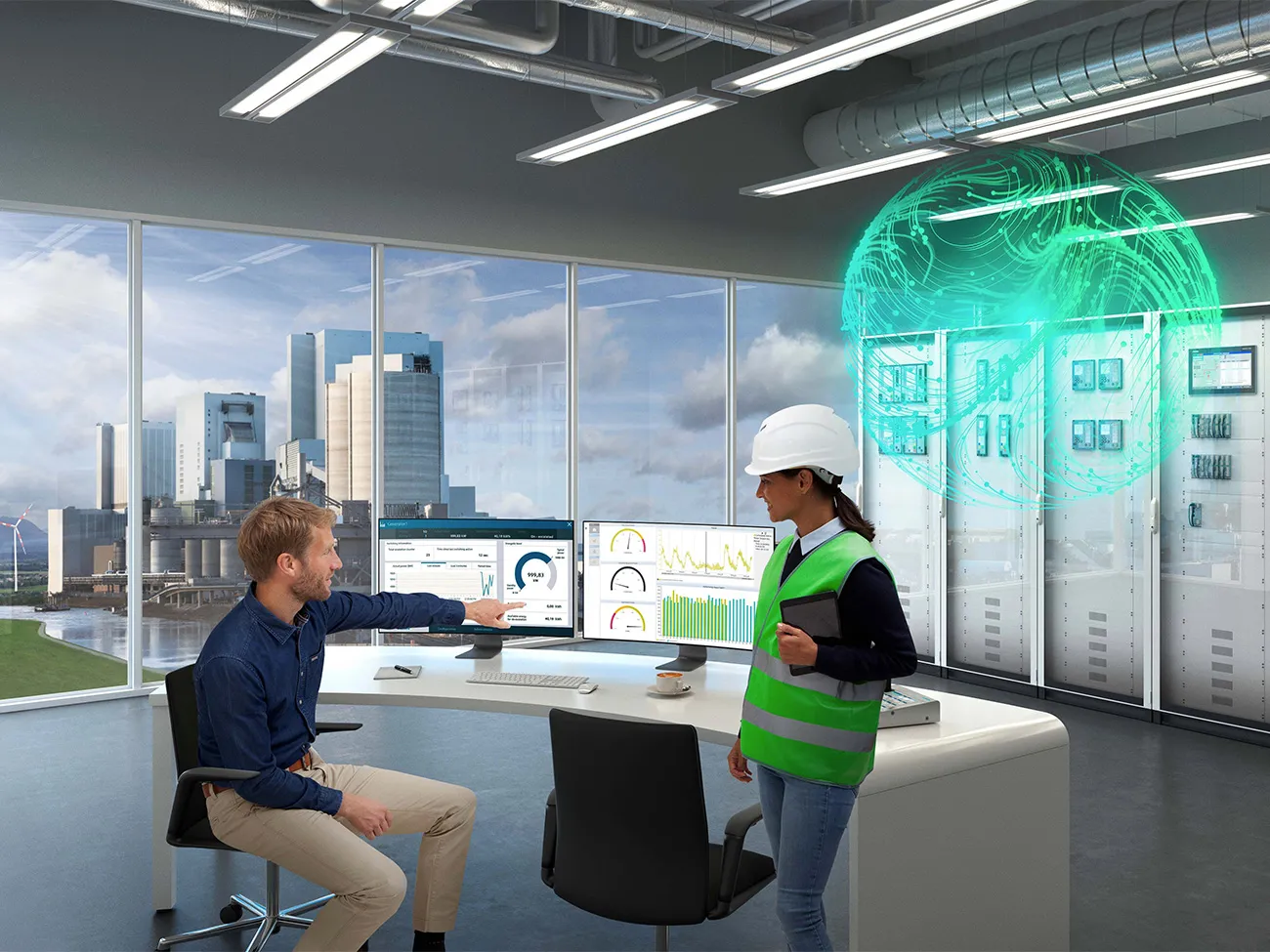
More efficient workflows. Greater comfort for staff and patients alike. Greater use of renewable energy, without compromising the stability of the electricity grid. And all while cutting costs. It can all be achieved by making healthcare facilities smart through digitalisation and automation.
Imagine you are a patient about to spend a few days in a smart hospital. What would your stay be like? It starts at home. You book an appointment online and specify your room and meal preferences at the same time. Once you arrive, an app guides you to the right parking space and the correct room in the building, while medical staff are notified of your arrival. If you are staying in a room, you can adjust the temperature and lighting yourself and check your schedule at any time. Convenient and comfortable!
This example alone shows how digitalising workflows improves both the efficiency of care delivery and patient comfort, enhancing the patient experience. It also reduces the risk of infection, a more crucial consideration than ever, since you never have to wait for long in a crowded waiting room. Patient flows are managed optimally.

Download the white paper
‘Smart hospital concept’ and discover how smart hospitals offer a vision for optimising operational performance.
Entirely achievable today
To make the scenario above a reality, a healthcare facility’s infrastructure must be able to respond intelligently to events. This requires sensors that collect big data and solutions that analyse it. It also requires all these systems to be integrated into a single building management platform, such as Siemens’ Desigo CC. This is the essential foundation of a smart hospital.
Still a vision of the future? Perhaps, but we are already well on our way. Scan the QR code accompanying this article to discover Sint-Maarten Ziekenhuis in Mechelen. Or scan the other QR code to find out more about the new S-gebouw, an extension of the A.S.Z. Aalst main campus. Smart Siemens solutions for video surveillance, access control, fire safety, HVAC, … work seamlessly together through Desigo CC. The technology creates an environment where patients can recover as well as possible, with the best support from their healthcare providers.

More sustainable energy use, too
A smart hospital does more than support patients and healthcare providers. Its technology also helps care for the planet… and cut energy costs safely. And that is certainly necessary. Hospitals are under enormous cost pressure, and healthcare accounts for 4.5 to 5% of the national carbon footprint in OECD countries, China and India, according to a study by the Potsdam Institute for Climate Impact. Hospitals consume as much as 2.5 times more energy than a commercial building of the same size.
To reduce their CO2 emissions and energy costs, healthcare facilities are installing photovoltaic panels and electric vehicle charging systems, …. These measures certainly help, but they must not put the hospital’s power supply at risk when the panels generate less electricity or more electric vehicles are being charged.

Smarter for greater sustainability and safety
Here, too, smart technology provides the necessary assurance. Smart hospitals have microgrids, another Siemens technology, that enable them to manage energy production and storage locally. During the hours when the hospital uses the most energy, the microgrids feed more self-generated electricity into the healthcare facility’s grid. This keeps purchased energy consumption within the limits of the applicable preferential tariff, where relevant, helping the hospital cut its energy costs all year round, including at peak times. At the same time, microgrids ensure that critical parts of the facility continue to receive power if backup systems fail. They then draw on stored renewable energy. The microgrids are also configured to self-heal. They isolate grid faults so they do not spread throughout the healthcare facility.

The ideal care environment, with maximum use of renewable energy
The technology in smart hospitals therefore does more than create the ideal environment for efficient, high-quality care. It also helps reduce the carbon footprint and energy costs, while continuously stabilising the hospital’s electricity grid and increasing its resilience for greater safety. Discover the Siemens solutions that make all this possible at www.siemens.be/smarthospitals.
A business enquiry for Siemens? Get in touch
Companies in this story

Keep following this
Get an email when a new story is published. No account needed.
- ThemeSustainable healthcare buildings
- SubjectGeneral
- CompanySiemens







