











Sustainability in healthcare
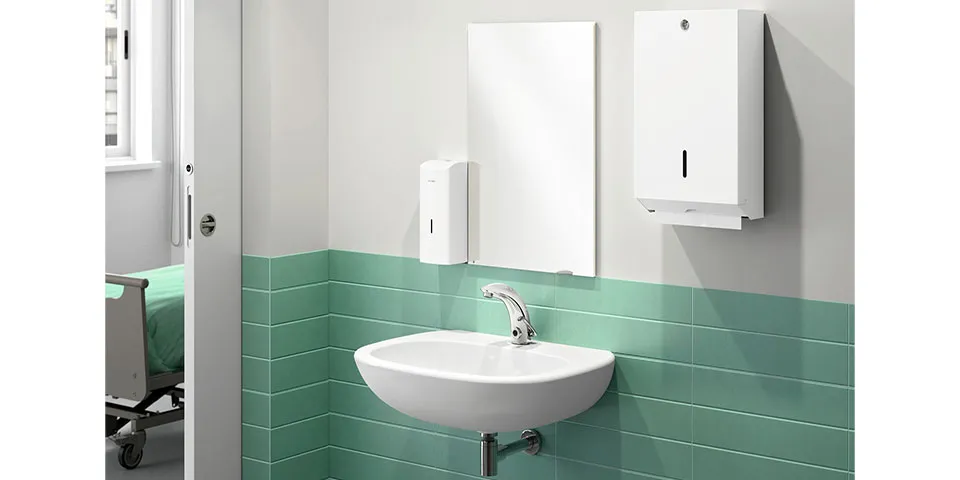
Hospitals and healthcare institutions also face environmental and economic challenges, such as reducing water consumption. The right product can save up to 90% of water just during handwashing, while also preventing energy waste.
Specialist taps curb water waste
Applying strict hand-hygiene rules in patient care and private areas can greatly reduce the risk of bacterial transmission. Naturally, the necessary facilities must be planned, tailored to the needs of surgeons, doctors and care staff.
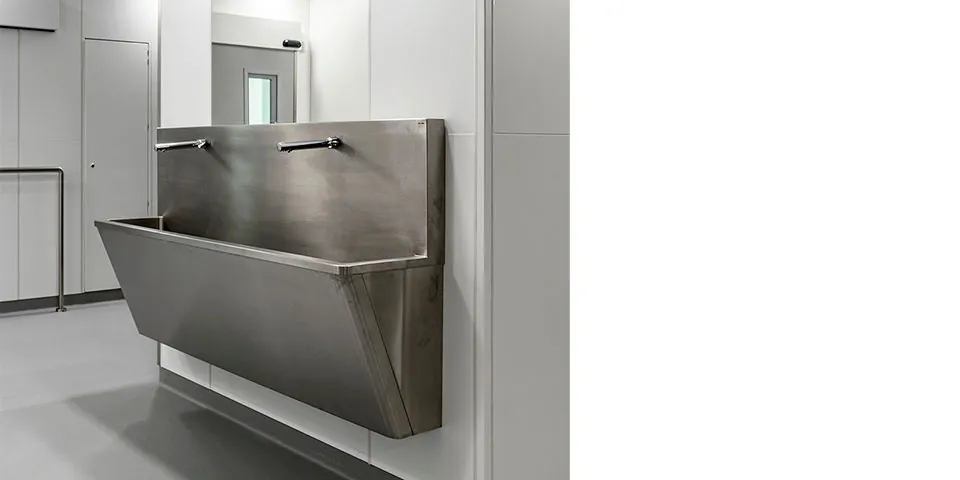
The various handwashing stations are used intensively, meaning the taps are running almost constantly. Limiting water consumption is therefore essential. Choosing basin or sink taps with a flow rate set to 4 or 5 litres per minute can save 45% of water, without compromising comfort or effectiveness. In addition, electronic taps with a periodic flushing function prevent water stagnation and, consequently, bacterial growth. An automatic flush is activated every 24 hours after the tap was last used and runs for 60 seconds. The tap also shuts off automatically when hands are removed from the detection zone and has a low flow rate of 3 litres per minute at 3 bar. Users can therefore wet their hands, apply soap, and wash and rinse their hands as required for surgical hand preparation without the tap running continuously. With this type of electronic tap, water consumption falls to 0.6 litres per use, a reduction of almost 90%.
Healthcare update
‘There is interest in isolation gowns from non-COVID care too’ The need for protective equipment on all COVID-19 wards and in the emergency department called for swift action early in the pandemic. Within a day, the Albert Schweitzer ziekenhuis had approved the purchase of reusable isolation gowns from VP Medicals. Anja Vroon (Procurement) and her colleague Nelleke Visser (Infection Prevention) discuss not only the process, but also comfort, financial benefits and environmental gains.
“An email from Bravis Ziekenhuis and a newspaper article picked up by our Business Manager for Medical Care Support, Deni Kraus, paved the way for a sample of the reusable isolation gowns,” Vroon recalls. Naturally, the need to act quickly did not come at the expense of due diligence. Visser says: “We took a close look at the quality of the material and its resistance to splashes. We also consulted colleagues at Bravis Ziekenhuis in Roosendaal.”
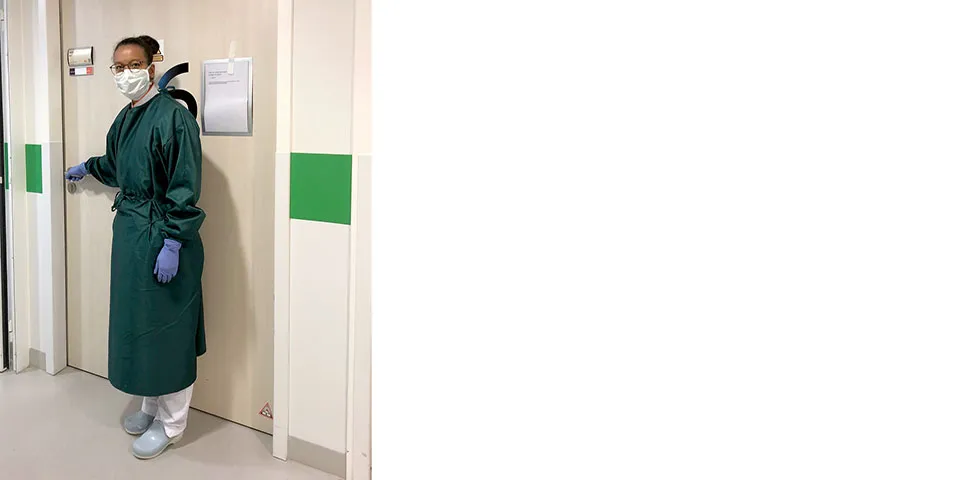
Deni Kraus, who had been given authority by the Executive Board to make decisions during the pandemic, quickly gave the go-ahead for the purchase of 4,000 green isolation gowns. Vroon says the gowns may look heavy, but are extremely comfortable for everyday use. For now, they are being used on all COVID-19 wards and in the emergency department, but Vroon has already sensed interest from non-COVID care. “From nurses and doctors alike.” Vroon and Visser think it would be a great idea to use the gowns more widely. Vroon says: “They are better quality than disposable gowns. They offer better protection and, just as importantly, generate less waste. That makes the isolation gowns sustainable.” Visser adds that the gowns are back from the regional laundry within 24 hours and can therefore be put back into use quickly.
Albert Schweitzer ziekenhuis is based in Dordrecht, Sliedrecht and Zwijndrecht.
Question about this story? Ask your question
Keep following this
Get an email when a new story is published. No account needed.
- ThemeSustainable healthcare buildings
- SubjectGeneral







