Building healthcare with technology that understands people
Text Universiteit Twente en Maya Debie Beeld Universiteit Twente en Fokke Eenhoorn
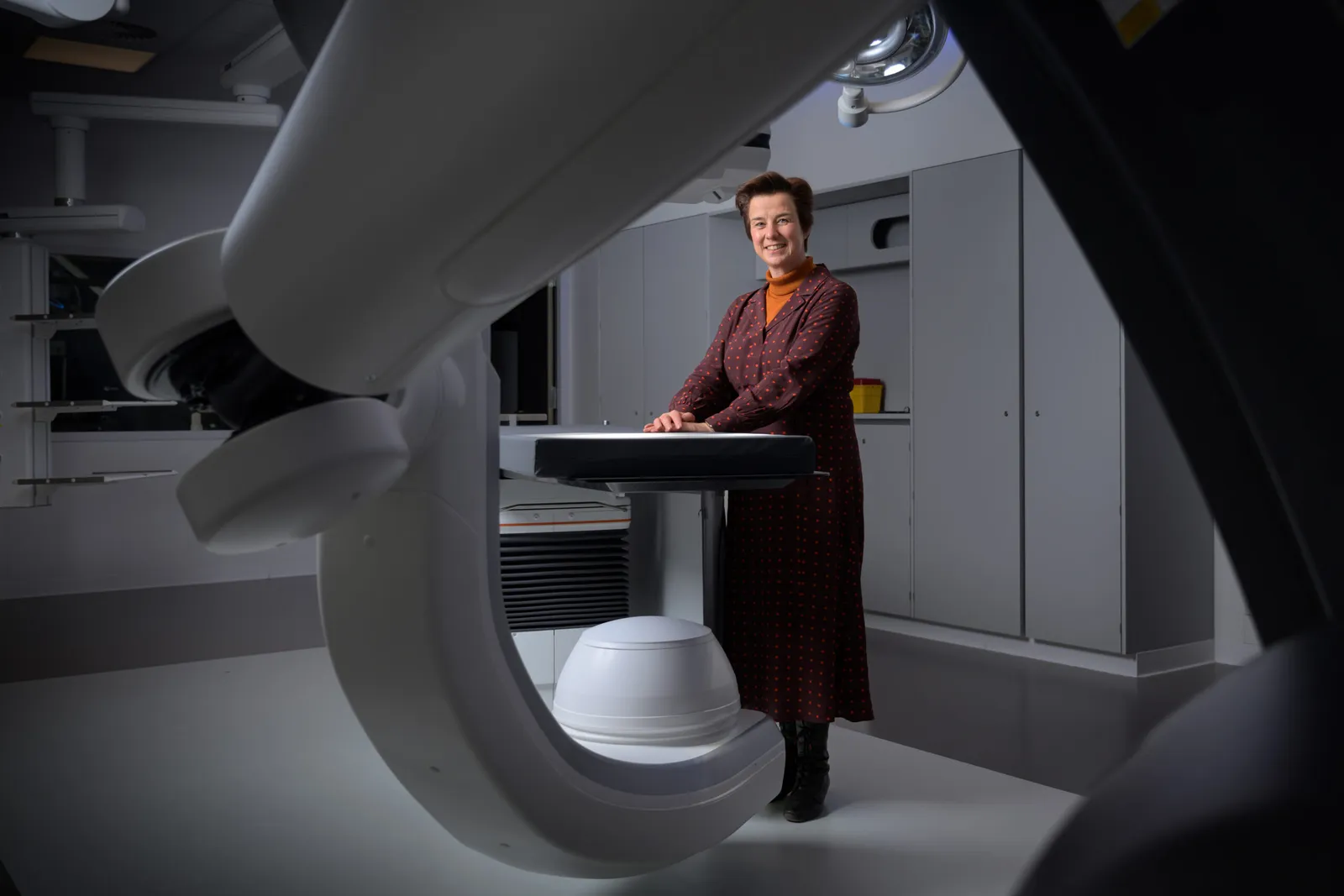
Healthcare in the Netherlands is at a turning point. Growing staff shortages, rising costs and increasing demand for care are putting the system under pressure and pushing us towards ‘code black’. At the same time, this crisis offers a unique opportunity to fundamentally reorganise healthcare. But this can only be done together. This is one reason why TechMed professors Maroeska Rovers and Jouke Tamsma are delivering their inaugural lectures jointly.
We are at the start of a new era in healthcare. Technological innovations are changing the way we deliver care. As Professor of ‘Evidence-Based Medical Technology and Innovation’, Rovers is working to address the enormous challenges facing the healthcare sector, which we cannot ignore. “At present, one in six people works in healthcare. If we carry on as we are, that will be one in three,” she says. As Professor of ‘Principles of Technical Medicine in Clinical Practice’, Tamsma focuses on the link with education and medical practice. “Technical medicine leads to more effective, safer, more efficient and more people-centred practice,” he stresses. “Technology should not only do what we want, but also ‘understand’ what we need.”
The Delta Works of healthcare
The professors use the Delta Works, the Netherlands’ most pioneering innovation, as a metaphor for this large-scale undertaking. In the years after the North Sea flood of 1953, the Netherlands united to build an impenetrable flood defence system. “An entirely new healthcare system could be just as forward-thinking an innovation. As then, all parties must come together to fight a common enemy,” says Rovers. Today, the enemy is not water, but shortages of staff and resources, changing demand for care, inequality of opportunity, climate change and the role of big tech. As then, these problems require a collective approach in which government, knowledge institutions, industry and healthcare providers join forces.
An opportunity for regional care networks
But before we can tackle this, we need to be willing to ask ourselves some searching questions. “Are we prepared to entrust care to AI?” asks Rovers. “If AI does something better than a person, that part of the work can be handed over. Healthcare professionals will then have more time to listen to patients and answer their questions.” Rovers also asks how we can keep healthcare manageable. “By 2040, 60% of people in the Netherlands will have a chronic illness. That will require decisions about which care to offer and which not to, and how to provide it.” She therefore predicts that hospitals in 2040 will look very different from today. They will focus even more on highly technological specialist care, and may also be smaller.
If hospitals become smaller and provide only the most complex care, patients will go home much earlier or be transferred to a facility outside the hospital. This also creates opportunities for regional care networks. Tamsma says: “Technology that understands people, such as remote care systems, increases the capacity of regional care networks. And this can be achieved without compromising the safety or quality of care.” In the best-case scenario, the quality of care will even improve.
Technology that understands people
Many things are changing that we are not yet aware of. That is why we need to ensure that everyone understands both technology and healthcare. “And you cannot afford to be left behind, because your health is at stake,” says Tamsma. To make technology understandable to everyone, technical physicians could do much more work outside hospitals.
Technical medicine is often seen today in 3D technology and intensive care. ‘How can you get someone who is difficult to wean off a ventilator off the ventilator?’ is one question technical physicians might tackle. Technical medicine also plays a crucial role in medical imaging and radiology, as well as in orthopaedic procedures. But technical physicians can also make important contributions in areas such as elderly care. They can investigate how to assess signals from sensors around vulnerable older people effectively with fewer staff. This could help us address the staff shortage.
Joint inaugural lecture
This joint inaugural lecture highlights that we must not shy away from the challenges facing healthcare. Now, in particular, there is an opportunity to create a flexible, agile system in which technology understands and supports people. Rovers and Tamsma call on all stakeholders to play their part: “With the help of technical medicine and together with the entire healthcare sector, we will make care more available, accessible, safer and more sustainable. Together, we are building the Delta Works of healthcare, ready for tomorrow’s challenges.”
About Prof. Dr. Maroeska Rovers
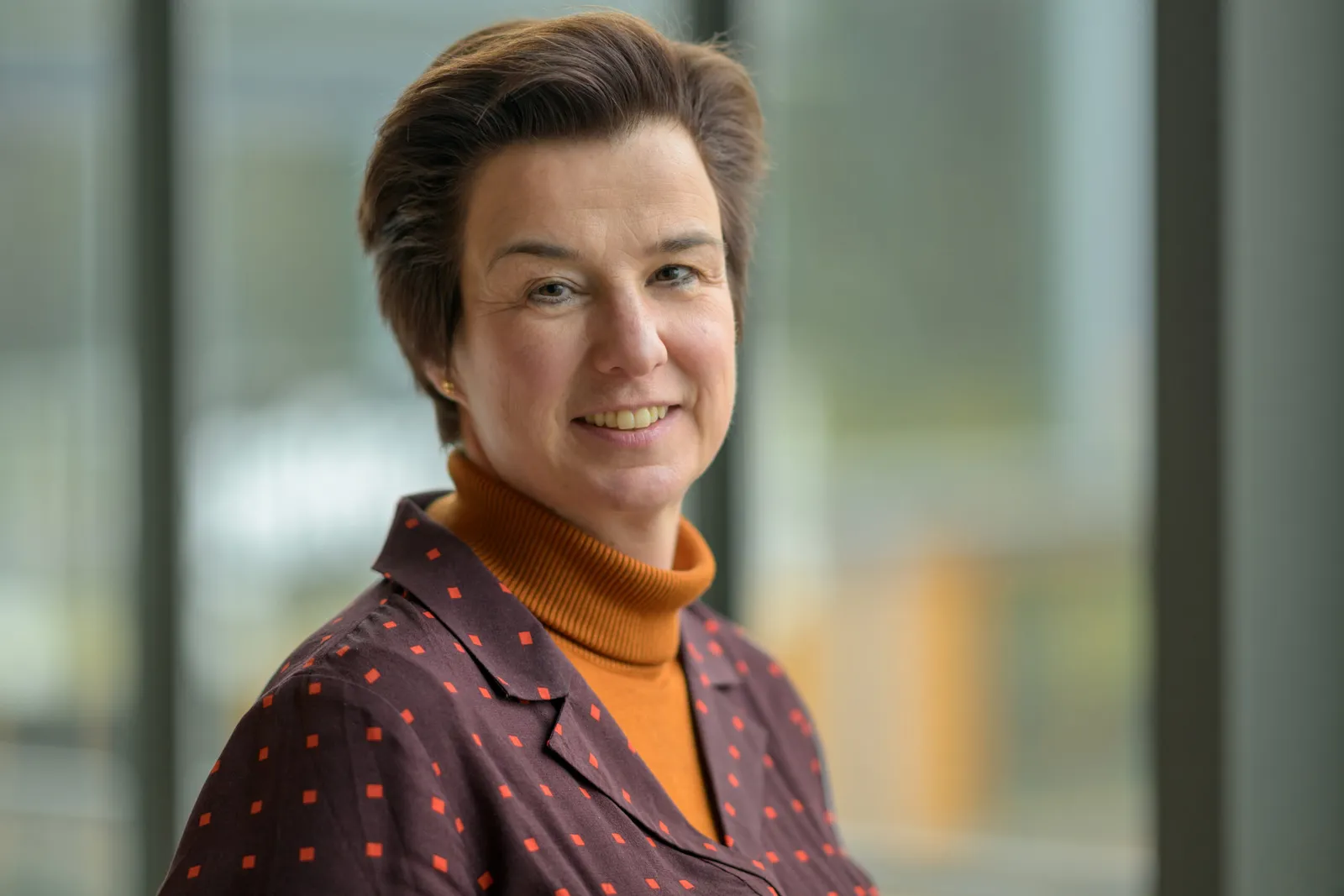
Since mid-2022, Prof. Dr. Maroeska Rovers has been Scientific Director of the Technical Medical Centre, a leading institute that makes an impact on healthcare through research, innovation and education. Rovers is also Professor of Medical Technology & Innovation at Radboudumc in Nijmegen and a member of, among others, the KNAW, NAE and KHMW. With this inaugural lecture, she formally takes up the position of Professor of Evidence-Based Medical Technology and Innovation (Faculty of BMS).
About Jouke Tamsma
Jouke Tamsma has been Medical Director of the Technical Medical Centre since 2019. Since 2000, he has worked as a consultant in vascular medicine at LUMC, where he became Director of Medical Affairs in 2010. With this inaugural lecture, Tamsma formally takes up the position of Professor of Principles of Technical Medicine in Clinical Practice (Faculty of TNW).
Question about this story? Ask your question
Keep following this
Get an email when a new story is published. No account needed.
- SubjectZorgTech