Acoustics? In a healthcare building?
When we think about acoustics, we often think of concert halls, music venues or large, reverberant churches. These are spaces where the acoustic environment has received a lot of attention or is particularly noticeable. But what about the acoustic environment in healthcare? A patient room or corridor, the waiting room at a GP surgery or the communal lounge in a care home? Do we pay enough attention to acoustics there, or is it not that important? Let’s consider the following scenarios….
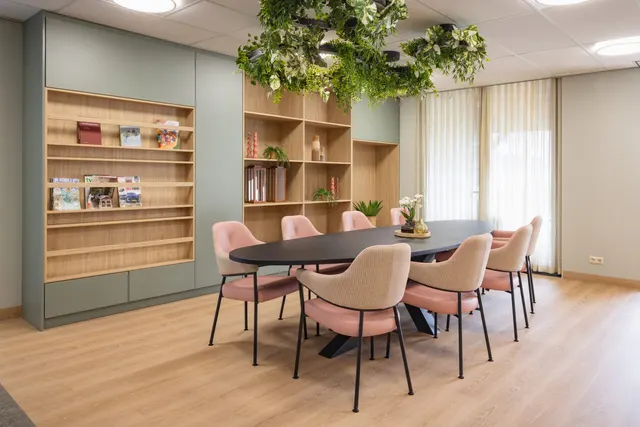
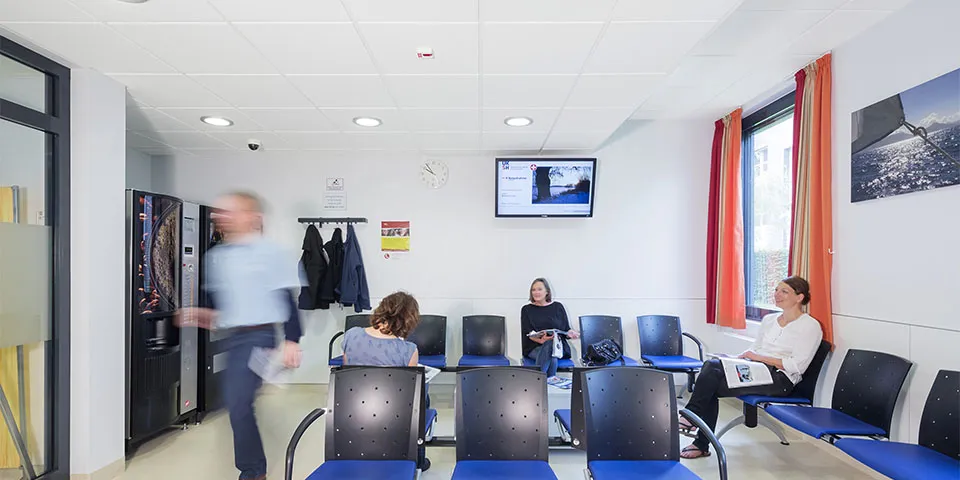
You can put it off no longer and have to call the GP to make an appointment, because that nasty condition isn’t going to go away on its own. The receptionist answers and notes down your complaint: “Oh, that sounds painful, Mrs Janssen. An abscess like that can really hurt!” Meanwhile, you could sink through the floor, because you know from experience that everyone in the waiting room will have heard the conversation. Even when you have to pick up a prescription from the same receptionist after seeing the doctor, you wish you could whisper!
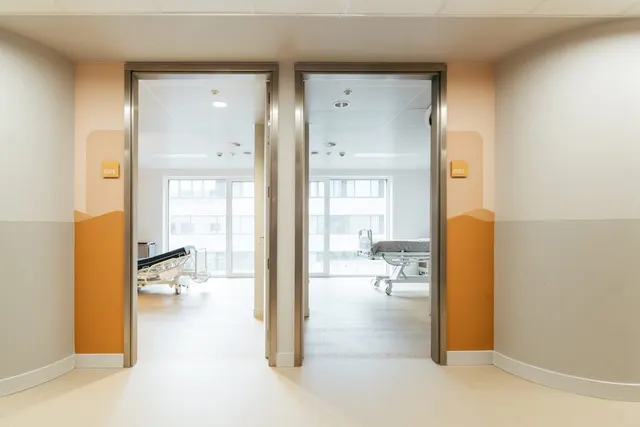
Unfortunately, you don’t always have a choice of a single room when you are admitted to hospital. Many hospitals still have two- or even four-bed rooms. That means you have to create privacy for yourself by drawing a curtain around your bed, at least giving you visual privacy. But that won’t keep your private phone calls, or personal questions from nursing staff, to yourself: everyone in the room can hear! The reverse can also be a problem when you are disturbed by others. Not only your fellow patients, but also all the activity in the corridor can keep you awake and distract you. And yet a good night’s sleep is so important for a full recovery.
Research also demonstrates the importance of good acoustics
Several factors affect the acoustic environment. One is staff behaviour. A conversation, footsteps or a door opening in the middle of the night can unintentionally disrupt sleep. Approaches to patient privacy also vary considerably. Examples from the US have shown that staff guidance or a noise policy can make a big difference. Recent Dutch research has also found that staff are the biggest source of noise on hospital wards.
(Image: Hans Georg Esch)
Tackling the problem at source is the first step, but it is not enough. Noise is unavoidable, whether it comes from people or equipment. How sound behaves in a space, its room acoustics, depends on the shape and height of the space and the finishes of its floors, walls and ceilings. By applying acoustic knowledge intelligently to every design decision, we can create an environment that supports its intended function.
People, activity and space
By asking who a space is being designed for, what activities will take place there and what characteristics the space offers, we can set requirements for its acoustic parameters. In some cases, these requirements are more stringent, for example when the space is intended for older people with dementia and hearing loss. In that case, we need to consider factors such as speech intelligibility and noise levels. In a waiting room for a gynaecology outpatient clinic, privacy is more important, and it is essential to limit speech intelligibility over longer distances.
What can be done?
For clients and managers of healthcare organisations, the most important thing is to recognise the value of good acoustics. Work with an adviser to include acoustic requirements in the project brief for building and refurbishment projects, and make sure an acoustic consultant is involved. If acoustic problems only come to light after handover and a solution then has to be found, this can lead to high costs and wasted time. Organisations can also address the issue by, for example, drawing up a noise policy with rules of conduct for staff.
The right quantity and effective positioning of sound-absorbing and sound-reflecting materials result in good room acoustics. Ultimately, acoustic comfort is determined by the interaction between people, the space and the activity.
Question about this story? Ask your question
Keep following this
Get an email when a new story is published. No account needed.
- ThemeHealing environments
- SubjectInteriors