‘Putting historic OCMW land to work for local food production’
Text Koen Mortelmans
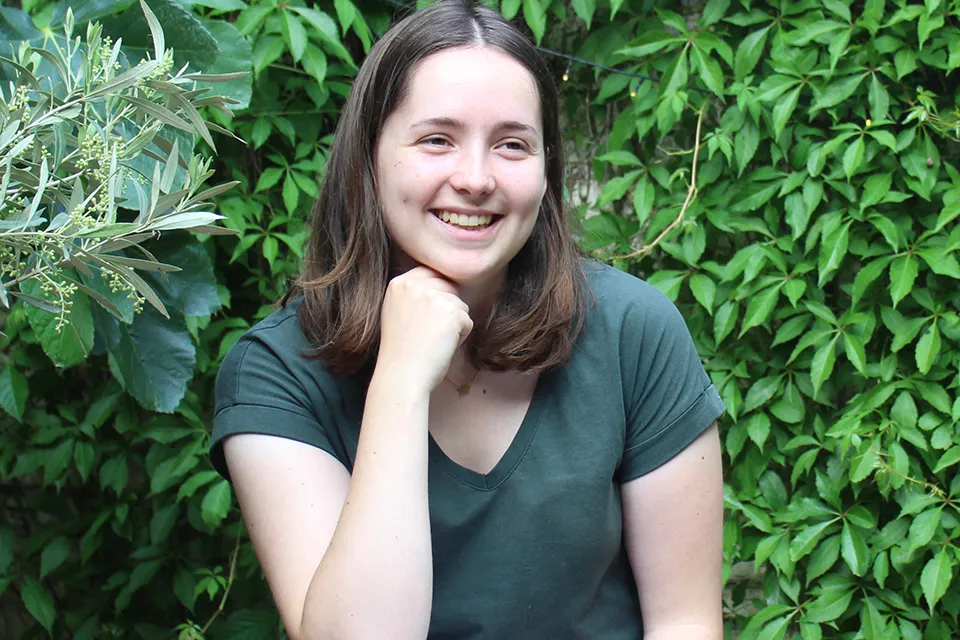
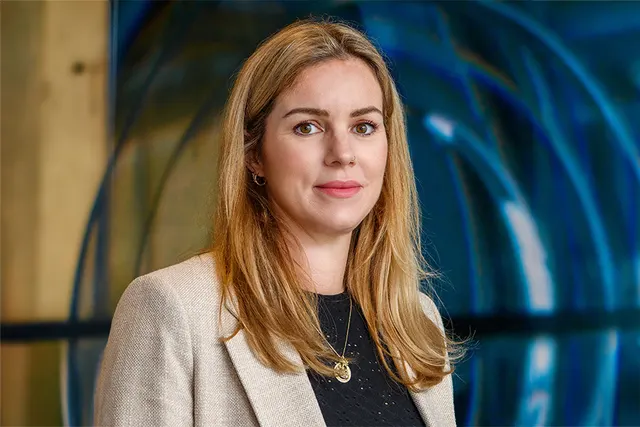
Fien Vansevenant: Master’s in Urbanism and Spatial Planning, Ghent University (2020-2023) Urban designer, Arcadis (2024-)
Last year, Fien Vansevenant won the Flemish Future Proef Award for her master’s thesis at the Faculty of Engineering and Architecture at Ghent University. In her thesis, she explored how farmland owned by the Public Centre for Social Welfare (OCMW) could contribute to the food supply of nearby care institutions. The jury recognised her holistic approach and strong opinions.
The Future Proef Award recognises final-year projects that promote sustainability. “Ghent’s OCMW agricultural estate has grown since the Middle Ages through numerous bequests and donations for the care of the poor and the elderly. I explored what role the historic land owned by Ghent’s OCMW could play today in supplying food to nearby care institutions. Over the years, that connection had been lost.”
A crucial role
“For hundreds of years, OCMW land has provided cities such as Ghent with an important buffer in times of crisis, a crucial reserve of food or other raw materials, such as timber. But in recent years, public land has increasingly been sold. Ghent, too, sold land to fund social objectives. The city council has since pressed pause on this. Selling the land risks putting local food production out of sight. The land’s current market value seems to blind various authorities to its future value and to the need for local, ecological food production.”
Future scenarios
“To find out what these plots of farmland could mean for the future, I developed several sustainable future scenarios, from social and ecological perspectives. They offer reasons to preserve the land. One such scenario could be the development of a ‘Zorgderij’, a farm dedicated to elderly care.”
Local food production
“Although older people are more susceptible to malnutrition, figures show that this group often does not receive enough healthy food. On top of that, care homes are grappling with huge amounts of food waste because of strict food restrictions. This unfortunate combination prompted care provider Zorgband Leie & Schelde (L&S) to take part in exploring a sustainable solution. One option is a community-building food strategy in which local farmers produce food for older people near care centres. AZ Zeno in Knokke has already shown that it can work. The hospital has an ongoing agreement with a local agroecological farmer. When I asked catering chef Pieter De Smet whether this kind of partnership could work on a larger scale, he enthusiastically said ‘yes’.”
A complex situation
“Leie & Schelde’s care landscape is highly diverse, both in terms of infrastructure and community-building. This offers many opportunities to rethink the care landscape. Outsourcing care in a green setting, as a complement to regular care activities, could already open up new possibilities. Town centres and communities can help maintain social connections within the neighbourhood. In addition, the range of kitchen facilities offers scope for creativity in distributing and processing locally grown food. We must also remember the farmers who manage the land. We want to encourage them to adopt agroecological farming practices.”
“Building care campuses entails the partial destruction of the surrounding landscape. Anchoring food production in the area could help restore it. The fact that the umbrella organisation for care provision also owns the land makes this easier. Remember that most of the land was originally donated to the organisation specifically to support the provision of care. Concrete agreements between farmers, care institutions and other stakeholders could make stable, long-term bulk production possible. The range of kitchen facilities offers various possibilities, such as a ‘food library’ of pre-packaged frozen ingredients, modelled on AZ Zeno.”
Barriers
“I want to find out whether a different perspective on the land could spark debate about keeping it rather than selling it, and taking alternative futures into account. Many barriers must be overcome before the Zorgderij can become a success, particularly barriers over which L&S itself has little influence. That makes partnerships crucial. AZ Zeno has already shown that an enthusiastic chef and a motivated management team and staff can bring about significant change.”
Question about this story? Ask your question
Keep following this
Get an email when a new story is published. No account needed.
- SubjectInterviews & columns