Residential care & nursing homes
Fire safety in residential care homes can be improved easily
Safety has been compromised several times in Dutch residential care homes over recent months. Since December last year, several people have even died in fires. Residents who smoke or are forgetful often appear to be the cause. Unless action is taken, the number of older people who die in fires will rise sharply in the coming years. René Hagen, Professor of Fire Safety at the Fire Service Academy of the Institute for Safety, recently said as much on the TV programme ‘Tijd voor Meldpunt!’ on Omroep Max. According to Jasper Coppes, healthcare and technology specialist at Leertouwer, this risk can be easily reduced with smart home automation solutions.
Nine older people have already died in fires in 2015. A fire in a retirement apartment block in Nijmegen on 20 February claimed the lives of four very elderly people. In March, a resident died when a major fire broke out in a bedroom on the fifth floor of care home De Tollekamp in Rhenen. On average, 14 people aged 65 and over die in fires each year, a figure that, based on current statistics, the Netherlands is on course to reach easily in 2015 too. Older people are almost three times as likely as younger people to become victims of fire.
Smart home automation
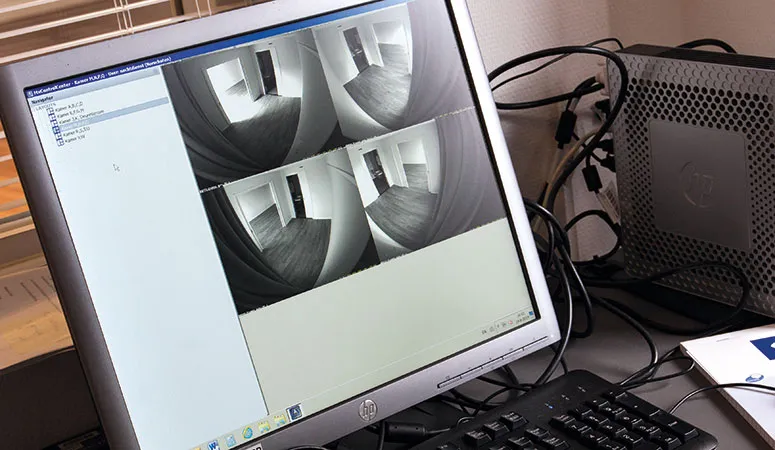
Drawing on his knowledge and expertise, Coppes advises residential care homes on the smart use of technology. He works as a consultant for Leertouwer in Barneveld and is a leader in care home automation. Coppes says: “In recent years, we have equipped a number of residential care homes with care automation systems. These include alert systems for residents with dementia, for example, smoke detection systems, and smart sensors and lighting. Fire detection is an important part of our home automation solution. Smart alert systems notify staff at residential care homes when smoke levels become too high. Put simply, home automation improves residents’ quality of life and safety. At the same time, it gives them more privacy, because a care worker only comes when a resident really needs one. This reduces the pressure on staff, and in many cases the night shift can be staffed with fewer people.”
Safety
Safety is particularly important for a vulnerable group. Older people may find it harder to get themselves to safety if, for example, a fire breaks out. Smart home automation provides systems that can be vital in such emergencies. For example, smart sensors can detect whether a resident is still in their room. These sensors can also be configured for each individual in consultation with their treating doctor. In this way, home automation takes account of each resident’s individual needs in every situation, without monitoring them unnecessarily.
Privacy
The ability to programme sensors differently for each resident and situation is important, particularly when it comes to privacy. “In the event of a fire, for example, the system needs to provide visibility into every room, but normally not every resident needs to be monitored continuously,” says Coppes. “That is why we always choose flexible solutions that can be set up for each individual. For one resident, a staff member may receive an alert if the person gets out of bed at night, while another resident is free to do so. If you know that a resident occasionally lights a cigar, cigarette or candle in their room, you can use technology to address this too. This enables staff to respond quickly and prevent a fire.”
Older people living independently
Older people in residential care homes are, of course, an important group. But given the government’s policy of enabling older people to live at home for as long as possible, the Netherlands must not forget older people who live independently either. Home automation makes this solution simple and flexible: connect the fire alarm system in a (retirement) home to the system in a neighbour’s home. Important alerts can now be sent automatically to a person’s social network, for example by email, WhatsApp and Facebook. In an emergency, looking out for one another can thus take on a life-saving dimension.
Text: Jasper Coppes
Photo: Leertouwer
Question about this story? Ask your question
Keep following this
Get an email when a new story is published. No account needed.
- ThemeSafe and reliable healthcare buildings
- SubjectResidential care & nursing homes