











Architectural practices see a modest recovery, but slow permitting and stagnation among developers are holding back output

Four in ten architectural practices rate market conditions as good, and half as reasonable. The picture is therefore stable and moderately positive compared with the spring. This is according to the BNA Economic Survey autumn 2025, conducted by Panteia on behalf of the Royal Institute of Dutch Architects (BNA).
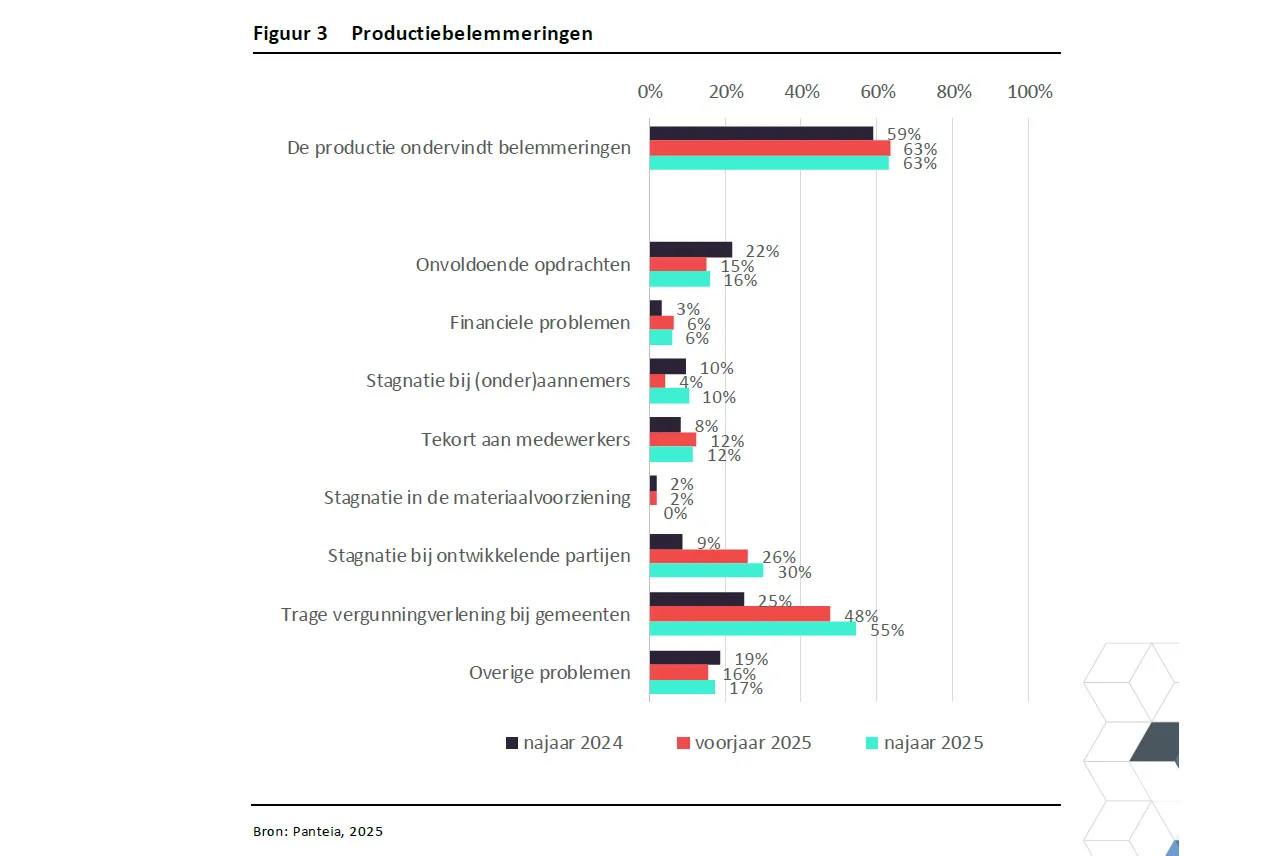
Production trends are mixed: output increased at 27% of practices over the past three months, while an equal proportion reported a decline. At the same time, almost two thirds of practices (63%) are experiencing constraints on production. This figure has remained virtually unchanged since spring 2022. Slow permitting by local authorities is cited most often as a bottleneck, followed by stagnation among developers.
Workload has edged down
The average workload this autumn stands at 4.9 months, slightly below the 5.3 months recorded in the spring. One fifth of practices rate their workload as high, while 29% consider it low.
Positive expectations
Looking ahead, the outlook is cautiously optimistic. For the fourth quarter, 30% of practices expect an increase in new commissions, while 38% forecast growth for 2025 as a whole compared with the previous year. This continues the upward trend in expectations that has been evident since 2023.
Revenue expectations are also moving in the same direction: 39% of practices expect revenue to rise in 2025 as a whole, compared with 20% that forecast a decline relative to 2024. In addition, almost 40% of practices expect to charge higher fees, while none expect fees to fall. Staffing levels are expected to remain largely stable, although almost a fifth of practices anticipate growth.
Transformation and sustainability are gaining ground
On balance, practices expect the importance of all types of commissions to increase. Transformation, renovation, reuse and sustainability are mentioned particularly widely. Clients such as property developers are most often seen as a growth market, while half of practices do not actively work for clients in the healthcare and education sectors.
By market sector, the outlook is most positive for housing and mixed-use projects, traditionally sectors in which many practices are active.
Regulatory burden is growing
The survey also examined the regulatory burden, in addition to economic conditions. The greatest obstacles are encountered in permitting, environmental regulations and objection procedures. Administrative costs are high: more than six in ten practices spend 10% or more of their operations on meeting obligations. At almost a quarter of practices, the figure is 20% or more. Smaller practices are particularly heavily burdened. A large majority (71%) expect the regulatory burden to increase further over the next two years.
Tenders: participation concentrated among larger practices
The survey also shows that four in ten practices take part in European or Dutch tenders. The proportion varies considerably by size: 81% of practices with 5 FTEs or more participate, compared with just 22% of smaller practices. The main reasons for not participating, or for no longer doing so, are a lack of capacity and high participation requirements and costs. On average, 8% of revenue comes from tenders; the share is considerably higher among larger practices (16%) than smaller ones (5%).
Question about this story? Ask your question
Keep following this
Get an email when a new story is published. No account needed.
- ThemeFuture-proofing healthcare estates
- SubjectGeneral







