











Different property for different care?
The healthcare property market is changing. Investors are becoming active in more categories, while institutions are looking for ways to optimise their property portfolios in response to future care needs. Demand for care is growing, as is the pressure to control costs. What can we learn from practice? That was the starting point for Vastgoedjournaal’s Healthcare & Vastgoed conference on 28 January. “New business models can also benefit the public,” says Michel van Schaik, Director of Healthcare at Rabobank.
The investment market ‘coming of age’
An integrated vision for healthcare property is proving increasingly elusive. The separation of housing and care, together with investors entering parts of the cure and care sectors, has led to a wider range of possible solutions. This is both a blessing and a burden, says Roel de Vos, programme director of Nieuw Amphia. The Molengracht site of the Breda hospital has been expanded with 80,000 m² of new property, while the existing buildings are being converted for high-turnover care. Other sites are being disposed of or scaled back to day treatment centres. This development is in line with the efficiency drive at many institutions with multiple sites, but is it possible to plan for the lifetime of a building? “To some extent,” says De Vos. “The older buildings are being renovated with a view to the next 25 to 30 years.” During that period, the need for demolition or conversion will be assessed. “In any case, we want to make space for other operators, so patients do not automatically have to stay in the hospital’s tertiary care facilities. They can receive accessible care elsewhere.”
Conference chair Daan Tettero interviews Willem Jan Hanegraaf of Rijnstate and Hein Uitterhaegen
of Sint Antonius.
Process approach
The process and delivery of Nieuw Amphia have received widespread praise. Key elements include standardised processes through an integrated approach, including facilities management. This made it possible to build three fewer operating theatres than planned by standardising them, while the new build is organised on a multidisciplinary basis around tertiary care specialties. But hospital construction remains bespoke. Ziekenhuis St Jansdal is embarking on a major renovation of its Harderwijk site and is still studying plans for the hospital in Lelystad that it has taken over. Despite the speed of the takeover, prompted by the bankruptcy of owner MC IJsselmeerziekenhuizen, it was well prepared, says Relinde Weil, Chair of the Executive Board. “Things had been unsettled in Lelystad for some time, and we knew the patients. We had already developed ideas before the takeover.” Anita van der Haar, Construction Manager, is now working on conversion plans. The question is whether Lelystad should provide clinical treatment with or without overnight stays. “There are few benchmarks for situations like this. The patients and staff are ‘worth their weight in gold’, and you need to build a framework around them. We have decided to pause for the time being on that front.”
Modular construction
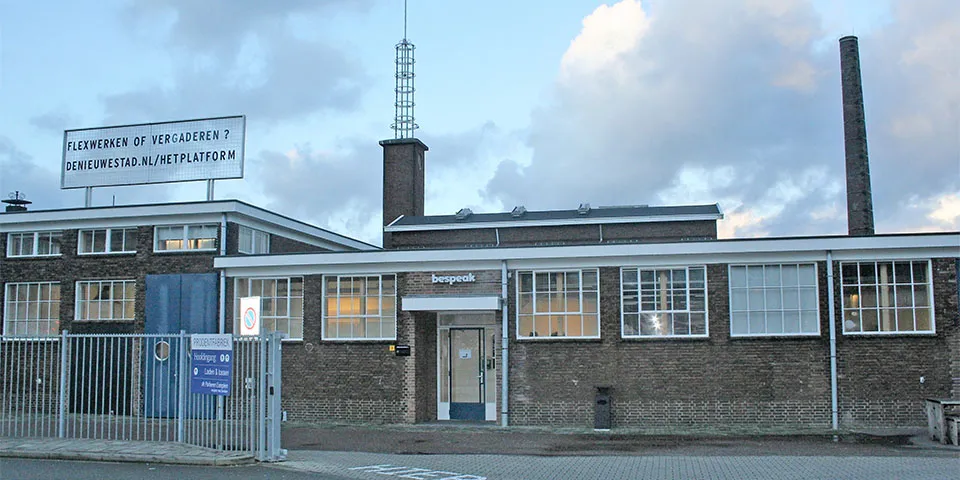
The conference, held at the Prodentfabriek in Amersfoort, clearly focused on hospitals. New business models often come from the market, such as those developed by modular construction companies. A presentation by Jan Snel and its acquisition partner Medexs showed that an operating theatre complex, such as the one at Utrecht’s WKZ, can be expanded in 3 months. “Modular construction is often confused with temporary buildings, but we deliver turnkey projects and always build permanent healthcare facilities to the highest standards, in compliance with the Bouwbesluit,” says Jorrit Janmaat, healthcare advisor at Jan Snel. Dutch regulations allow this approach to development. “It even offers a quality advantage, because we build in controlled conditions. The preliminary process is also shorter than in traditional healthcare construction. We are now receiving enquiries for complete hospital complexes of up to 60,000 m².” “Modular construction can be around 10% cheaper than traditional construction,” adds Jos Lans, business partner at Medexs.
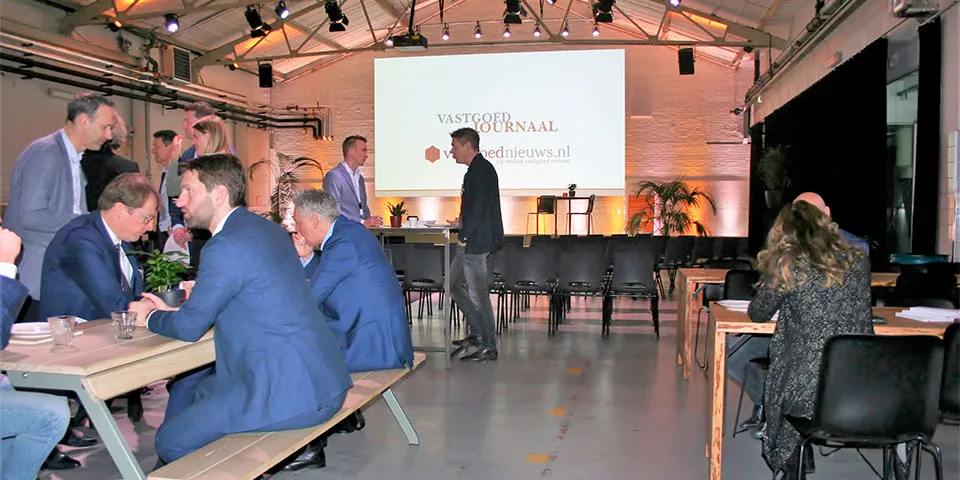
Around 50 people attended the Healthcare & Vastgoed conference
Caught between two stools
Could the answer to the ‘tight fit’ and uncertain horizons lie in financial expertise? Hospitals, however, are holding on to their scope and areas of operation. Conference chair Daan Tettero, associate director of Healthcare at investor CBRE, says the investment market is ‘coming of age’, with more than a billion invested each year, and is increasingly moving into primary and secondary care. “Not in the high-tech areas, but, for example, in health centres, car parks and outpatient clinics.” Rijnstate illustrates this dilemma: it sold an outpatient clinic to investor Cofinimmo while also planning to build a new outpatient clinic in Overbetuwe. Tettero sees no problem: “The proceeds from a sale to an investor go back into the organisation’s coffers and benefit care.” Investors are willing, “but don’t expect high returns from investments in hospitals.” The direction of developments in care is also unclear. “Outpatient care is moving towards primary care,” says Hein Uitterhaegen, Facilities & Property Manager at Sint Antonius Ziekenhuis. But nobody knows whether GPs will move to hospital sites, or outpatient procedures to traditional practices and health centres. “Innovation often leads to difficult discussions about funding silos.” “Collaboration comes before competition,” says Willem Jan Hanegraaf, programme director of construction at Rijnstate.
Digitalisation
And so the challenges overlap. That may sound like a cliché, but the Dutch healthcare market calls for compromise and perhaps patience. Some investors focus on dependable markets, such as Science Parks (including USP and TU Delft). a.s.r. has even made them the focus of a major fund. “Science Parks offer major opportunities for synergies between education, research and business,” says Luc Joosten, Fund Director of a.s.r. Dutch Science Park Fund. The institutions often own the land, and tenants tend to stay put. “There is exceptionally little vacancy at Science Parks.” Michel van Schaik of Rabobank summed up the day on an optimistic note. “I see a range of programmes and a diverse pool of financiers. The healthcare market is less closed than it used to be. The boundaries with other markets are becoming blurred, particularly in housing with care.” The healthcare sector has more and more entrepreneurs and will digitalise in the future using platform technology. “We cannot avoid digitalising non-complex care in particular. It is possible to develop new business models that benefit the public. And when it comes to sustainability investments as part of the energy transition, don’t put them off, bring them forward.”
Een zakelijke vraag aan Jan Snel? Get in touch
Companies in this story

Keep following this
Get an email when a new story is published. No account needed.
- ThemeFuture-proofing healthcare estates
- SubjectGeneral
- CompanyJan Snel
- CompanyMedexs







