











IVVD Healthcare Real Estate Day: ‘Break down the silos, break down the silos, break down the silos’
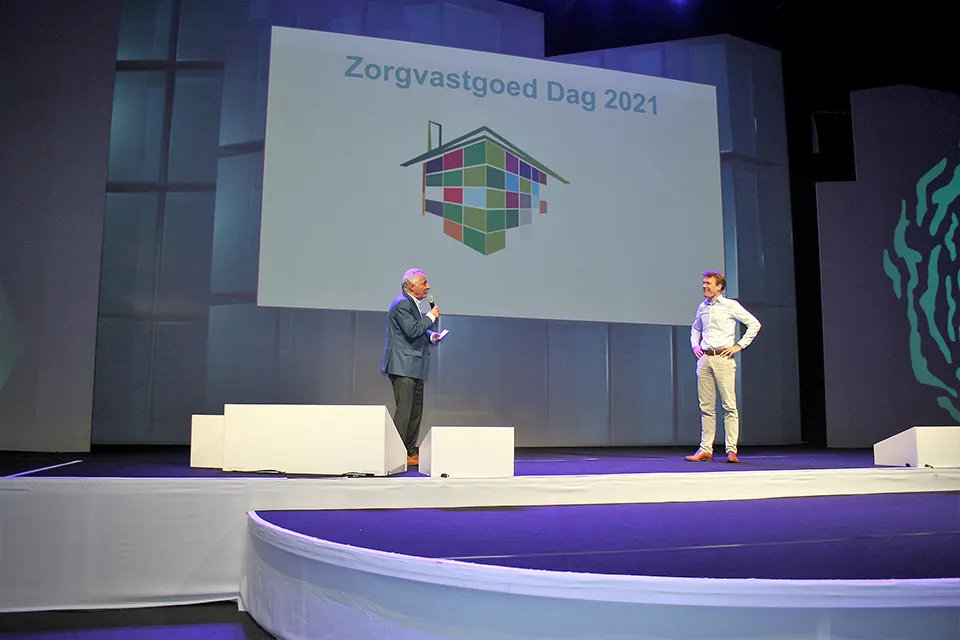
What should have been the theme of the first Healthcare Real Estate Day after a year of lockdown?
Instituut voor Vastgoed & Duurzaamheid IVVD brought together the latest developments in healthcare construction at NBC Nieuwegein (13 September) at an event that, for once, was not about COVID-19, but about breaking through the status quo in the housing market. Across the sector, disability, elderly care and mental health care providers are experimenting with joint development. “Healthcare can no longer do it alone.”
Social cohesion
In recent years, legislation, regulations and financial constraints have tended to hamper healthcare real estate development rather than support it. One example: “Property investors have money, healthcare providers are willing to build, but somewhere along the line things grind to a halt,” was the comment from the audience after Daan Tettero of Syntrus Achmea Real Estate & Finance had spoken. Healthcare investors cannot be accused of failing to think outside the box. Tettero even advocates hospital real estate as an investment, and is not afraid to talk about ‘lower returns’. “We invest pension funds’ money; first and foremost, it has to generate returns, but investing in society is a second requirement.” In such cases, although we are talking about percentage points rather than percentages, the focus is not on the margin, but on the investment over the longer term. Healthcare providers are stable tenants. “There is little tenant turnover in healthcare real estate.”
Groninger Zorgakkoord
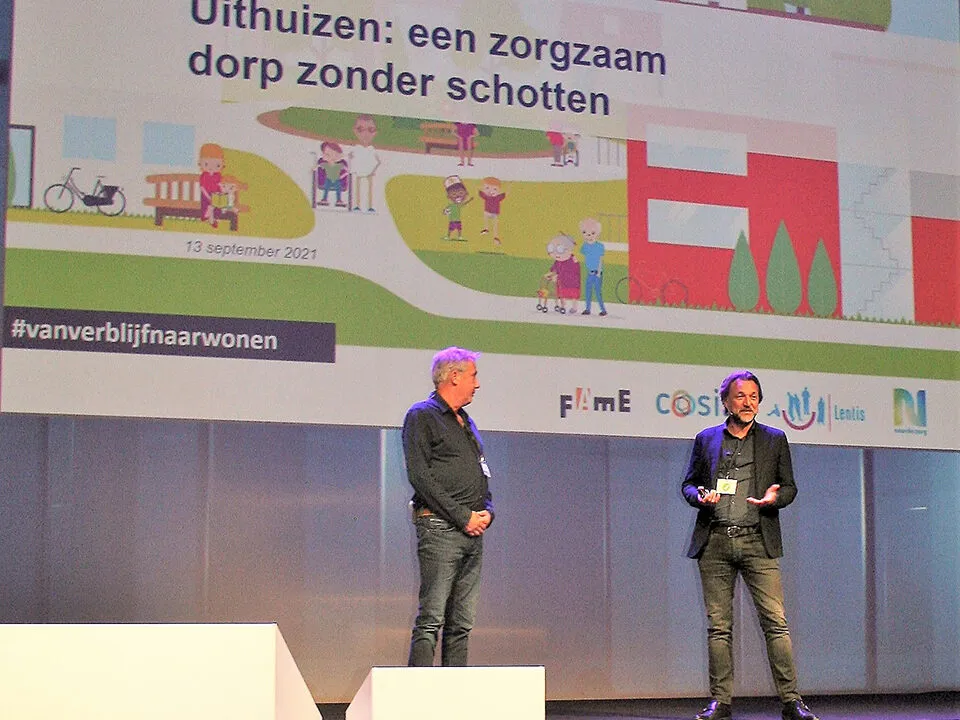
As part of structural investment in Groningen, GGZ Lentiz and bespoke developer Fame Groep are working together on neighbourhood development in Uithuizen, a village with many residents with chronic conditions. Developing projects tailored to clients is difficult but necessary, say Robert Mulder of GGZ Lentiz and Henk Vonk of Fame. “It is experimental, but that is the idea behind the Groninger Zorgakkoord: to forge new alliances.” GGZ Lentiz and Fame are developing property through a limited partnership, with operations managed by a foundation. “We need to help care provision and supported living break free from the system,” says Vonk. “Nor should residential care and independent living be seen as separate forms of housing. A stay becomes a home. Instead of talking about hybrid forms of housing and healthcare real estate, we should see supported living as a niche in the housing market.”
Digital health
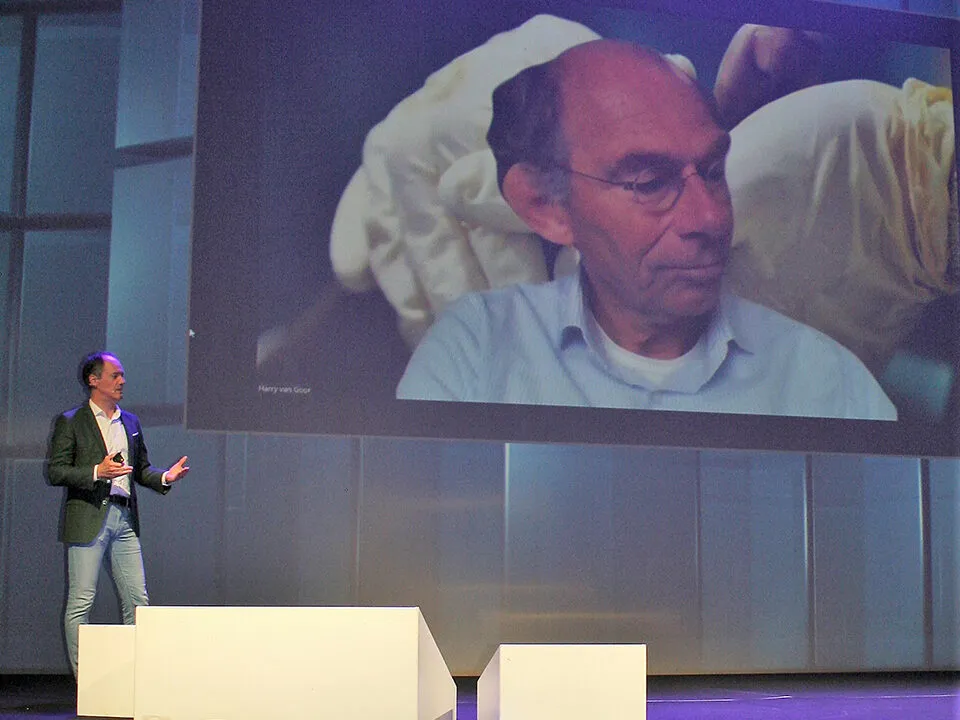
One of the benefits of ‘test beds’ such as those in the Groninger Zorgakkoord (20 organisations) is that they can foster networks of care organisations and developers, says Mulder. “For example, in property development.” In the past, these parties were separated by formidable ‘silos’. Vonk: “Healthcare can no longer do it alone.” Digital healthcare is another development, but by no means a panacea, says Prof. Dr. Harry van Goor of Radboud MC. “Staff shortages are a bigger problem than a lack of money; remote care, including informal care, is a realistic option for the future.” Van Goor even describes ‘digital health’ as a fourth dimension alongside ‘physical, mental & social health’. The innovation researcher gave a presentation with Robert Muijsers of developer Arbol Healthcare Real Estate. “COVID-19 has accelerated digitalisation. Without the digital coordination system used to distribute COVID patients among hospitals in the Netherlands, for example, the recent evacuation of VieCuri MC in Venlo would not have been completed within 24 hours.”
Pleynkwartier
Pleyade, an elderly care organisation with six sites in Arnhem-Zuid among others, has decided to take matters into its own hands as a developer and landowner. Together with the municipality, Pleyade is looking for partners for a neighbourhood development in Arnhem-Zuid (working title Pleynkwartier), which will include space for temporary stays. Creating temporary accommodation for 50 clients (rehabilitation/ELV) is part of a neighbourhood development that meets the aims of the Green Deal and will include both conventional owner-occupied housing and social housing, say Bas Leijser and Remko Meek of Pleyade. The mixed neighbourhood will have residential blocks of up to 13 storeys, connected to the local shopping centre by a footbridge. The masterplan is ready, but the brief still needs to be specified. Leijser and Meek are pinning their hopes on a relatively ‘green’ College of Mayor and Aldermen. “As landowner, we can at least provide housing for the important group needing ‘temporary stays’ in a way that encourages activity: care in a green neighbourhood, close to amenities. The key is to find a good development partner.”
‘Healthcare providers are stable tenants’
Isala Meppel
A presentation on the new-build Isala Meppel hospital was part of the afternoon’s plenary programme. As the Netherlands’ first all-electric hospital, it is already attracting considerable attention. Alex van Reeuwijk of Isala, however, focused mainly on the design’s critical care performance. The building has been designed to minimise disruption to care processes. The targets include maximum ICU availability (99.97%), minimal operating theatre downtime (two half-days per year), and minimal response and recovery times for the most critical installations (10 to 30 minutes). ‘Space is a source of waste’ is one of the designers’ guiding principles. In addition to being all-electric and maximising availability, the hospital has also been designed according to lean principles and total cost of ownership. All this in a region with growing demand for care. “A hospital is built to last 40, 50 years, and by 2050 the entire housing stock will have to be gas-free. What if we do that now?”
Have a business enquiry for IVVD? Get in touch
Companies in this story
Keep following this
Get an email when a new story is published. No account needed.
- ThemeFuture-proofing healthcare estates
- SubjectGeneral
- CompanyIVVD







