











Looking ahead to the future of care
Text and images Koen Mortelmans
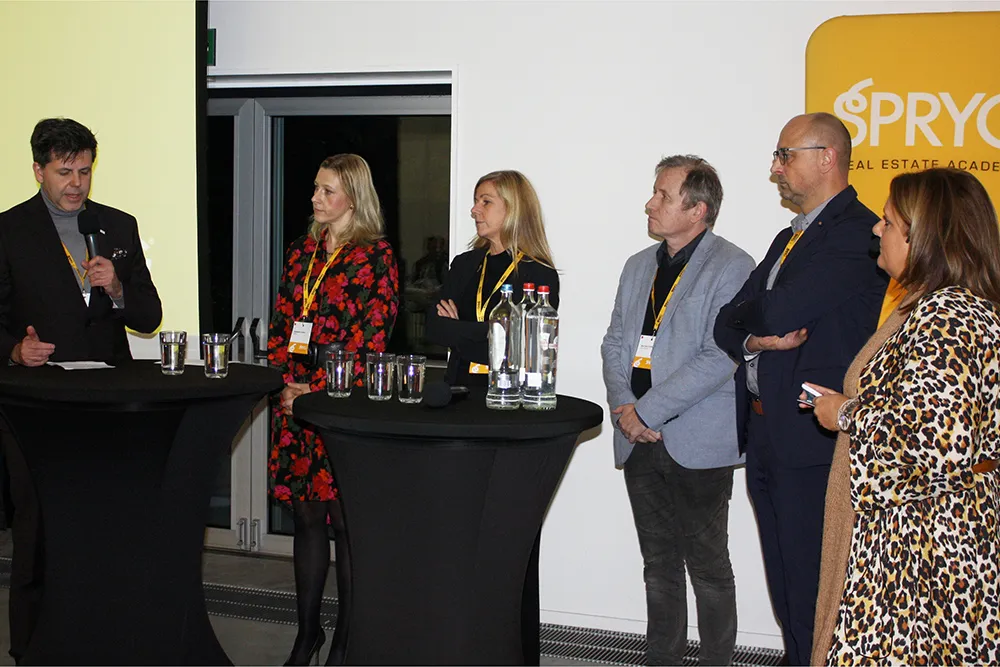
Spryg Healthcare Property Event Antwerp
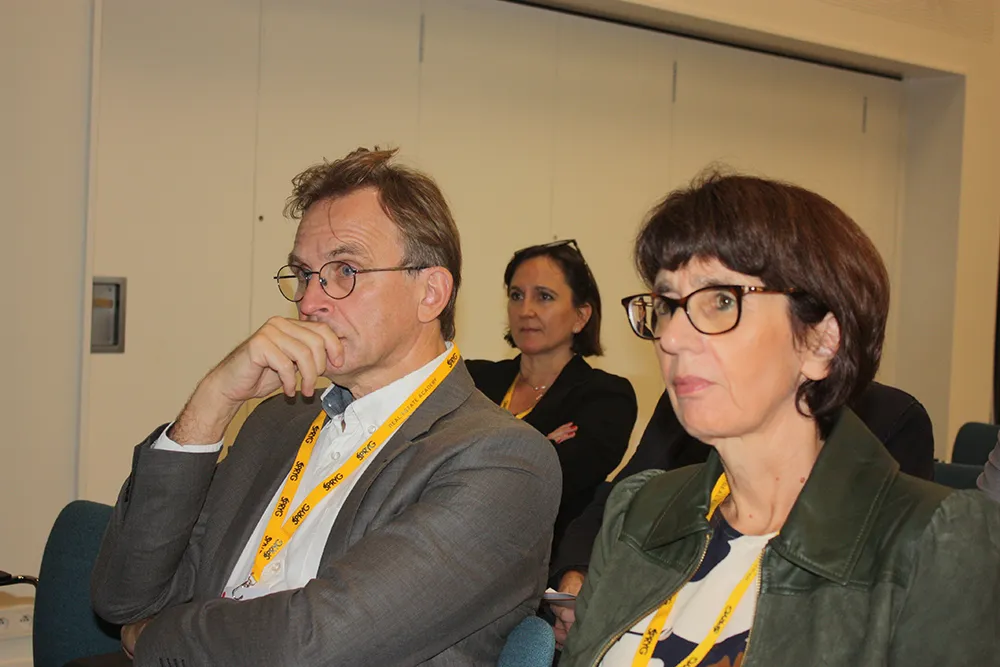
The 12th Belgian Healthcare Property Event was recently held at the Kava conference centre in Antwerp, organised by Spryg Real Estate Academy. Several specialists discussed developments in the sector, regulations and social perspectives, through presentations and panel discussions.
Flemish Minister for Welfare Hilde Crevits (CD&V) set the tone in her opening remarks: “The major wave of population ageing that lies ahead is, first and foremost, good news. It proves that people in Flanders can and are allowed to live longer. But it also puts pressure on our care system. That is why the Flemish government will explore the future of residential care models.” The current recognition timetable for residential care centres expires at the end of 2025. “The question is which direction we want to take next. The current recognition requirements have led to more than ten thousand places being added to residential care centres in just under ten years. There is no doubt that our care facilities will need additional capacity in the years ahead, particularly for people with chronic or complex conditions. I believe people should be able to remain in their own homes for as long as possible. That is why we are pursuing a preventive policy. We see the private sector following suit, which is positive. This gives people more options to exchange their existing home for a residential unit adapted to their care needs.”

No profit from care
“Our budget for building care and welfare facilities is approximately 800 million euros. Infrastructure investment must provide a pleasant environment for patients and staff, without compromising the affordability of care. That is why we are very clear about making a profit from care: this is not possible in facilities funded by the community. In consultation with the sector, various agreements have been reached and additional measures taken for residential care for older people. For example, we will enshrine in law that no profit may be made from the care component, and introduce transparency in accounting and daily fees. Financial management will also be subject to stricter oversight.”
Dennis Weyts of property consultancy Stadim analysed the effects of the current financial climate, including higher interest rates, and increasing regulation on the value and profitability of care buildings. “These changes are happening in the short term, but leases with operators typically run for 27 years. Agreements over such long periods require a good relationship between owner and tenant. Rather than simply passing on all new and increased costs, it is advisable to work together to find a win-win solution.”
Impact on valuation
Weyts also noted that the impact of certain laws on the valuation of healthcare property cannot yet be calculated accurately, as the implementing decrees have not yet been published. Nor are there any international standards. “Take circular construction, for example. In a circular economy, an existing building is also a potential stock of construction materials. But how do you factor that into the valuation?”
Staff shortages set to continue
In recent years, and particularly since the COVID pandemic, waiting lists for admission to residential care centres have shrunk, but they are now growing again. “When supply exceeded demand, residential care centres in less favourable locations felt it most,” said Wim Boon of KBC Social Profit. “Location is, of course, not the only deciding factor. Price, quality of care and reputation also play a decisive role. Location will remain an issue in the future, as it already has been for assisted living facilities.” He also expects staff shortages in residential care centres to worsen, partly because of the ageing nursing and care workforce. “In the war for talent, care institutions are at a disadvantage because they are bound by fixed pay scales. Unlike companies in the service sector and industry, they cannot offer cafeteria plans and other perks.”
According to Thomas Fiers of Cofinimmo, future demand will be limited to healthcare property in “top condition” that meets all sustainability requirements. In contrast to its strategic approach in the past, Cofinimmo has also been selling buildings in recent years. “But demographic developments remain a driver.”
Vertical integration
AG Real Estate responded to this development by acquiring care provider Anima. “This vertical integration strengthens contact between landlord and tenant. It also means far fewer intermediaries are needed to develop projects. For us, that is still two to three a year. What’s more, it gives us greater insight into how the end user uses the building, which is useful in view of the forthcoming ESG reporting regulations,” said investment manager Nicolas De Blieck.
Certification
Thomas Fiers questioned the value of all kinds of certificates. “Certification processes are quite expensive,” he noted. His point was that for an established provider such as Cofinimmo, meeting social and sustainability requirements should simply be an inherent part of its business. Melissa Swinnen of Qualicor Europe did not shy away from the criticism. “One problem with traditional certification was the stress caused by audit periods, which was then followed by a return to complacency. We want to change that with our adapted approach. Where we used to act more as inspectors, we now position ourselves as partners in a process of improvement.”
In the future, a residential care centre should no longer be an island, but part of a much broader neighbourhood care concept, enabling people to remain in familiar surroundings for as long as possible. Models and projects based on this approach already exist or are in development, but there is plenty of scope to take them further. Tania Stalmans and Dirk Doucet outlined Zorggroep Zusters van Berlaar’s approach, from vision and planning to practice. The Sisters already have five caring neighbourhood initiatives under way. Stalmans and Doucet said the overwhelming volume of regulation made it difficult to work flexibly. Serge Lefevere of Gortemaker Algra Feenstra architects looked ahead, using examples to illustrate the impact of trends such as breaking down silos in care and diversifying care provision. These included hospitals specialising in specific procedures and (large) residential care centres where every living unit has its own external entrance. This prompted comments about possible discrepancies in vision between the designer, who by virtue of their role is far removed from considerations of investor profitability and the operator’s maintenance and operating costs.
Sharing risks in solidarity
The event concluded with a panel discussion moderated by Valérie Jonkers of Care Property Invest. Johan Staes of Vlozo, Dominiek Beelen of Korian Benelux, Stéphanie Lomme of Aedifica, Ellen Mast of Zorgbedrijf Vlaanderen and Wim Van Cromphout of B2AI Architects discussed the opportunities and challenges presented by the new Flemish quality decree. Under the current structures, the risks fall mainly on residential care centre operators, it emerged. Breaking down silos could also mean that risks are shared more collectively, as is the case with assisted living facilities. But this need not go as far for residential care centres.
Question about this story? Ask your question
Companies in this story

Keep following this
Get an email when a new story is published. No account needed.
- ThemeFuture-proofing healthcare estates
- SubjectGeneral
- CompanyGortemaker Algra Feenstra architects







