











Meeting climate targets: fewer square metres?
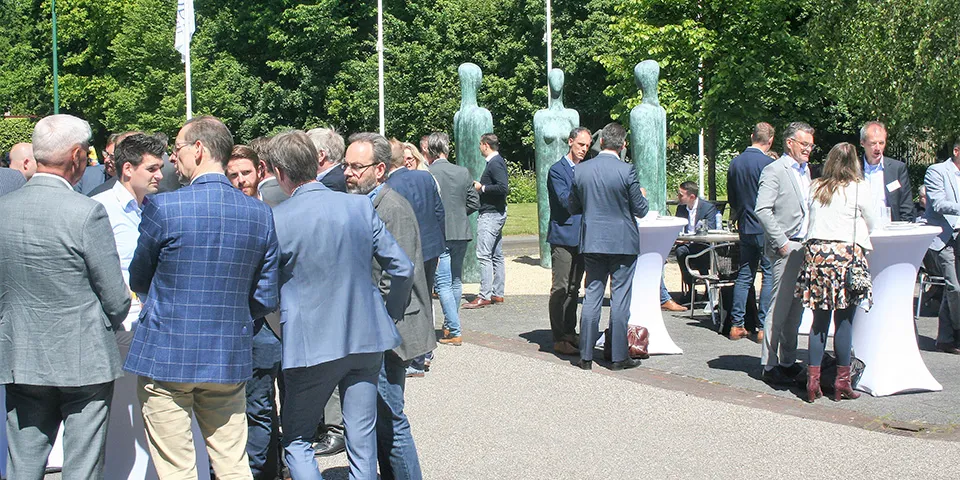
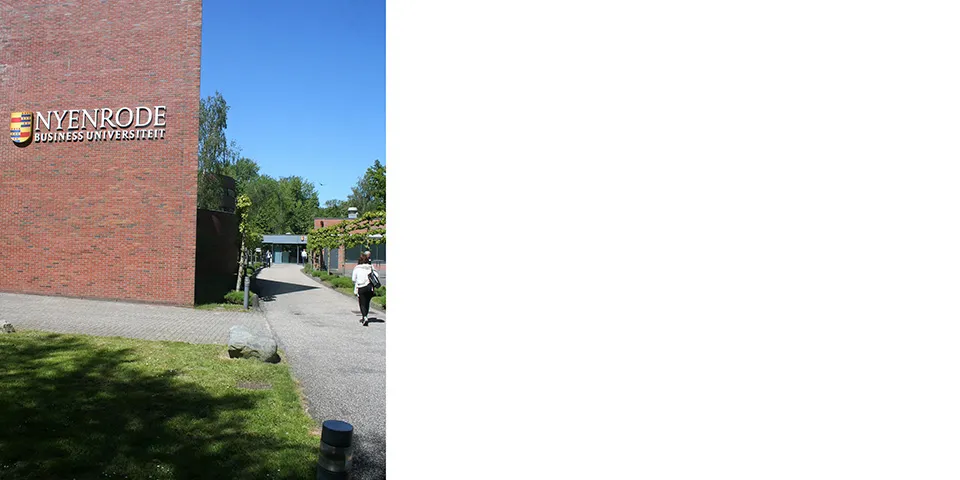
The annual healthcare conference organised by the Institute for Real Estate & Sustainability (IVVD) was held on 15 May at Nyenrode Business University, with a clear objective: to provide tools and best practice for the long-term sustainability of healthcare property. There is no escaping it, say the Ministry of Health, Welfare and Sport (VWS) and TNO. Across the healthcare sector, an investment of more than €10 billion is needed to meet the Paris Agreement, requiring ‘ambitious targets’. “Focus on what is achievable, with standards that go beyond statutory requirements,” says Roberto Traversari of TNO.
Encouraging but also sobering words for the sector came from, among others, sustainable healthcare programme manager Cathy van Beek (VWS), who had to be back in the afternoon for the second round of the Green Deal Zorg to welcome 32 new signatories. Syntrus Achmea is one of the new participants in the initiative, which aims to drastically reduce CO2 emissions. “A large proportion of CO2 emissions comes from heating and lighting, and is therefore linked to buildings,” says Van Beek. “The healthcare sector makes a substantial contribution to the carbon footprint; participation has to come from within the sector itself. Perhaps we need to do a little less, and possibly build less.” Institutions are also contributing: NEN is a participant in the Green Deal Zorg, while TNO is developing an energy-saving roadmap for the sector, with various scenarios. Banks, too, have reported that the number of square metres needs to shrink: ‘From bricks to clicks’. Smaller hospitals, more e-health. Is it possible? Traversari backs up Van Beek’s points with figures. “Sustainability is not a new story, but it has taken on greater urgency in the context of Paris and the Groningen natural gas issue,” says the building physics specialist at TNO. “Focus on the CO2 emissions of buildings and on achievable interventions that go beyond statutory requirements.” According to Traversari, meeting the Paris climate targets (a 95% reduction in CO2 by 2050) will require ambitious targets (scenario 5 on a scale of 6). The total investment needed for cure is around €6 billion, while care will require €5 billion. Is that a lot? Traversari offers no definitive answer. “We are talking about 28 million square metres of healthcare property in the Netherlands. If the government continues to focus on kWh/m², it creates a perverse incentive that does not lead to energy reductions. Develop an individual roadmap, with procurement playing an important role. There is much to be gained at the start of the chain.”
Buildings, areas and use
Real estate strategist Rinus Vader of Royal HaskoningDHV has extensive experience advising on hospital design and favours plain speaking. “If your building dates from after 1996, you can assume that its envelope is up to standard. But from now on, we must avoid ‘lighting fires’ with fossil fuels. The strategic accommodation plan and multi-year maintenance plan form the basis for sustainability roadmaps. Always consider buildings, areas and use together.” The sustainability programme at Artis, a zoo complex with many buildings dating from the nineteenth century, illustrates the last principle. “There are significant gains to be made in how the buildings are used, for example by concentrating activities in fewer rooms and imposing greater discipline on staff.” Given their age, Artis’s buildings themselves offer limited opportunities for scaling up measures such as solar panels. Perhaps Artis could serve as an anchor point in the development of an urban network, using geothermal energy and waste heat from the canal. “The physical space is there.” Maasstad Ziekenhuis is one such anchor point: work is under way on an installation that will turn the hospital in Rotterdam South into a producer for the Rotterdam district heating network. “From consumer to prosumer,” says Max Heijboer, Real Estate Manager. The hospital receives sponsorship from, among others, BNG Bank, which is arranging for solar panels with advertising displays to be installed through a third party. The proceeds will go towards making the hospital organisation more sustainable. “This will enable us, among other things, to run electric minibuses from the car park to the hospital building.” Energy sponsorship is an innovative way of funding projects, says Caspar Boendermaker of BNG Bank. “Funding is fundamentally different from financing. It is not just about finding money, but also a business model. We are happy to support initiatives that deliver some form of ‘social return’.”
Hilverbeek Almelo
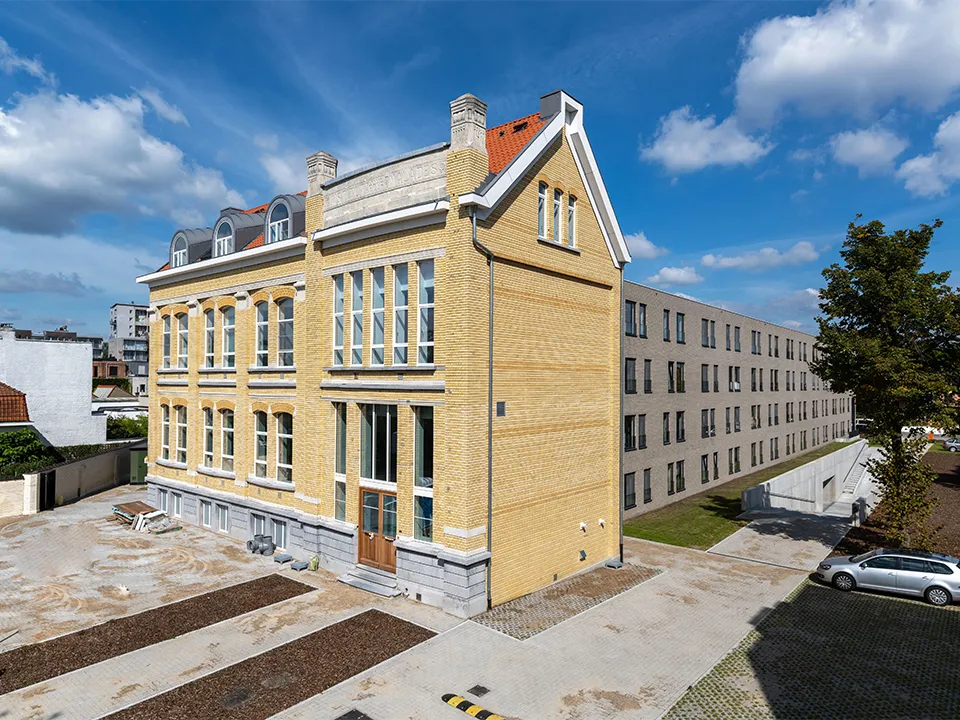
The workshops included two practical examples worthy of replication. The Hilverbeek residential group for people with mental health needs in Almelo (Twentse Zorgcentra) has been redeveloped with minimal intervention to support independent living and improve sustainability: two rows of studio flats connected by a central section containing communal spaces. “It is designed to anticipate the further separation of housing and care, and even the possible abolition of the NHC,” says manager Bas van de Moosdijk, an architect by training. The all-electric concept is called ‘Kameleon’ and avoids expensive investments such as thermal energy storage and heat pumps, instead using simple plug-in electric radiators. Residents have their own entrance on the outside of the low-rise complex, and even a garden. “Independence is important for this group, and yet this is residential care.” A viable redevelopment in the neighbourhood. “We are not building anew. These buildings, dating from 1999, still had a substantial part of their book value remaining. This approach has made it possible to improve sustainability while keeping the budget balanced.” Then there is Oranjepark in Ermelo, a wooded site with outdated apartments, acquired by Zorggroep Noordwest-Veluwe (ZNWV) from Vestia’s estate. In the heart of Ermelo, a high-quality residential care centre is being developed alongside a health centre, community room and owner-occupied homes, made possible by investment from Rabobank. Stakeholders have been brought together by an assertive care provider that owns land. Anita van der Haar, ZNWV’s property manager during the planning phase, says: “There were a lot of coffees drunk before this plan was finalised, but it was worth it.” Oranjepark is being developed in phases. Phase 1 will deliver the residential care centre, health centre and community room. The market-rate component will follow. Mixed-use construction is being carried out under the supervision of the municipality, which is overseeing the creation of a ‘multi-generational neighbourhood designed for all stages of life’. Construction began in mid-2018. Van Wijnen is building 76 natural-gas-free care homes for ZNWV, replacing Dillenburg, to a design by IAA Architecten.
Healthcare Property Trend Radar
The afternoon’s plenary session concluded with the presentation of the annual National Healthcare Property Trend Radar. As in previous editions, it highlighted the growth of the investor market and noted that developments in market mechanisms and regulation are following one another at an ever faster pace. Adaptability and integrated thinking are essential; investment risks, including low initial yields, come with the territory. The healthcare sector is maturing, and accountability to market parties is becoming accepted. Is the sector a fully fledged market participant, and will it ever become one?
Een zakelijke vraag aan IVVD? Get in touch
Companies in this story
Keep following this
Get an email when a new story is published. No account needed.
- ThemeFuture-proofing healthcare estates
- SubjectGeneral
- CompanyIVVD
- CompanyVan Wijnen







