











More housing for older people needed

Research highlights the specific need to expand and make healthcare real estate more sustainable
1 in 3 new homes must be suitable for older people. This is the finding of CBRE Nederland, part of publicly listed CBRE Group, the world’s largest real estate consultancy, following research into the future of healthcare real estate in the Netherlands.
Between now and 2050, an additional 1.3 million homes will be needed to house the growing population. Debate about the housing market often focuses on first-time buyers and families: they need to be able to find a home more easily. But older people hold the key to freeing up homes, as future generations of older people will largely live in owner-occupied properties. If demand for care among older people develops as expected, 433,000 of the new homes will need to be allocated to this group, equivalent to 33% of the additional homes.
To bring the long-term balance between the housing stock and the composition of the population into line, in some regions, such as South Limburg, Friesland and Drenthe, only good-quality (care) homes should be built from now on. The picture is completely different elsewhere, for example in the Haaglanden region, where the share that should be allocated to older people is just 11%.
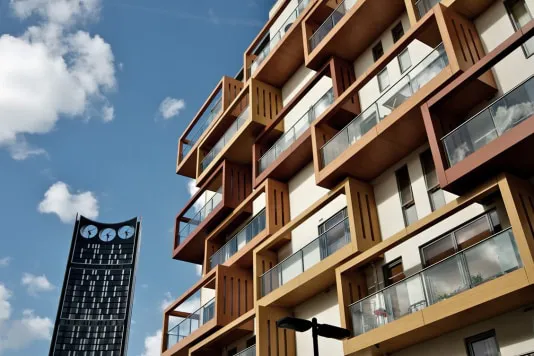
One factor restricting movement in the housing market is the relatively poor quality of existing homes for older people. Building homes that are suitable for people throughout their lives and meet the (quality) needs of this group can set a chain of moves in motion. This creates opportunities, as the next generation of older people will be considerably wealthier than the current one. More clustered housing is also needed, enabling care organisations to provide 24-hour care efficiently and effectively.
Laura Seckel, Head of Healthcare at CBRE Nederland: “By mapping the whole of the Netherlands, at national, regional and local level, using healthcare and real estate data, we can show exactly what healthcare real estate already exists. We can also show what is needed in terms of expansion and improvement, what the options are, where and at what pace.”
A huge challenge
Alongside expanding the number of (care) homes in the Netherlands, making the existing built environment more sustainable is an equally urgent task. Nursing and residential care homes lag far behind social housing, offices and logistics real estate in terms of sustainability. The challenge of improving sustainability has recently become much more tangible. Energy bills are set to double compared with 2019. Many nursing and residential care homes are likely to report losses, potentially at the expense of their core task: providing care. Investors can help care providers, for example by funding improvements to the sustainability of healthcare real estate. Or, when it comes to expansion, by tapping into the growing market for homes for older people in the higher-end segment.
“Investing in sustainability reduces energy costs for care organisations, creates healthier environments that benefit people’s health and wellbeing, including that of care staff, and helps build the future-proof care sector we need,” says Laura Seckel.
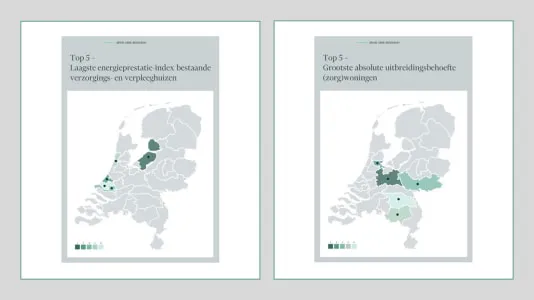
Read the report ‘Healthcare real estate at a critical crossroads: how can we prepare housing for older people for the future?’
Question about this story? Ask your question
Keep following this
Get an email when a new story is published. No account needed.
- ThemeFuture-proofing healthcare estates
- SubjectGeneral







