











New Lindenhoven care home opts for a tried-and-tested building concept
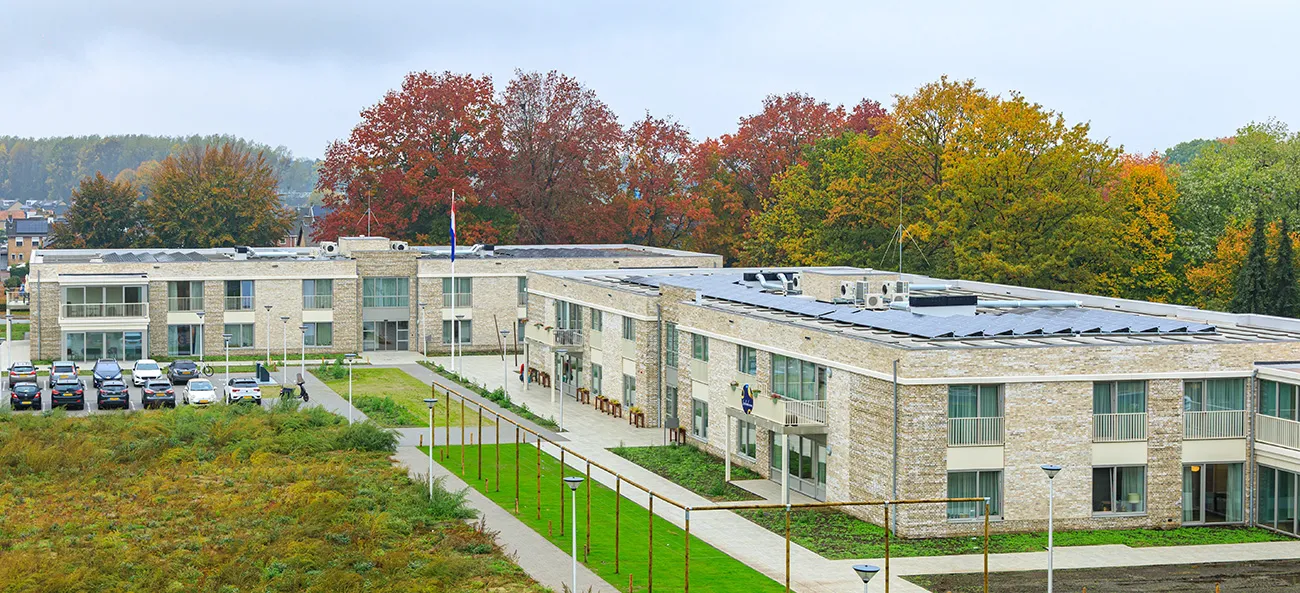
South Limburg care organisation Envida opened the doors of its new Lindenhoven care home in Maastricht in May this year. The home comprises two buildings, each with two floors. Each floor houses two living groups, each with eight residents who have their own studio with a bathroom. That makes 64 studios in total, intended for people with dementia or a physical disability.
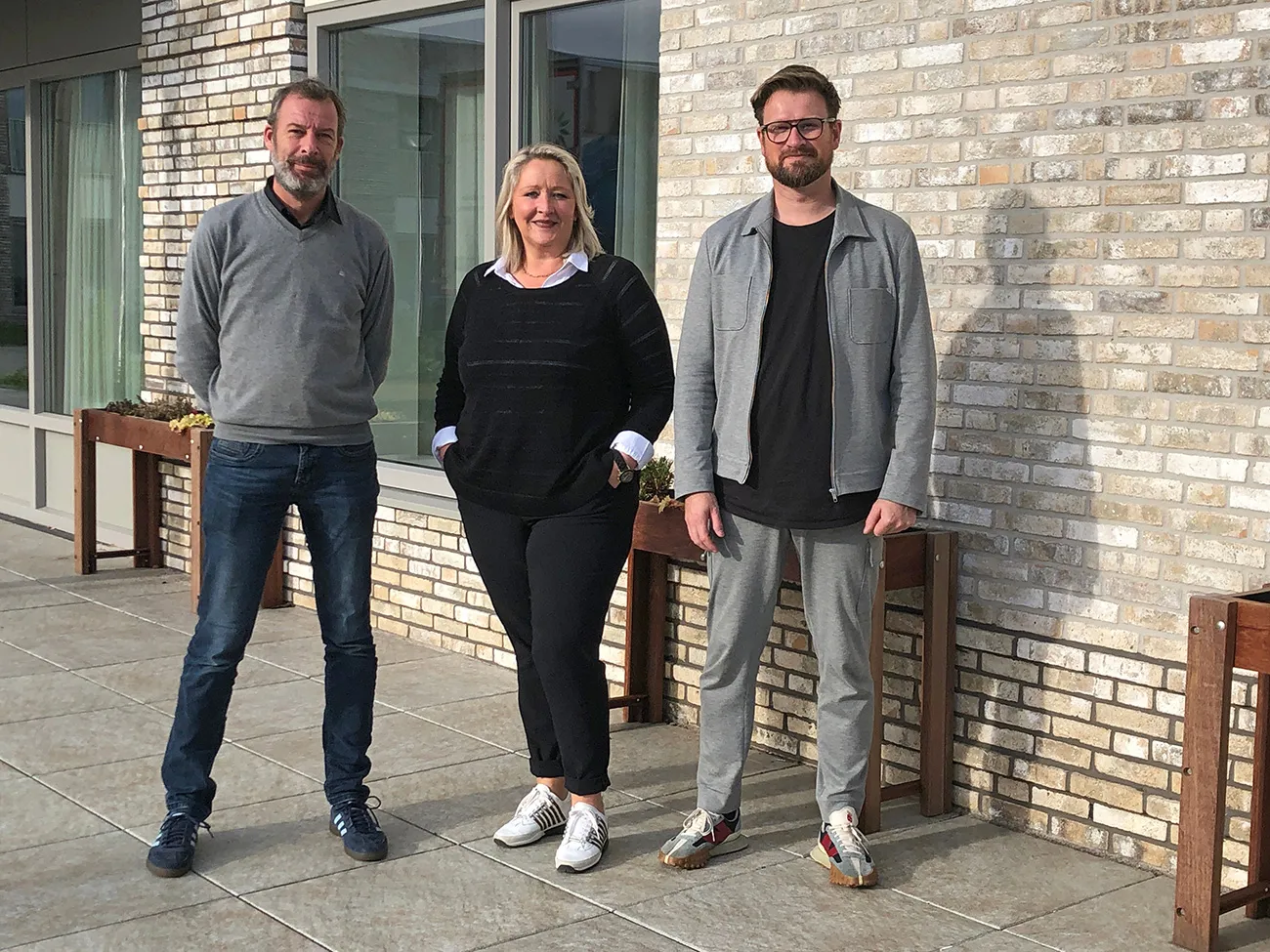
“We needed a new, small-scale care home that reflected our vision,” says Toine van Oirschot, property manager at Envida. “I came into contact with architect Eric Schellevis in 2020. He told me about the Domi Curae building concept, developed by 2.0 Architecten together with Willems Bouwbedrijf. Care organisations have the option of adding their own touch. That is the benefit, and it means a tailored vision can be developed.”
Smarter and more affordable
According to Van Oirschot, it was important for Envida to start construction at short notice, because a site where residents were still living at the time was being given a new purpose. “The Domi Curae concept was ideally suited to this. Everything had been worked out in advance, and the price was favourable too.” Schellevis adds: “The aim was to see whether we could devise a smarter, more affordable concept that would add value for care organisations throughout the Netherlands.”

Review and adapt
The concept is designed for residential care for older people. Schellevis says: “You can wait to be selected for a construction project, but we thought it would be more practical to come up with a plan in advance that was ready to go. The Domi Curae building concept is independent of location, funding stream or client. The client can, however, make its own adjustments so that the concept aligns even more closely with its care vision. Because the concept was ready for tender, construction at Lindenhoven could start relatively quickly. It began in July 2021, and by early May 2022 the home was ready to welcome its first residents. Rather than devising a plan, all that was needed was to review and adapt it. This is much faster than a traditional construction process.”
Adjustments
Site manager and project leader Nicole Koerts studied the Domi Curea concept closely and, she says, made the finishing touches. “My aim was to make the home even easier to use and more enjoyable for residents. I also had a clear wish to integrate a bespoke cupboard into the wall in every living group. It can be used, for example, to store medication.” Schellevis understood Koerts’ wishes. “We discussed the precise details extensively beforehand. Envida’s wishes and its own vision of small-scale living called for a few minor adjustments.”
Keeping things on track
After the contracts were signed, the first pile was driven into the ground in July 2021. From that point on, the project gathered pace, thanks to the Domi Curea concept having been worked out in advance, says Ralph Geurts, commercial director of Willems Bouwbedrijf. “We did have to make some adjustments to the schedule during construction. There were some delays due to late deliveries of materials. The weather and the restrictions caused by coronavirus also played a part, but this only goes to show what an outstanding achievement it was to complete these two buildings and make them ready for use in just ten months.”
The construction process and collaboration were also particularly smooth. According to Geurts, this was because Domi Curae had been fully developed and was ready for tender, meaning the client already knew from the outset what it was buying and at what price. “This means there are few, if any, significant disagreements during construction.”
A calm environment
Turning to the layout of the various living spaces, each type of accommodation has a range of communal areas, including a dining room, TV room, reading room, conservatory and balcony. Koerts says: “This is essential for providing different levels of stimulation. Our residents need to feel safe, free and secure everywhere. Some people with dementia do not enjoy spaces without stimulation and prefer to be around other residents. This allows people to develop their own routines. One advantage of this layout is that staff in the central kitchen are visible from every room and corner. This creates a sense of security and calm. Staff also appreciate this. The layout adds value for everyone.”
The studios cover 30 square metres. They all have a spacious, well-equipped and innovative private bathroom.
“Every studio has a sanitary wall that can easily be turned towards the bed,” explains Van Oirschot. “That is ideal for residents who have difficulty walking or who, for whatever reason, can no longer get out of bed at all.”
Smart technology
Safety is, of course, essential in care home complexes. That is why investment has been made in areas such as communications technology and smart technology, including smart cameras and detection devices, while doors are not locked. “That is why all residents wear a wristband or a necklace with a transmitter,” says Koerts. “This allows us to set a personalised safe zone for everyone. It is a bespoke approach that gives people more freedom. All the doors leading outside are open. We focus on what people can do. We agree this carefully with families and explain any potential risks. If the resident or family wishes, the safe zone can be adjusted. Quality of life comes first.”
Research
To establish the extent to which the new building, based on the Domi Curae building concept, contributes to residents’ wellbeing, 2.0 Architecten, Envida and Willems Bouwbedrijf contacted Maastricht University to conduct research. The first round of observations took place at the old site, according to Schellevis. “The second round was carried out immediately after the move to Lindenhoven, and the residents were observed for the final time in mid-November. The researchers looked at freedom of movement, the use of psychotropic medication, the occurrence of conflicts and so on. A new building also leads staff to work differently. Which factor has the greatest influence? Even if the building results in a two per cent reduction in medication use in the future, that would already be a fantastic result. We expect to hear the first results around the turn of the year. Care in the Netherlands faces so many challenges, and we would like to make a positive contribution. This research will enable us to present clear figures that can help the sector move forward.”
Question about this story? Ask your question
Who worked on it
Lindenhoven in Maastricht
- care organisationEnvida
- architect2.0 Architecten
- construction companyWillems Bouwbedrijf
Keep following this
Get an email when a new story is published. No account needed.
- ProjectLindenhoven
- ThemeHousing with care close by
- SubjectGeneral
- CompanyEnvida
- Company2.0 Architecten
- CompanyWillems Bouwbedrijf







