











NVTG Healthcare Property and Facilities Congress 2015: Affordability under pressure, a change of direction is needed
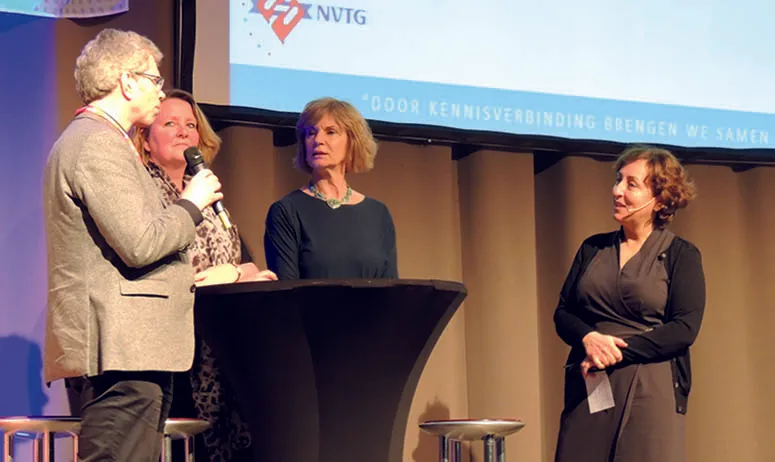
Healthcare in the Netherlands is of a high standard, but costs are soaring. Change is essential, as became clear at the NVTG Healthcare Property and Facilities Congress in Veldhoven on 9 and 10 April. The ‘prescriptions’ for affordable healthcare: focus on core activities, tailor-made solutions and sharing knowledge.
NVTG, the association for facility professionals in healthcare, chose the theme ‘Do we still understand one another in healthcare?’. Disciplines such as healthcare, property and finance all speak their own language. Budgets are under pressure and clients are asking for tailored solutions. NVTG chair Douwe Kiestra spoke about this in Veldhoven at the opening of the Healthcare Property and Facilities Congress. The themes for 9 and 10 April were ‘Caring for tomorrow’s property’ and ‘Property organisation 2020’. Conference chair Karin Bruers introduced the speakers and led the discussions.
Focus on core activities
More than 12% of gross domestic product is spent on healthcare, and this proportion is growing. Bart Berden, chair of the executive board of Elisabeth-TweeSteden Ziekenhuis in Tilburg, said that much is set to change. “We are heading towards a future with a number of large core hospitals and smaller satellite sites around them. Quality and efficiency are essential. Healthcare institutions need to focus on their core activities and outsource support services. Savings can be made, for example, by automating administrative processes and helping patients manage their medication with assistive devices.”
Tailor-made solutions
Willemijn Souren, concept developer at Woonzorg Nederland, spoke about changes in healthcare property. “The residential care capacity in the Netherlands is a third of what it was in 1980. Only people with a Care Intensity Package 5 or higher are eligible for a care home. The norm is to live independently for as long as possible. Woonzorg Nederland wants to make optimal use of the potential of healthcare property. We are working on projects to convert vacant care homes into studios and apartments for independent sheltered living. We offer tailored solutions with different service packages. No two older people are the same.”
Learning from others
The property organisation of the future was the focus of the second day of the conference in Veldhoven. According to Joke Boonstra of the Executive Board of IJsselland Ziekenhuis, hospitals have much to learn from one another and from other sectors, such as SMEs. “A lot of money can be saved by sharing knowledge. IJsselland Ziekenhuis is open to new ideas and co-creation. One example is the construction of a mock-up for a new ward. The trial layout showed, for instance, that the sanitary facilities needed to be larger.”
A sound business case
According to Ron van Bloois, who works at HEVO and Amsterdam School of Real Estate, healthcare and the work of facility professionals are set to change. “Parties other than banks will play an important role in project financing. Healthcare property funds are an interesting alternative. They can finance projects worth between €50 million and €100 million. The healthcare institution leases the property from the fund and may also take a stake in it. Healthcare institutions need to put forward a sound business case. After all, property investors want high returns at low risk.” Sèbastien Berden spoke on behalf of Confinimmo about its pan-European healthcare property portfolio. “We seek long-term projects in residential settings. We diversify our portfolio and operate in submarkets such as geriatrics and psychiatry. This helps spread risk. Our sale-and-leaseback arrangements spread healthcare institutions’ cash flow. The Dutch market is interesting and is characterised by considerable variation in solvency.”
Slow and cumbersome
Discussions on a range of property and property-organisation issues took place on both 9 and 10 April. On 10 April, Pieter Schendstok of Subliem Ondernemen, Steven Leenheer of Leen Instituut, Jack Thiadens of Antonius Zorggroep and Sèbastien Berden discussed the future of property organisations. The responses showed that healthcare institutions are often perceived as slow and cumbersome when it comes to change. Regulations sometimes hinder progress, while a tangle of competing interests can mean that a shared perspective is lacking. It also emerged that there is no need to fear hospitals turning into factories, because that is not what we want. But there is work to be done to rein in costs.
Text and photos: Martijn van den Bouwhuijsen
Nora, your healthcare partner
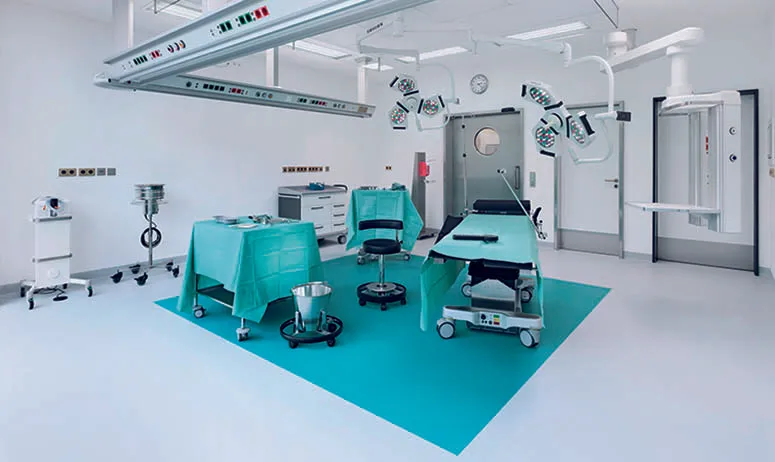
To help patients and staff feel comfortable, nora offers a range of flooring solutions. Colour is an important consideration when designing buildings in the healthcare sector. Colour makes a significant contribution to personal wellbeing, with a positive effect on the healing process. Colours trigger not only emotional responses and associations, but also physical reactions. This is why colour therapy uses specific colours to relieve or treat particular types of pain.
Colours for the healthcare sector
Nora rubber floor coverings are characterised by a wide colour palette. Rubber makes it possible to create both vibrant colours and subtle pastel shades. With noraplan signa and noraplan sentica, nora has developed unique floor coverings designed specifically for the healthcare sector. Noraplan signa is available in 48 colours. Noraplan sentica was launched in spring 2012 and is already a great success. Its harmonious colour scheme comprises 32 colours, complemented by 6 individual colours for adding accents. Nora floor coverings are made from high-quality industrial and natural rubber, minerals from natural sources and environmentally friendly colour pigments. None of nora’s floor coverings contains PVC, plasticisers (phthalates) or halogens (such as chlorine). In addition, the floor coverings have numerous Green Design certifications, including the Blue Angel and the Finnish M1 ecolabel, which help to create a healthy indoor environment.
For more information, visit: www.nora.com
DELABIE stands for quality
Founded in 1927, DELABIE has built a reputation for outstanding quality through sustained investment in research and development, as well as a number of targeted acquisitions.
In less than a century, DELABIE has become a key player in the non-domestic market for taps and sanitary fittings for commercial buildings. Today, DELABIE offers a complete range of stainless-steel sanitary products, taps and fittings. This range perfectly meets the requirements of healthcare institutions, providing optimum hygiene by, among other things, controlling bacterial growth, ensuring complete safety, eliminating the risk of scalding, and saving water and energy. At the same time, the products offer patients ease of use, comfort and ergonomics.
TransCheck in the spotlight at NVTG congress
Swisslog shares its expertise at the NVTG congress every year.
As well as sharing knowledge and experience in automating laboratory processes and workflows in pharmacies, we focus on a special theme each year. This year, the focus was on TransCheck. TransCheck validates and analyses transport quality and can be used to support the validation process in the laboratory.
Special patterns can be used to measure the number of shocks and vibrations, as well as the temperature and g-forces in the pneumatic tube system. The data is then presented in clear reports that can be used for quality assurance.
Please do not hesitate to contact us for more information.
Sharing knowledge about operating theatres and preparation rooms is essential
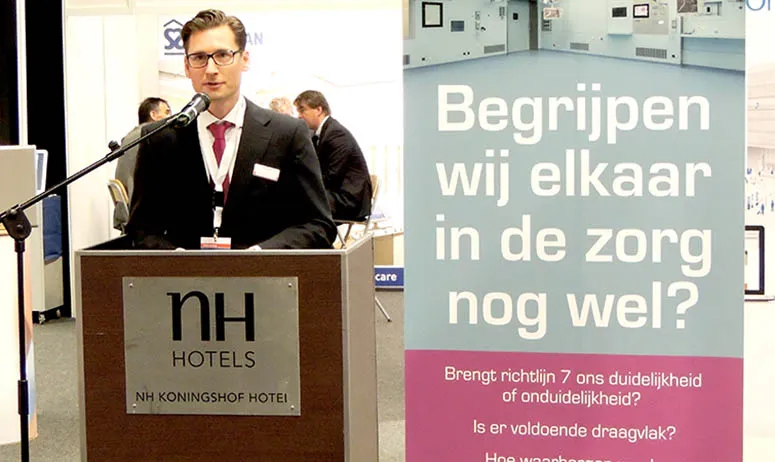
On 9 April, Sander Oosterbeek of Van Galen klimaattechniek gave a brief explanation of how to apply VCCN Guideline 7, ‘Method for testing and classifying operating theatres and preparation rooms at rest’.
“In practice, applying RL 7 produces results that differ from the theory. This is evident, for example, from the experience of Universitair Medisch Centrum Utrecht. As operating theatres get larger, the airflow changes. A larger plenum means more airflow and more turbulence at the periphery. Opening and closing doors can disrupt the airflow.”
According to Oosterbeek, it is not always clear how measurements should be taken or whether the right things are being measured. “Innovations must, of course, comply with the WIP guideline. We need to share knowledge on this subject, engage in discussion and amend the regulations where necessary.”
Een zakelijke vraag aan Nora flooring systems B.V.? Get in touch
Companies in this story
Keep following this
Get an email when a new story is published. No account needed.
- ThemeFuture-proofing healthcare estates
- SubjectGeneral
- CompanyNora flooring systems B.V.
- CompanyDelabie
- CompanyWoonzorg Nederland







