











‘Today’s challenges call for new concepts and a more flexible framework’
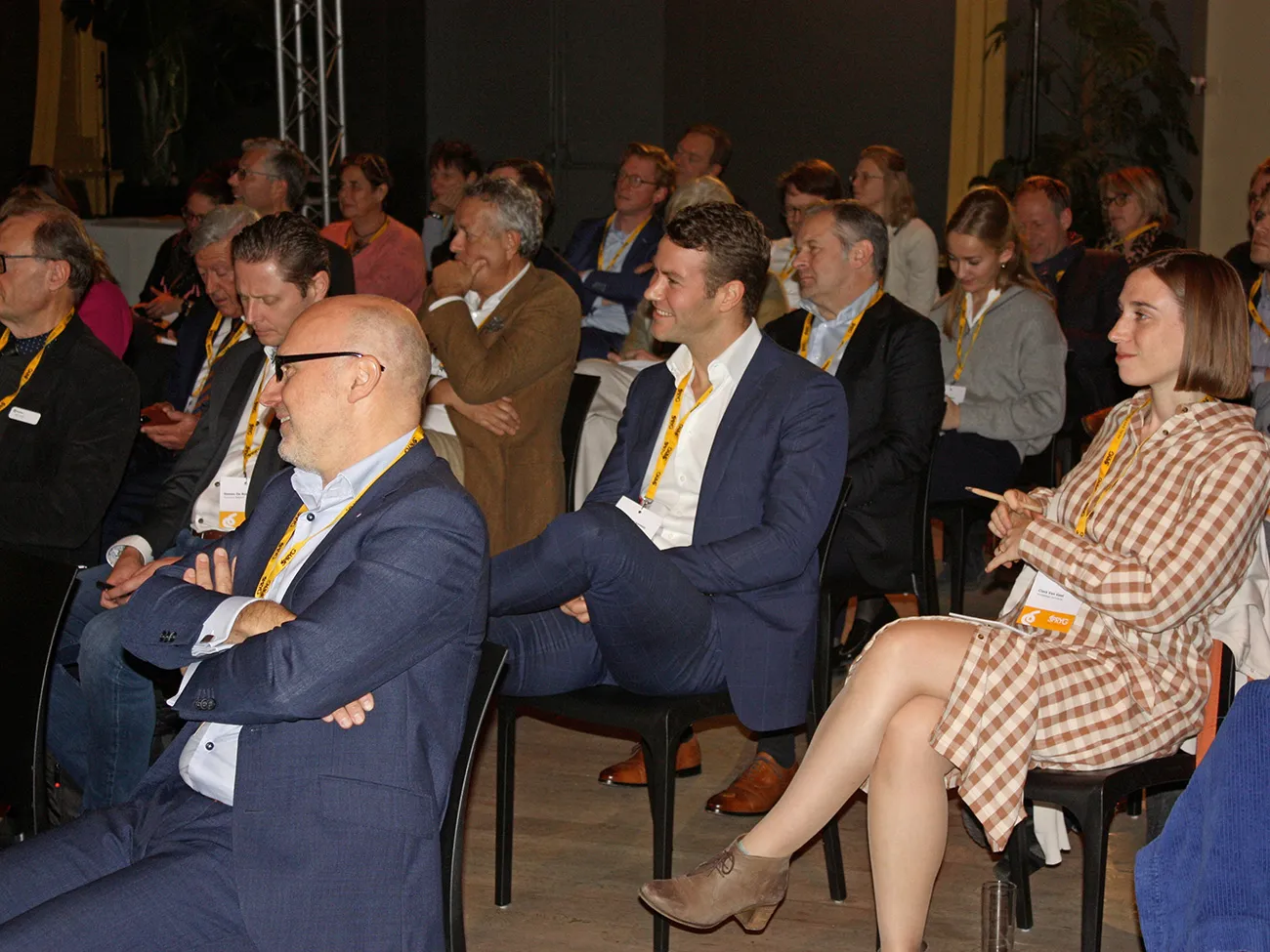
This year, Spryg’s Belgian Healthcare Real Estate Seminar took place at ‘Horta’ in Antwerp. As always, it was an opportunity to network, exchange views and ideas, and present projects to one another.
Spryg seminar on healthcare real estate in Belgium
From an architectural point of view, the art nouveau hall at Horta is an interesting venue. Although the building was only completed in 2000, the steel trusses from the former Maison du Peuple in Brussels have been incorporated elegantly into the conference hall. Designed by Victor Horta in 1896-1898 in the then popular art nouveau style, the building was demolished in 1965. The dismantled parts that remained were then kept in storage for years at various locations. The city of Ghent could find no use for them, but the city of Antwerp put out a competition, which was won by the proposal from Palm Brewery.
Flemish government funding
Despite the attractive setting, Flemish Minister for Welfare Hilde Crevits (CD&V) kept her ecological footprint low and opened the seminar with a video message. She stressed that, through the Flemish Infrastructure Fund for Personal Matters (Vipa), the Flemish government awarded grants worth almost 35 million euros in the first half of 2022. Vipa funding enables major healthcare construction projects to be delivered in Flanders.
Taking responsibility
Crevits also asks whether care providers are taking responsibility in ways other than financially. “The government can establish quality frameworks and provide funding, but everyone working in the sector needs to make an effort to ensure that staff can work in a pleasant environment and every resident receives high-quality care. This is something we keep emphasising. I think it is extremely important that there is transparency and that any areas for improvement are made known and addressed.”
The current labour shortage in healthcare is unprecedented. “That is why, following an agreement with the sector, it is now possible to train people who do not yet have the right qualifications in the short term, while they are already working in the sector. In this way, we aim to fill vacancies more quickly. Every effort that can encourage people to choose a job in healthcare can make a world of difference to those already working in the sector.”
Location, occupancy and future planning
Valérie Jonkers, COO of Care Property Invest, kept the proceedings on schedule as moderator and put various questions to the speakers, occasionally taking them out of their comfort zone. Ronny Neckebroeck, director of public and social banking for Flanders at Belfius, noted that while healthcare institutions used to seek the longest possible loan term when applying for loans, the interest rate now carries more weight. Banks only consider the applicant’s financial capacity at the second stage. “First, we check whether their location, occupancy and future planning are firmly grounded.” Sustainability is another factor carrying increasing weight.
Breaking down sector silos
Thomas Fiers, head of healthcare Belgium at Cofinimmo, Charles-Antoine Van Aelst, CIO at Aedifica, and Nicolas De Blieck, healthcare investment manager at AG Real Estate, gave their perspective on the issues facing major owners of healthcare buildings today. Their contributions highlighted that Belgium is currently a leader in developing new care concepts, but that much remains to be done to break down the sector’s silos. Responsibility for care and health, and their funding, is divided not only between the federal government and the regions, but the frameworks that have evolved historically are also inflexible.
New roles for hospitals
Wino Baeckelandt, managing director of Zorggroep Heilig Hart, warned that Belgium currently has a surplus of around 10,000 hospital beds. The average length of stay has fallen sharply in recent years. He believes hospitals need to take on other roles that build on their established remit. He cited rehabilitation as an example.
Simplicity and affordability
Using various healthcare real estate projects as examples, Wim Van Cromphout, partner at architecture practice B2Ai, set out his vision for the future of residential care. As an architect, he focused on integration into the surroundings, a design that allows not only for flexibility but also a mix of uses, and affordability. In 2019, his practice completed wzc De Zonnewenden in Meulebeke. Its intimate architecture, free of unnecessary ornament, and modest use of materials kept construction costs below 1,300 euros per square metre. This is no longer possible now, he added, given the general rise in material and energy costs since then. Other examples showed how new-build projects can be combined with the renovation of existing care sites, such as care convents, and with residential clusters. When designing integrated residential, living and care neighbourhoods, for example, he considers which facilities are missing from the area and seeks to fill those gaps.
Inclusive living
Den Dries shares the same outlook, although its approach started from the existing situation. In Evergem, this non-profit organisation providing residential support for people with disabilities has a 17,000-square-metre site. “We are building on only 20% of it,” say managing director Tim Bruylandt and strategic projects policy officer Luc Verbeke. “This leaves room for plenty of greenery and a genuinely inclusive residential environment.” In practical terms, this means that the site also has space for private homes. This contributes significantly not only to the affordability of the care development, but also to a mix of residents.
Panel discussion
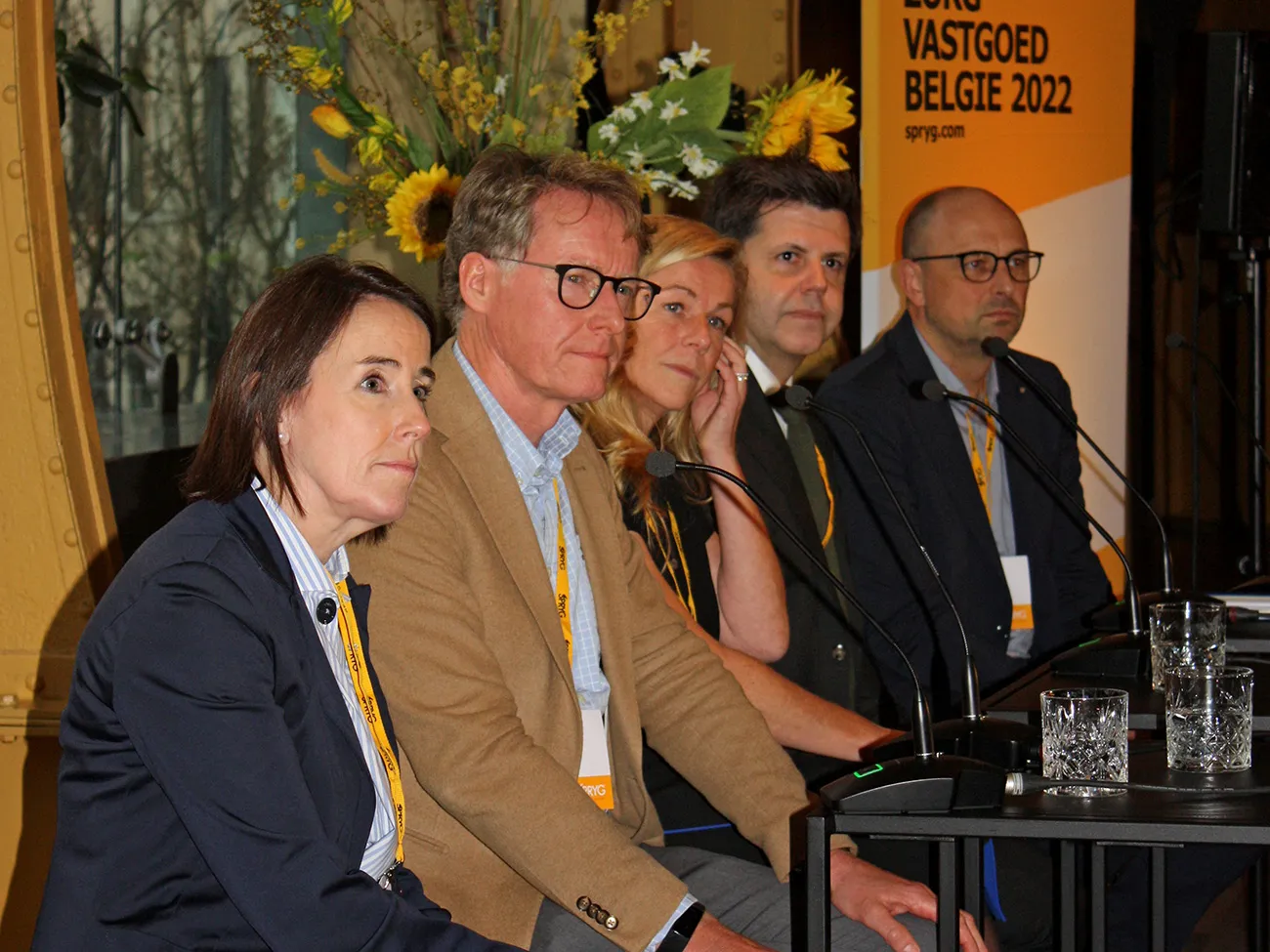
To close the seminar, Jonkers held a discussion with a panel of leading stakeholders. Ellen Mast, director at Zorgbedrijf Antwerpen, Johan Staes, managing director of Vlozo, Patricia Vermeulen, COO at Orpea Northern Europe, Johan Crijns, CEO of Anima, and Dominiek Beelen, CEO of Korian Benelux, discussed the challenges of small-scale provision and affordability, as well as staff shortages in healthcare.
Question about this story? Ask your question
Keep following this
Get an email when a new story is published. No account needed.
- ThemeFuture-proofing healthcare estates
- SubjectGeneral







