Automated plating robot helps laboratory identify patients’ bacteria
Text and images Isala
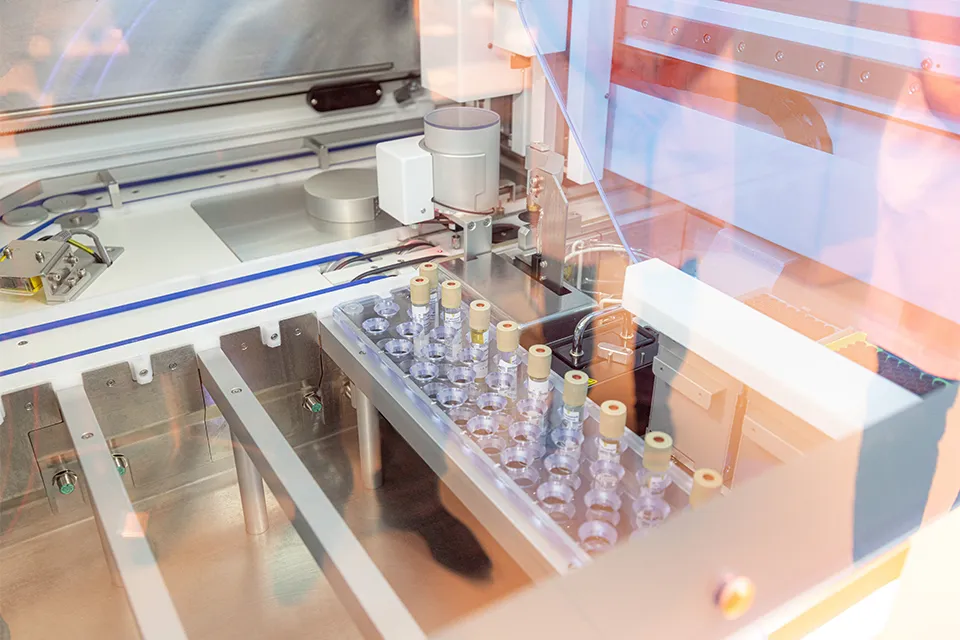
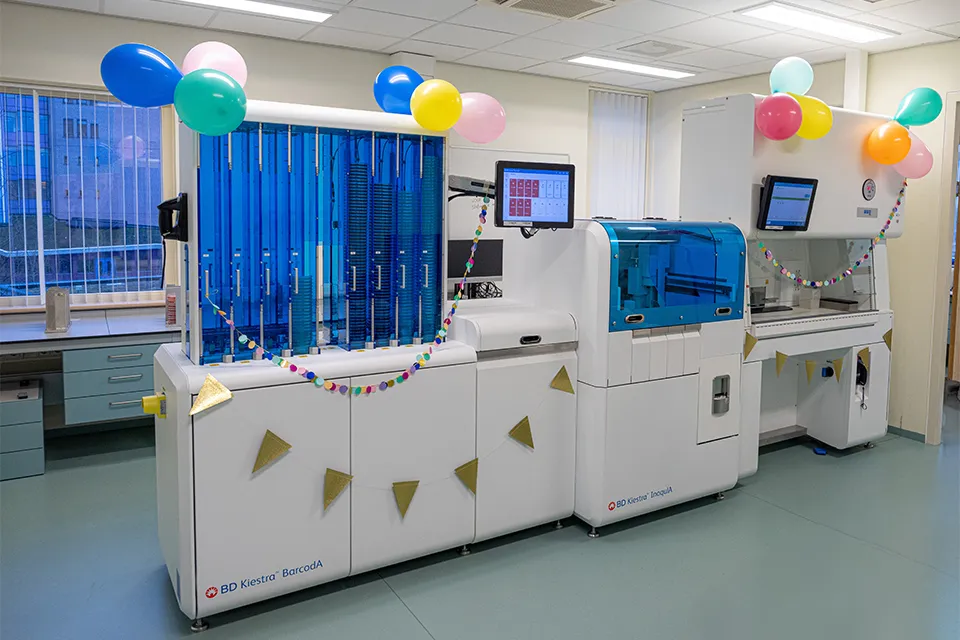
To determine whether a patient has, for example, a bladder infection, the Laboratory for Medical Microbiology and Infection Prevention (LMMI) cultures samples to detect bacteria. An innovative automated plating robot is now helping with this work, making the process more efficient and accurate. The robot was officially commissioned on Monday 20 January.
Inoqula. That is the name of the brand-new device at the LMMI. Medical microbiologist Julian Machiels was closely involved throughout the process. “This device makes the plating process more efficient and improves quality,” he says. “That enables us to make care more efficient.”
Infections
The LMMI laboratory investigates infectious diseases. These can be caused by microorganisms such as bacteria, viruses, parasites, yeasts or fungi. At Isala, a large proportion of all samples requiring investigation are urine samples. So that is where Inoqula is starting.
Preparing cultures
“Before an LMMI analyst can identify a bacterium, cultures have to be prepared,” Machiels explains. “Plating a culture is time-consuming work. The automated plating robot automates this process. It scans the tubes, has access to patient data and immediately sees what tests have been requested. A drop of urine is placed on a plate, which is then put in an incubator so the bacteria can grow. The analyst examines the cultures the next day and carries out further analyses. As medical microbiologists, we assess what a result means for the patient. Is treatment needed, for example?”
Testing
The automated plating robot is initially being used for urine tests to detect bladder infections. It will also be able to plate other samples in future. Machiels says: “It will not speed up diagnosis, because the culture has to grow for a set period at a specific temperature. But this device works more consistently and takes a lot of work off the analyst’s hands. It also reduces the risk of mixing up patients. Colleagues will spend less time on repetitive tasks, leaving more time for other care.”
Question about this story? Ask your question
Keep following this
Get an email when a new story is published. No account needed.
- SubjectZorgTech