Smart technology in healthcare facilities
Text Geert Van CauwenbergeImage Geert Van Cauwenberge en Shutterstock
A wide range of inspiring applications
Providing high-quality, safe care to patients, residents and those receiving support. That is the mission of every healthcare facility. Creating a modern, safe workplace for healthcare staff is also high on the sector’s agenda. Thanks to smart technology, from virtual care assistants to digital access control, this goal is being achieved more effectively all the time. Which new tools are gaining ground today?
Healthcare specialists are seeing growing and increasingly complex demand for care, rising care costs, an ageing population (including among healthcare staff!) and a heavy administrative burden. The challenges are therefore immense, and the sector is literally and figuratively all hands on deck to tackle them efficiently.
Flemish pilot project in technology
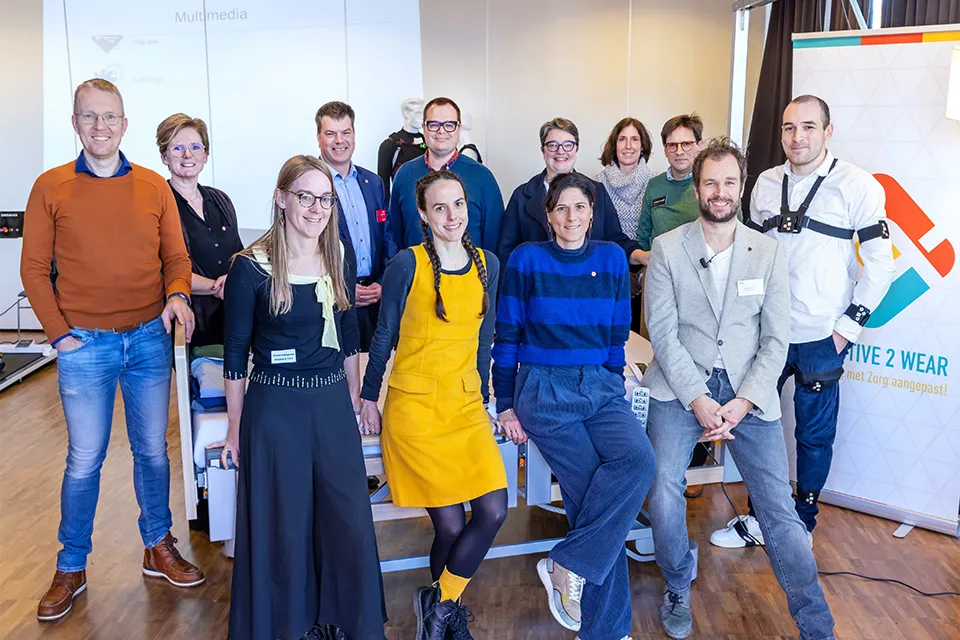
Focusing on the Flemish healthcare sector, the Flemish Agency for Innovation and Entrepreneurship (VLAIO) presented the pilot project ‘Technology for workable work in the care and welfare sectors’ in spring 2024. With support from the Flemish Government, Flemish research institutions are setting up pilot projects to create a future-proof working environment in healthcare. In this project, which runs until the end of 2026, the research institutions Flanders Make and imec, together with the universities of applied sciences Thomas More, PXL and UCLL, are responsible for delivering the pilot programme. They are developing technology demonstrators and sharing their findings through communication campaigns and events. At least five pilot projects are also being launched at various Flemish healthcare facilities. The focus is on sectors such as childcare, youth care, care for older people and support for people with disabilities.
Healthcare innovation in practice
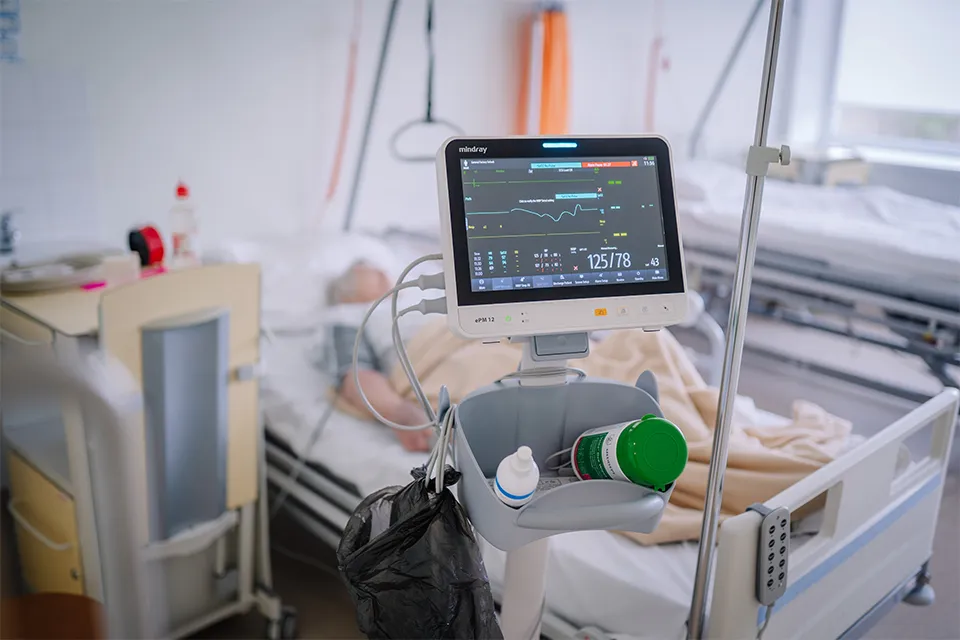
Research and healthcare institutions are now working hard to develop innovative technologies that improve working conditions in the healthcare sector. Here are some inspiring examples from practice:
• Stress monitoring (UGent-imec): a wearable device is used to systematically track physical signs of stress, such as an elevated heart rate or persistent headaches. By analysing this data over a longer period, care providers can take a more targeted approach to stress management.
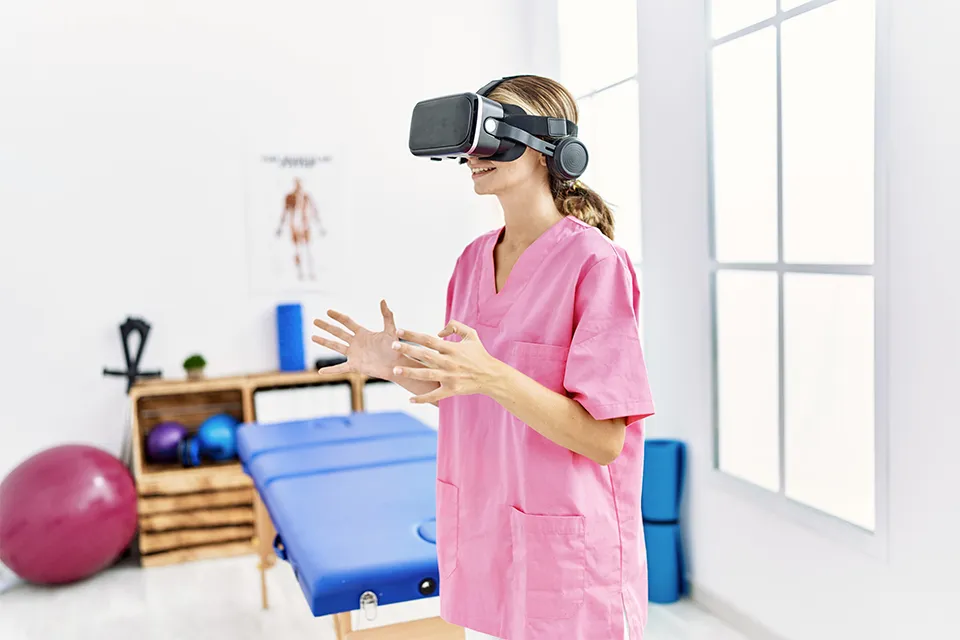
• VR headset as a training tool for teaching clinical reasoning (PXL): this technology can gradually prepare a patient facing a future with limited mobility for their future limitations. A care provider or teacher can experience for themselves what it is like to be highly sensitive. Or consider a professional who works on home adaptations: they can move through a house virtually, for example as a wheelchair user.
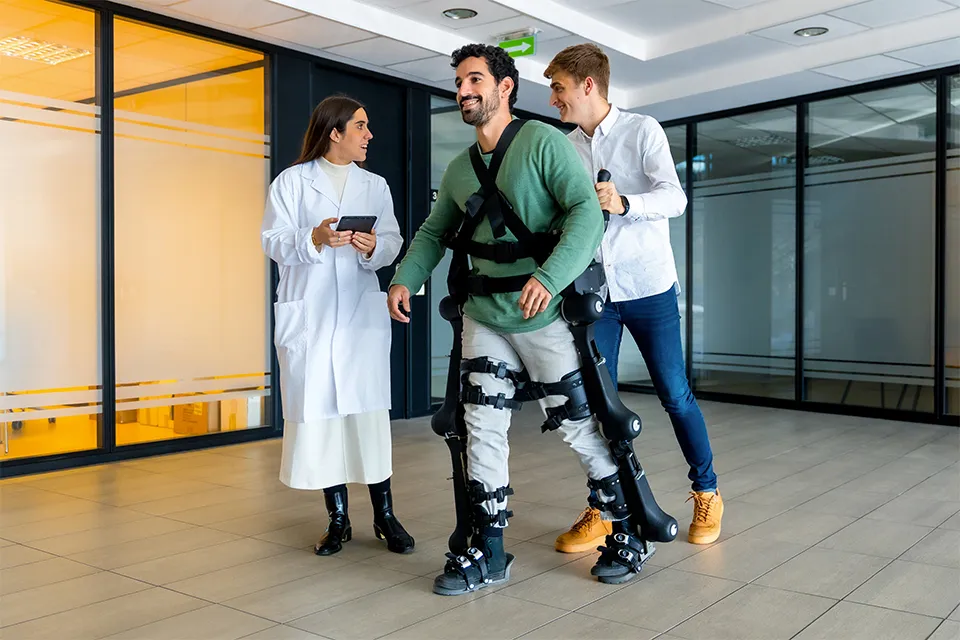
• Lightweight exoskeletons (Thomas More): both healthcare staff and patients can benefit from body-supporting exoskeletons, which can be powered or passive. In practice, these include an active elbow brace, hand support or a stabilising shoulder harness that provides greater freedom of movement.
• Patient rehabilitation using VR and a treadmill (UCLL): this technology makes rehabilitation after paralysis more efficient and safer. Patients practise in a controlled environment using a VR headset and treadmill, completing tasks that support their recovery. This reduces the workload for physiotherapists and makes rehabilitation more accessible.
• Real-time ergonomic monitoring using sensors or images (Flanders Make): time-consuming physical observation methods for assessing physical strain among healthcare staff are being replaced by offline and online risk assessment methods and software for the ergonomic design of workstations.
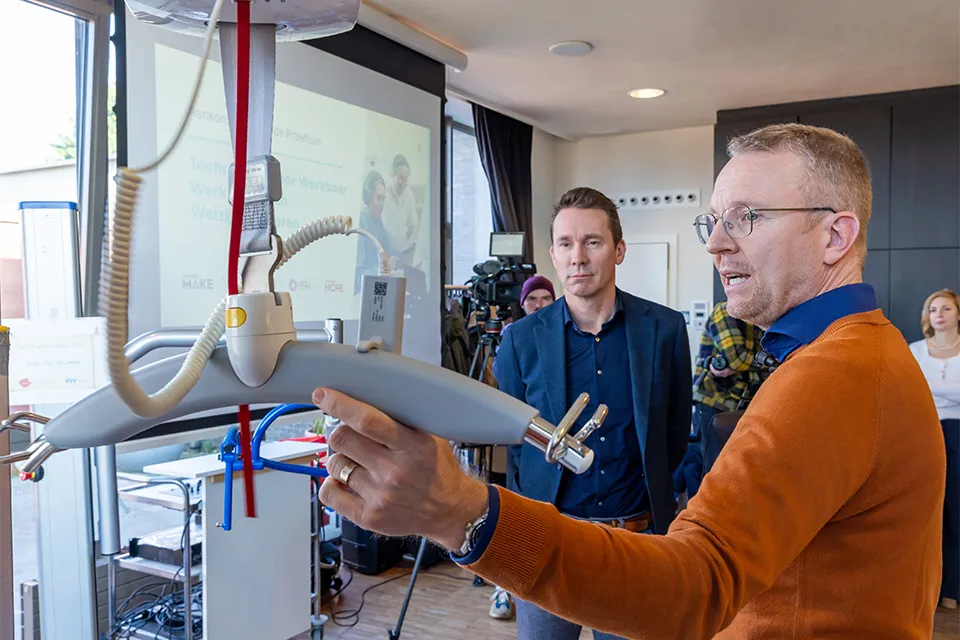
Alongside these innovations, other technological aids are also being further refined, such as intuitive powered drive assistance for both active and passive patient lifts. These aids are increasingly evolving into solutions tailored to the needs of care providers.
Extra comfort for patients and residents
The examples above clearly show that smart technology can significantly improve comfort for patients and residents in healthcare facilities. Systems that allow a care-home resident or hospital patient to control the lighting, heating and blinds with a simple voice command or through an app may soon become commonplace.
For people with limited mobility, this can greatly increase their independence and quality of life.
Another example from practice is smart beds fitted with sensors that improve comfort by automatically adjusting to the right lying position. These beds also continuously monitor vital signs such as heart rate and breathing, allowing medical specialists and healthcare staff to detect abnormalities sooner. Innovative devices and appliances also provide extra support for residents in assisted living facilities as they go about their daily activities. These include smart fridges that generate shopping lists and voice-activated devices that provide reminders to take medication.
More efficient workflows for staff
As we mentioned in the introduction to this article, the high workload faced by staff at healthcare facilities, in both the Netherlands and Belgium, remains a pressing problem. Why not ease that workload with technology that can automate tasks and make them more efficient? Advanced tracking systems, for example, make it easy to locate medical equipment and assistive devices. This saves valuable time and prevents frustration among healthcare staff. Another growing trend is the integration of electronic patient records with real-time monitoring systems. This gives staff an up-to-date overview of a resident’s or patient’s health at all times. It not only makes work more efficient, but also minimises the risk of errors.
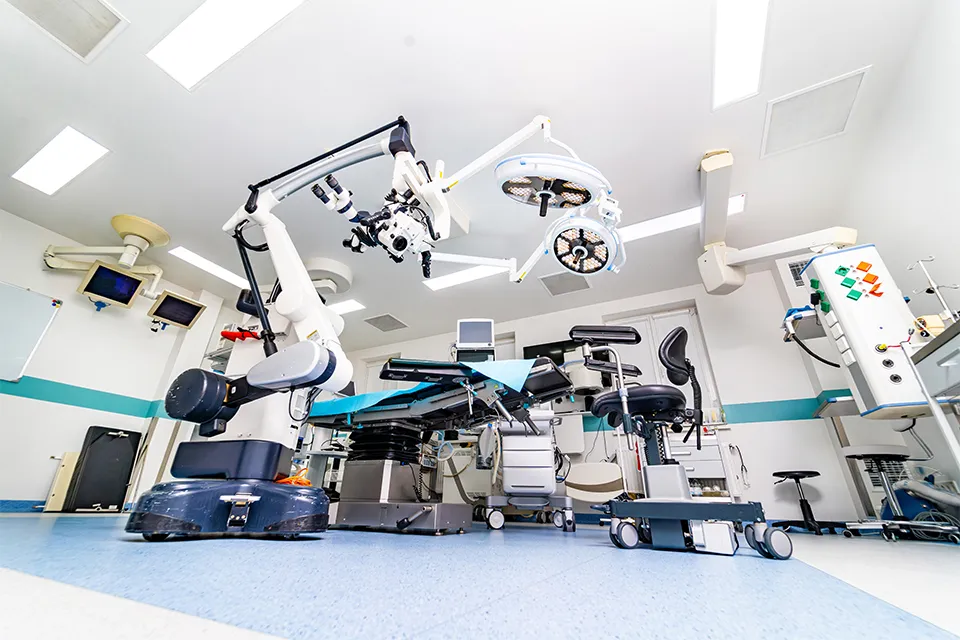
New technology is also changing the way operating theatres work. The use of surgical robots not only increases the precision of medical procedures, but also speeds up patient recovery.
Technology as an invisible ally
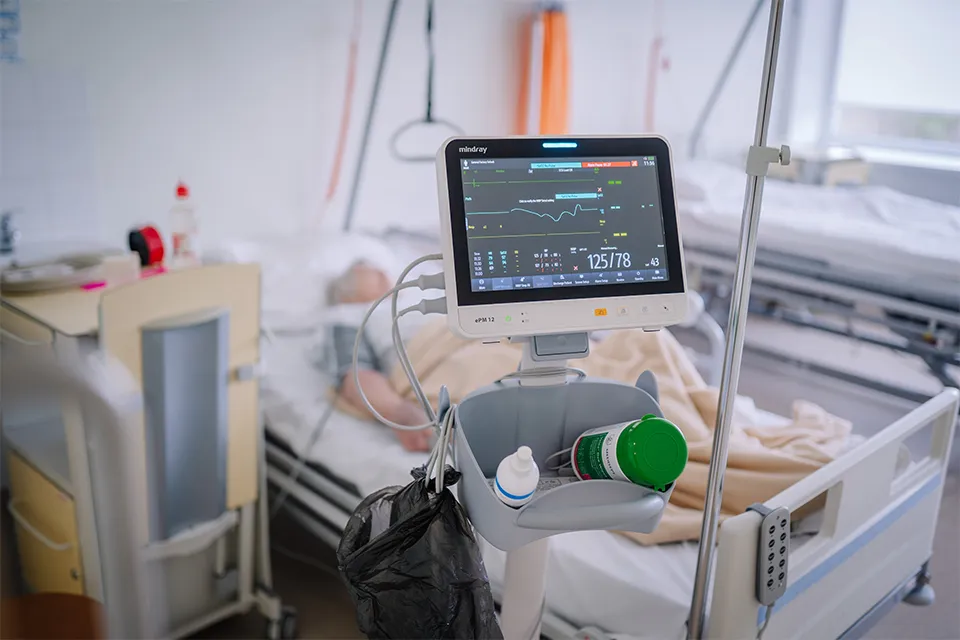
The safety of residents, patients, visitors and staff is a daily priority at healthcare facilities. This is another area in which technological innovation is playing an increasingly influential role. Take sensors that automatically trigger an alarm if someone falls. This can literally be a matter of life and death, especially in care homes, where a fall can have serious consequences. These systems enable care staff to respond quickly and prevent further complications.
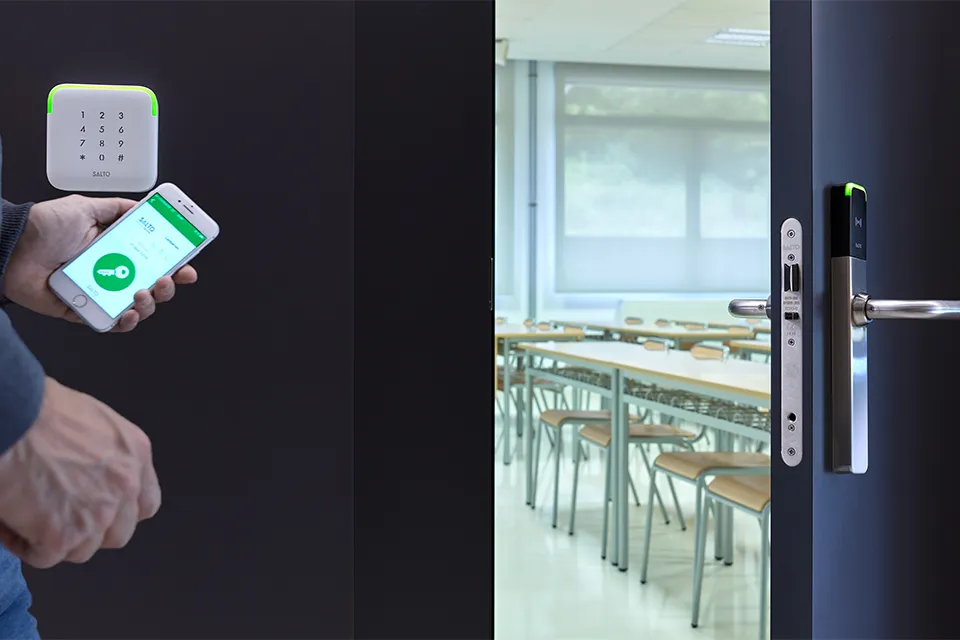
Access control also plays a major role. Smart badges or facial recognition ensure that only authorised people can enter certain areas, such as a medicine cupboard or operating theatre. This prevents accidents and makes everyone safer. Fire safety is another area where technology makes a difference. Modern smoke detectors do more than detect smoke: they also measure air quality and temperature, and send this information directly to a central control room. This enables staff to take immediate action when necessary. Then there is infection prevention, something we have become particularly aware of since the Covid-19 pandemic. Smart sensors can, for example, record whether people have disinfected their hands before entering a high-risk ward. It is a simple measure with a major impact on the spread of pathogens.
The future: integration and personalisation
In any case, the future of smart technology in healthcare lies in integration and personalisation. Systems are becoming increasingly interconnected, making it possible to combine data from different sources to build a complete picture of a resident’s or patient’s health. Smart technology will not replace care, but it will support it. Ultimately, care is about people, and technological innovation can make it even more personalised and effective.
Question about this story? Ask your question
Keep following this
Get an email when a new story is published. No account needed.
- SubjectZorgTech