Farewell to committed healthcare innovator Minister Conny Helder
Text Peter SwelsenImage Arenda Oomen Fotografie
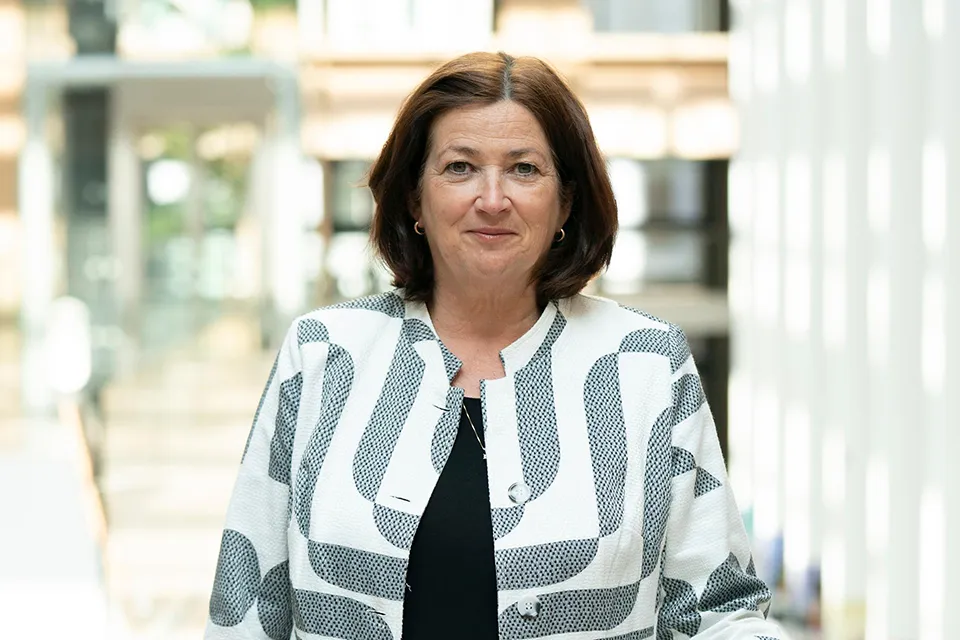
On 30 June 2024, Conny Helder stepped down as Minister for Long-term Care and Sport. For almost three years, she worked with remarkable dedication in the Rutte IV cabinet to lay a new, sustainable foundation for healthcare in the Netherlands. Her innovative approach and determination have made a lasting impression.
Helder’s vision: the time to act is now
Before becoming a minister, Helder had almost forty years of experience in healthcare. Among other roles, she was an executive at the innovative care organisation TanteLouise. She began her term as minister on 10 January 2022, alongside Minister of Health, Welfare and Sport Ernst Kuipers. Their joint mission was to improve Dutch healthcare through digitalisation, appropriate care, better data availability and more efficient (regional) organisation. It is hoped that her successor will be just as committed to these clear objectives.
Helder has a strong belief in the power of innovation to transform healthcare. Her message was clear: “We need to organise care differently to keep it sustainable and attractive.” In her view, technological progress and efficient organisation are crucial to the future of healthcare. “We need to get moving now,” Helder often stressed. Her motto, ‘The time to act is now!’ underlines her determination.
Innovation and digitalisation
At care provider TanteLouise, Helder championed digital innovation in elderly care. She sees technology as a means of improving the quality of care and easing the workload of healthcare professionals. Coming up with smart solutions that improve care quality and ease the workload of healthcare professionals was one of her frequently heard messages. Her vision of using digitalisation to curb healthcare costs and boost efficiency was widely embraced across the sector.
Involvement in IZA and WOZO
As minister, Helder played an important role in the Integral Care Agreement (IZA) and the Housing and Care for Older People programme (WOZO). These programmes aimed to future-proof the care sector. “Without the right integration, we will continue to work on isolated solutions,” she emphasised.
Building healthcare, literally and figuratively
Helder’s time in office was marked by policy measures and practical initiatives to improve healthcare infrastructure. One visible result of her work was the creation of thousands of suitable homes for older people. On 20 March 2024, eleven municipalities, care organisations and housing associations, among others, signed an agreement to deliver 6,590 suitable homes for older people by 2030. Helder emphasised the importance of homes that enable older people to live independently for longer: “More and more older people want to remain independent for as long as possible and retain control over their own lives.” Helder also backed the construction and renovation of care facilities, as well as innovation using modern technologies such as care robots and advanced communication platforms. These projects demonstrate her tireless commitment to improving healthcare both physically and technologically.
Looking to the future and engaging young people
Finally, Helder repeatedly emphasised the importance of involving young people in healthcare. She believes that the current generation of healthcare professionals must lay a solid foundation to ease the burden on future generations. “We cannot let the entire demand for care fall on their shoulders,” she warned some time ago. She also encourages investment in training and continuing professional development for healthcare staff, to keep their skills and knowledge as up to date as possible.
A lasting influence
Helder’s time as Minister for Long-term Care and Sport was marked by her determination to innovate and make the care sector more sustainable. Her vision, grounded in digitalisation, integrated care and tangible construction initiatives, continues to influence healthcare in the Netherlands. On stepping down, she left behind a solid blueprint for a new model of care organisation, which her successor can build on with confidence.
Question about this story? Ask your question
Keep following this
Get an email when a new story is published. No account needed.
- SubjectInterviews & columns