Multi-million-euro grant for research into sustainable surgery
Operating theatres are responsible for a large share of healthcare’s environmental impact. At the initiative of Maastricht UMC+, a group of ten hospitals and clinics will investigate how to reduce this impact. Using a common procedure, gallbladder removal, they will analyse and explore how it can be made more sustainable. They will receive a €3.4 million grant from the Dutch Research Council (NWO) for this work.
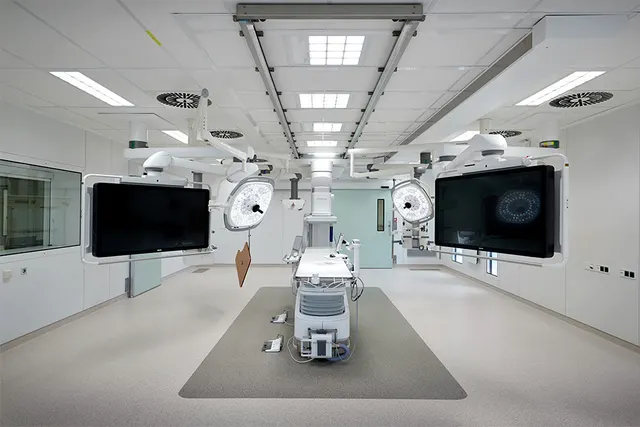
Healthcare in the Netherlands is responsible for 7-8% of total greenhouse gas emissions. In hospitals, at least 20% of this comes from the operating theatre. This includes waste, inhaled anaesthetic gases, ventilation and pharmaceutical residues in wastewater.
A new dimension
Hospitals are already paying considerable attention to sustainability, for example through the Green Deal Zorg 3.0 and various ‘Green Teams’, including one at Maastricht UMC+ (MUMC+). This research adds a new dimension, under the leadership of MUMC+ professor of innovative surgical techniques Nicole Bouvy: an in-depth analysis based on a common procedure, laparoscopic gallbladder removal, which is performed 15,000 times a year in the Netherlands. To cover all aspects of sustainability, a diverse team has been assembled: researchers, doctors, nurses, psychologists, philosophers, materials procurement specialists, policymakers and representatives from the pharmaceutical and medical instrument industries, water authorities, TNO and RIVM.
Mapping the environmental impact
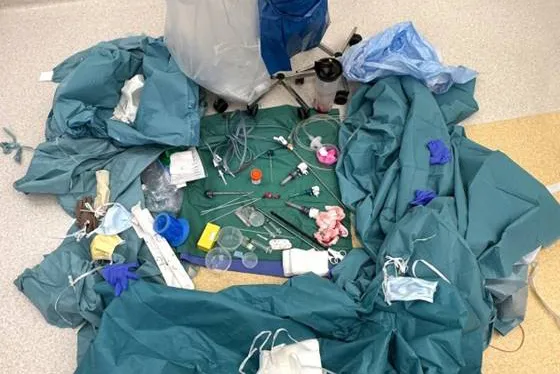
The researchers will carefully map the environmental impact of gallbladder removal, explains Bouvy. ‘On average, we use around 7 kilos of disposable materials for this operation. The environmental impact also includes operating theatre ventilation, pharmaceutical residues in wastewater and patients’ journeys for follow-up appointments. We are also looking at whether too many people are being operated on, since research shows that some patients do not experience an improvement in their symptoms after surgery. Not operating is, of course, more sustainable than operating. Once we understand all the different sources of environmental impact, we can develop plans for making surgery structurally more sustainable.’ The research focuses on two aspects: behaviour and ethics. To this end, Bouvy is working with, among others, Frank van Harreveld, professor of social psychology at the University of Amsterdam, and Marc Davidson, professor of philosophical ethics at Radboud University.
Behaviour
Making sustainable choices is largely a matter of behaviour, explains Bouvy. ‘Surgery is a human activity. So if we want to work more sustainably in the long term, we will need to change behaviour. That is why we have involved psychologists: first, to understand why people make certain choices. We then want to influence this behaviour and ensure that the professionals involved genuinely trust and accept more sustainable ways of working. We hope this will lead to lasting change over time.’
Ethics
Philosophers and ethicists are also part of the research team. Ethics is an important perspective, explains Bouvy. ‘Take the 7 kilos of disposable materials we use. This is the result of the decisions we make about safety: if disposable materials are safer than reusable ones, even if the difference is minimal, we choose disposables. The environment has never been part of this decision. We want to open up the discussion: how does the balance change if we take the environmental impact of disposable materials into account? How much improvement in patient safety justifies how much environmental impact? These are difficult ethical questions, but they need to be raised.’
CAREFREE
The research is titled CAREFREE (Creating A healthieR Environment for FutuRE patiEnts). Alongside Maastricht UMC+, the following institutes are part of the research team: Radboudumc, Radboud University, Amsterdam UMC, University of Amsterdam, UMCG, Laurentius Ziekenhuis, Rijnstate, Spaarne Gasthuis, Isala (ziekenhuis), Heelkunde Instituut Nederland, Annadal Kliniek and Maastricht University.
Question about this story? Ask your question
Keep following this
Get an email when a new story is published. No account needed.
- ThemeSustainable healthcare buildings
- SubjectSustainability