











34 Gelderland care organisations launch image campaign for elderly care
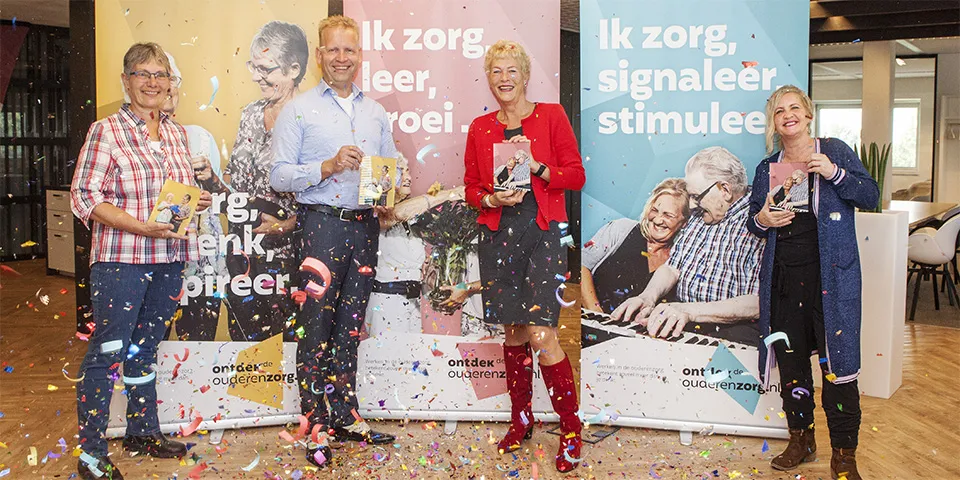
34 Gelderland care organisations want to improve perceptions of working in elderly care. They are joining forces to show what it is really like to work in elderly care. Research shows that more than 90% of staff in elderly care are proud of their work and describe it as ‘challenging’. Yet people who do not work in the sector still have too little understanding of what the job involves. That is why the large-scale campaign shows that working in elderly care is about more than caring for an older person. It is also about thinking up ideas, organising, inspiring, learning, growing, identifying needs, encouraging and much more.
‘Working in elderly care means so much more than you think.’ That is how the organisations want to explain what it is really like to work in elderly care. Wiko Vlasblom, chief executive of one of the care organisations, says: “Elderly care is a wonderful sector. You do not hear the positive stories often enough, so now we are sharing them. It is meaningful and enjoyable work. As a care worker, you connect with every older person to discover what suits them. For example, an older person who used to do highly technical work but can no longer do so. You then think: ‘What could he still do?’ In this way, you really help older people move forward; you inspire them.” One version of the new campaign is therefore ‘I care, think, inspire’. The campaign features real care workers and clients.
The challenge in elderly care
The immediate reason for the campaign is the shortage of staff in elderly care. New labour market figures, analysed by Werkgeversvereniging Zorg en Welzijn Gelderland (WZW), show that in 2022 too few people are still choosing a job in healthcare, including elderly care. The shortage in healthcare in Central, South and West Gelderland alone could reach 5,402 workers in 2022. Wiko Vlasblom continues: “Older people often have several co-occurring conditions. This requires a great deal of medical knowledge. But your work is not limited to providing care and performing medical procedures. You identify needs and consider how best to meet them together with older people. This enables the older person to have the best possible day within their own circumstances. You also have coordinating duties, for example involving family members, colleagues and other care providers.” In the research conducted for the campaign, staff said they valued the contact with clients. They also said they were proud of their work and learned new things.
So much more than caring
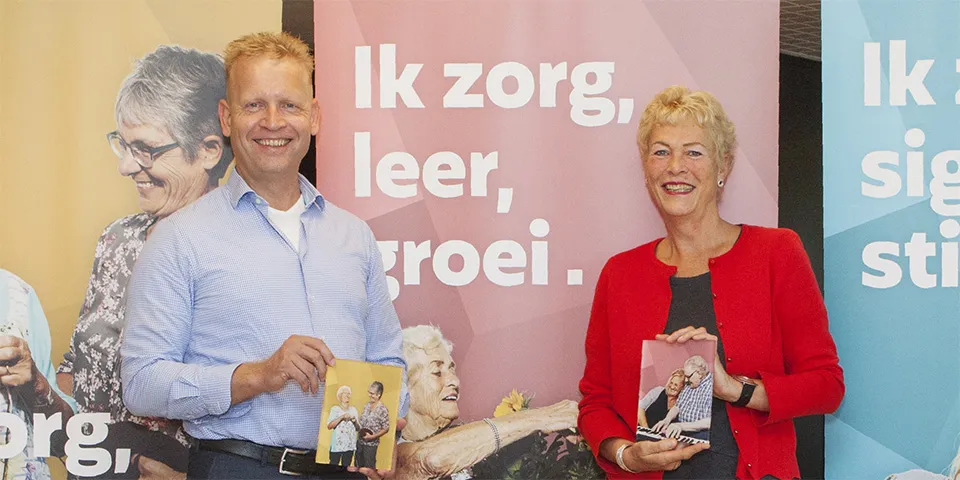
In 2018, the Ministry of Health, Welfare and Sport launched the public campaign ‘Ik Zorg’. “We want to build on that, because working in elderly care is about more than caring. You work closely with other care disciplines, such as physiotherapy. The responsibilities, contact with clients and variety also make the work so challenging for staff that they would not want to do anything else,” says Ineke Oude Boerrigter, another chief executive of one of the care organisations. Yet this message does not stick with many people in the Netherlands. “People see it as hard work. And of course it is. But it is so much more. During the research, staff said: ‘Come and spend a day with us, and you’ll see for yourself how enjoyable and challenging the work is.’ You have to experience and feel it.” The campaign launched this week and can be seen throughout the region.
Question about this story? Ask your question
Keep following this
Get an email when a new story is published. No account needed.
- SubjectGeneral







