











Atmosphere and comfort at the heart of new ZAS Palfijn renal dialysis unit
Text Koen MortelmansImage Ziekenhuis aan de Stroom, Dirk Kerstens
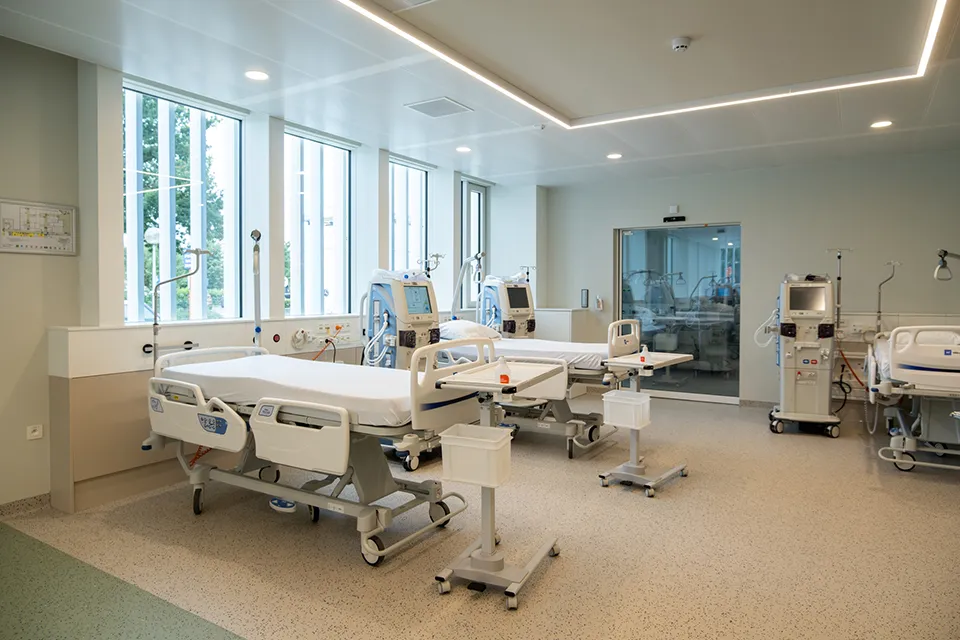
Renal dialysis patients at ZAS Palfijn Hospital in Merksem, a district of Antwerp, can now receive treatment in a brand-new low-care dialysis unit with capacity for 2,100 treatments a year.
ZAS Palfijn is one of the 17 campuses of the new Ziekenhuis aan de Stroom (ZAS), the recently approved merger of Antwerp hospital groups ZNA and GZA. Alongside eight chairs, the unit has eight beds for patients with limited mobility. Twelve of the 16 places are used for scheduled appointments. At the other four, patients can decide for themselves when to come in for dialysis, during the low-care unit’s opening hours.
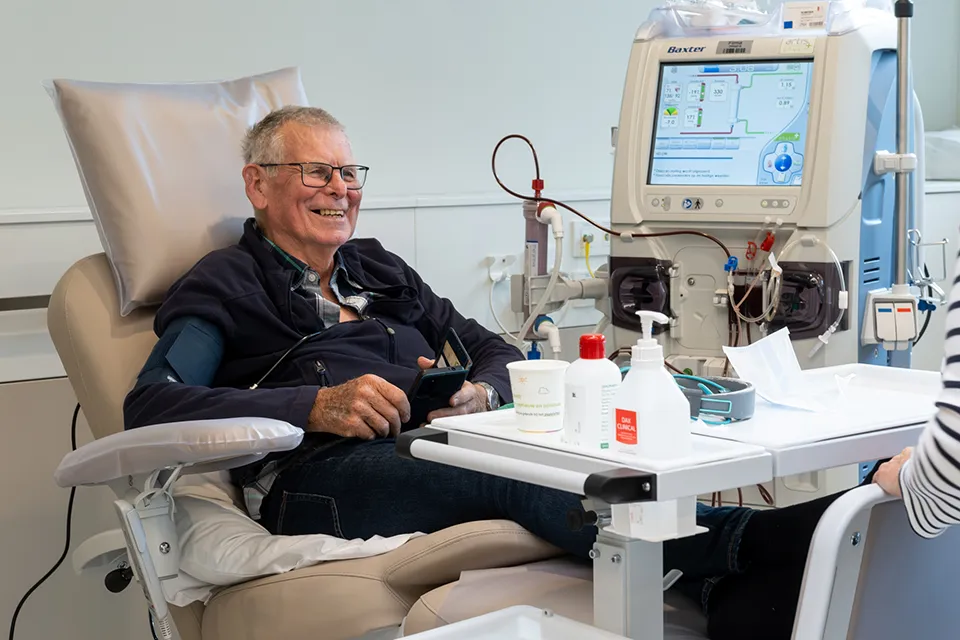
Almost one in five renal patients does not require urgent medical care or intensive medical supervision during dialysis. They can be treated at the low-care dialysis centre. Patients requiring more care and supervision are treated in the hospital’s high-care unit.
Investing in comfort
“With the opening of this dialysis unit, we have completed the first stage of a €68 million investment,” says Dr Wendy Engelen, medical head of nephrology. “The previous dialysis unit needed replacing. We have therefore invested €5 million in an attractive, comfortable environment equipped with the latest technology. That matters, because these patients spend four hours here three times a week. To make their time here more pleasant, we have provided tablets that they can use to read or watch a film or television programme, for example. This means the sound from a television set does not disturb other patients.”

Sustainable approach
The renovated renal dialysis building, with only the floor slab retained, meets several sustainability requirements. The extensive green roof is planted mainly with stonecrop. Filtered rainwater, stored in a 25,000-litre buffer tank, is used to water the plants on the site and flush the toilets. A second buffer tank, with a capacity of 7,000 litres, collects osmosis water, a by-product of dialysis. This water is also used to irrigate the plants. The dialysis equipment runs only when in use. This prevents unnecessary noise from disturbing neighbours and reduces the hospital’s energy consumption.
The nephrologists and specialist nurses involve low-care renal dialysis patients closely in their treatment. Patients who wish to can help prepare the dialysis machine. During dialysis sessions, they alert the nurse if an alarm sounds on the machine. Some patients also learn to insert a needle into the connection between an artery and a superficial vein.
Facts and figures
Client:
Ziekenhuis aan de Stroom, Antwerp
Design: Assar Llox, Antwerp
Main contractor: Brebuild, Antwerp
A business enquiry for Assar Architecten? Get in touch
Who worked on it
ZAS Palfijn low-care dialysis in Antwerpen
- Design
 Assar
- Main contractorBrebuild
- ClientZiekenhuis aan de Stroom
Keep following this
Get an email when a new story is published. No account needed.
- ProjectZAS Palfijn low-care dialysis
- SubjectGeneral
- CompanyAssar Architecten
- CompanyBrebuild
- CompanyZiekenhuis aan de Stroom







