











Getting started now on a gas-free, carbon-neutral hospital by 2050
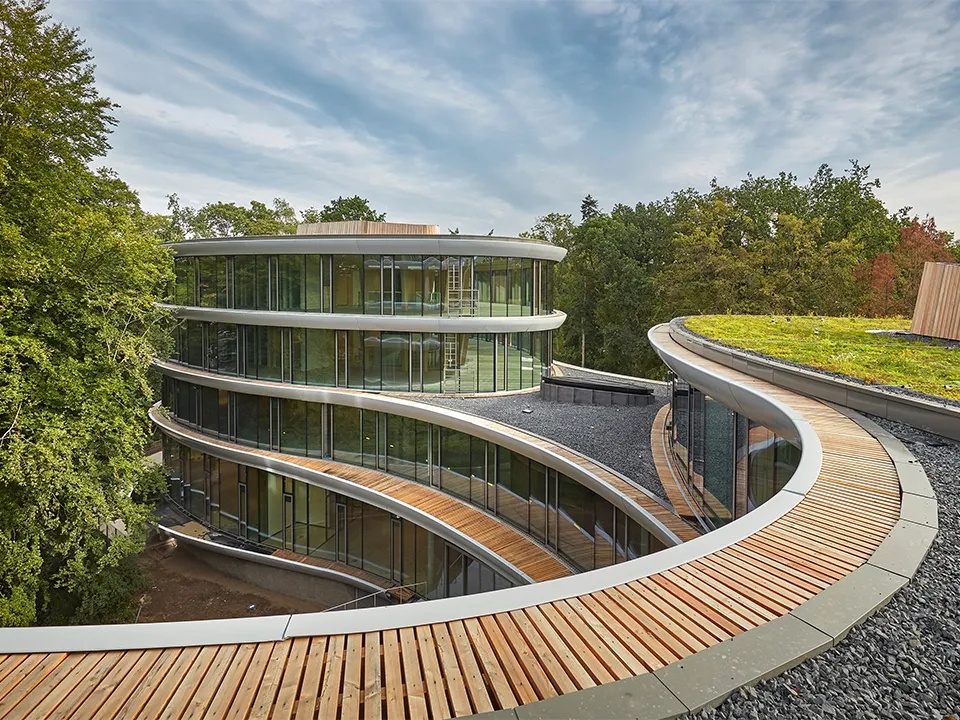
By signing the Green Deal, hospitals in the Netherlands have committed to making their operations and buildings more sustainable.
When building new facilities or revitalising existing ones, they face the challenge of making their building or buildings more sustainable and gas-free. Although 2050 may still seem a long way off, the amount of energy hospitals need to run their operations makes it clear that far-reaching changes to energy provision will be necessary. Consulting firm Deerns is supporting hospitals in mapping out a route together towards the 2050 climate targets.
Deerns advises on and designs the built environment, and has already designed many energy-neutral buildings. These include the new Triodos headquarters, an energy-neutral and circular building, and Plus Ultra in Amsterdam, which is set to achieve a BREEAM Outstanding rating and has an EPC of -0.61. The new Isala hospital in Meppel, currently under construction, was also designed by Deerns. As well as being energy-neutral, it is one of the first hospitals in the Netherlands to be gas-free. Deerns’ experience in other markets is, of course, brought to bear in hospital design, but meeting climate targets for hospitals involves more than that. Letty Kil, Healthcare Manager at Deerns, says: “Hospitals’ energy needs comprise two ‘streams’: the energy required for building services and the energy needed to run all their processes. Add to that the fact that not every hospital will build a new facility in the coming years, and the full scale of the challenge becomes clear.”
Energy for building services
If a hospital has the opportunity to build new, the building and its services can be designed to use renewable energy sources, such as an aquifer thermal energy storage (ATES) system for heating and cooling. One example is Reinier de Graaf Gasthuis in Delft, designed by Deerns. In 2015, it was the most energy-efficient hospital in the Netherlands, thanks to design choices that minimise energy consumption. These include energy-efficient smart lighting and climate control systems, heat recovery, and underground thermal energy storage (ATES). For existing buildings, a step-by-step approach is needed that works for hospitals. The building envelope will need to be adapted to enable the use of renewable energy sources. This requires not only substantial investment, but also time, while services must continue uninterrupted.
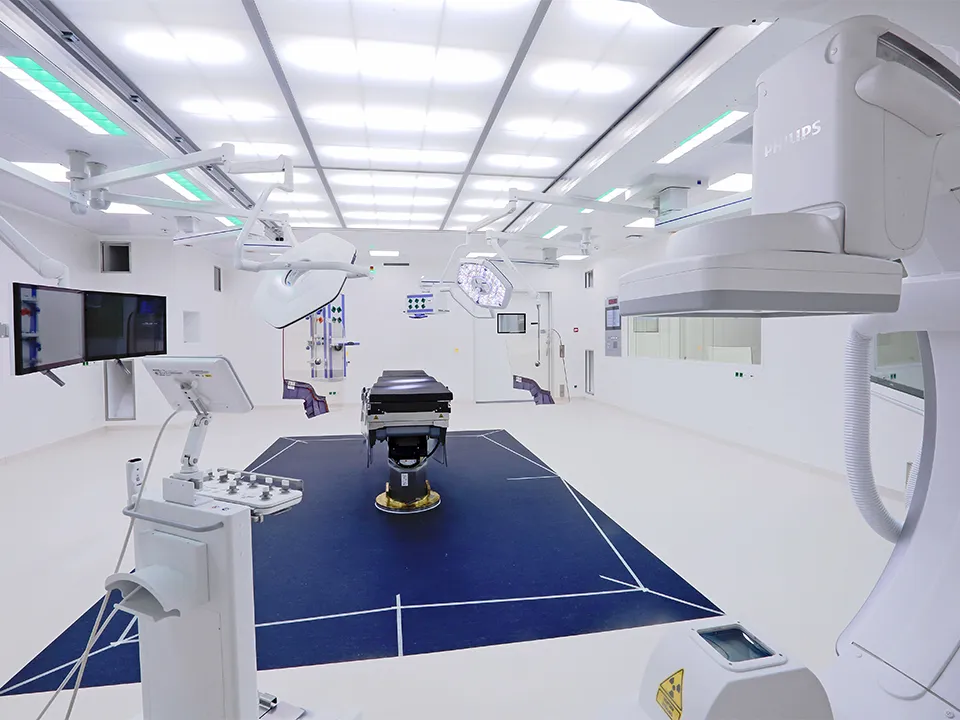
Energy for hospital processes
Hospitals must then meet the energy needs of all their core processes. These needs are expected to rise in the coming years as hospitals gain access to increasingly sophisticated equipment. Equipment such as MRI scanners and other imaging systems, used in hybrid operating theatres, is being used more intensively. Hospitals are also introducing fully automated laboratory lines for conducting analyses. These developments, combined with the shift from gas to electricity for building services, are driving ever-increasing demand for electricity.
Expanding infrastructure
This requires infrastructure to be adapted and expanded, both within hospitals and beyond them. The solution lies in taking an area-wide approach, which means thinking beyond existing boundaries. Rather than looking at a hospital’s energy needs in isolation, we need to consider the needs of an entire area, allowing energy to be shared and/or stored. Buildings can then ‘help’ one another meet their energy needs. To achieve this by 2050, action must begin today. Kil says: “At Deerns, we have all the expertise needed to work with hospitals to map out a route towards a gas-free, carbon-neutral hospital. We welcome the challenge.”
Question about this story? Ask your question
Keep following this
Get an email when a new story is published. No account needed.
- SubjectGeneral







