











Government Architect on the WHO CARES implementation pathway: building connections through a ‘Community of Practice’
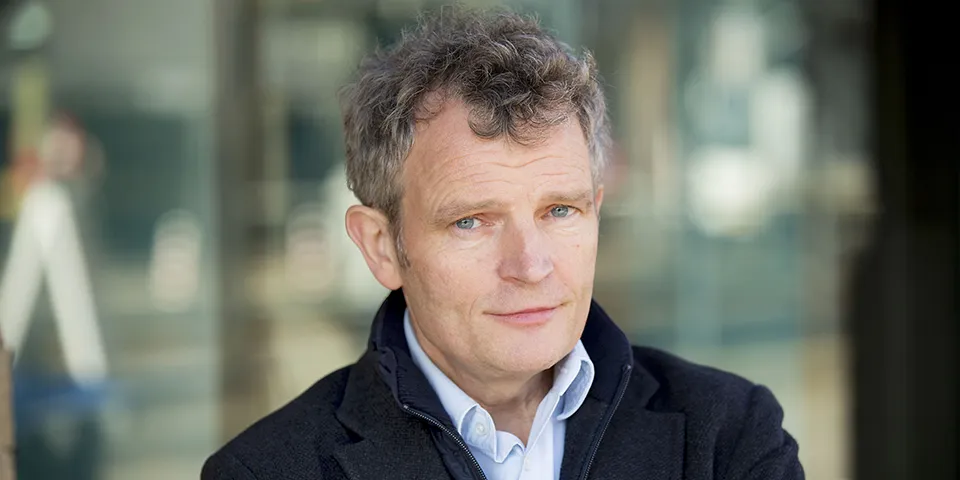
The vision for future care and housing has recently gathered momentum with the WHO CARES competition (2017), which is bringing together social partners to develop new care concepts. “An integrated approach is essential,” says Floris Alkemade, Government Architect and initiator of WHO CARES. “Care and housing concepts are not just about bricks and property, but about how we want to live together in an ageing society.” Bouwen aan de Zorg spoke to Alkemade about the next steps.
The Office of the Government Architect has traditionally focused on design, and this remains a priority for Alkemade, who has held the post since 2015 and was previously a partner at architecture firm OMA. “In the post-war period, design in the Netherlands served public housing for a long time, but in recent decades it has increasingly shifted towards market thinking. As a result, architecture is in danger of becoming impoverished. With projects such as WHO CARES (174 proposals; ed.) and Panorama Nederland, we are trying to develop genuine visions for the future spatial planning of the country.” Alkemade is a committed advocate of multidisciplinary working. “For me, it is not just about the spatial dimension, but about how we live together. The way space is organised may vary, with courtyard living, shared housing concepts or the co-location of community services in one building. But the need for social interaction and access to care in neighbourhoods are common concerns that must be addressed as part of development and regeneration. Through WHO CARES, we are working across disciplines to bring the social dimension to the fore, both in implementing the participating projects and at working conferences.”
Michi-Noeki
Many design teams have continued working together after the design competition concluded in October 2017. “That is one of the encouraging results of the integrated approach: lasting partnerships have been forged, including among teams that did not win.” As a next step, the Government Architect has set up a platform called ‘Community of Practice’. At the end of March, for example, Alkemade visited Groningen to discuss progress on the Michi-Noeki concept, one of the initiatives associated with the WHO CARES competition. “I am very enthusiastic about it, because its creators put connection and social interaction at the heart of their approach.” Michi-Noeki is an ‘adaptive concept’ inspired by Japan. It offers a holistic design theme for buildings and public spaces, bringing local businesses, organisations, volunteers and the authorities together. ‘Groningen’s Oosterparkwijk has spacious urban areas, but these can be difficult for our target group to navigate. We want to use Michi-Noeki to enhance focal points and turn them into carefully designed places for local connection,’ says the team of (urban planning) advisers and neighbourhood partners, which works in an integrated way. One element is simply encouraging people to take a short walk by creating an ‘informal’ place to stop in a neighbourhood park, with, for example, a toilet and/or a café. This is a relatively small intervention that can easily be implemented anywhere in the country.
More housing types
The winning plan from Sittard-Geleen (The neighbourhood as (t)home) also has great potential, Alkemade says. In the Geleen-Zuid and Kluis neighbourhood, plans include creating a walking route and a care farm. Could this be a tailored contribution to social cohesion, resulting from an integrated vision? “As I said, there are different possible approaches to housing itself, and the future is hard to predict. Perhaps there will be hardly any purpose-built care facilities in the future, Gijsbert van Herk of Humanitas told me recently, and care will only be provided at home. What is certain is that we need to work more collaboratively on policy and implementation. The director-generals of the ministries are involved in the project visits, and Aedes will take part in developing Panorama Nederland.” There is a clear need for much greater diversity in housing. “More housing types, especially in the uniform post-war neighbourhoods. Housing associations can contribute, as can private-sector organisations. An ageing population is in fact a luxury problem when you consider the extra years of life gained, and many older people have money to spend. We must also cater for higher-income groups and tackle loneliness across all groups.”
Courtyard living
Alkemade believes that courtyard living, a concept dating back to the Middle Ages, could be valuable as a general approach to semi-independent living on a small or medium scale. “More and more people live alone, and we are living longer. In the Netherlands, we are going to live in smaller and more diverse homes, reflecting the size of households. A diverse range of housing, complemented by enough places to meet and care tailored to the needs of each town or city, can take us a long way. A neighbourhood designed to provide care and support for older people and other vulnerable groups is good for everyone.”
Question about this story? Ask your question
Keep following this
Get an email when a new story is published. No account needed.
- SubjectGeneral







