











Higher consumption tax: sales of healthier juices fall further, while sugary soft and energy drinks gain ground
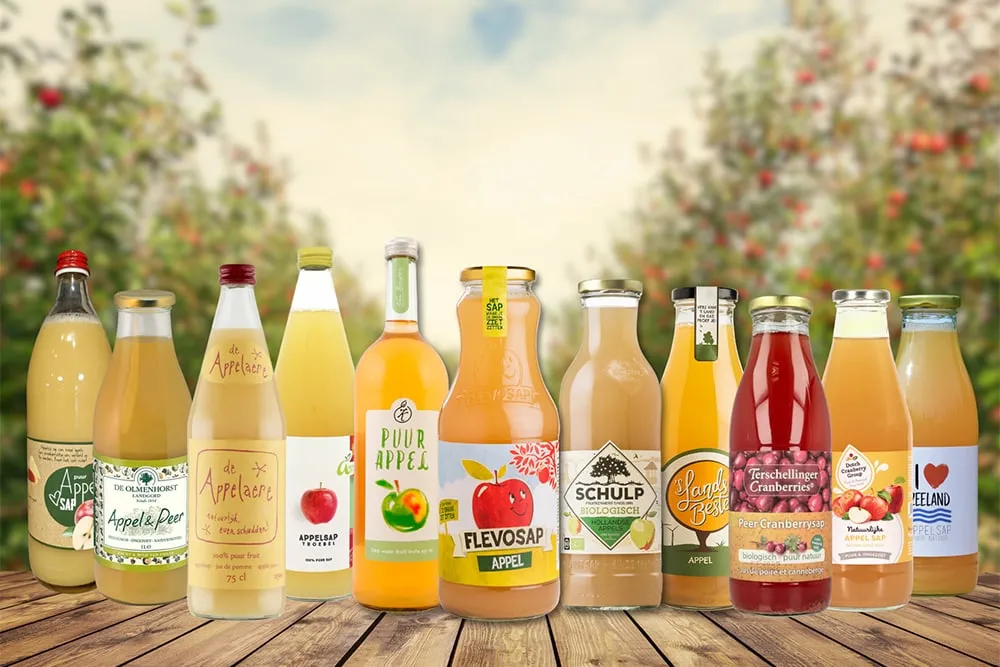
Since the consumption tax was increased on 1 January 2024 this year, people in the Netherlands have been drinking fewer vegetable and fruit juices and more sports and energy drinks. The higher consumption tax, introduced on the grounds that it would help people in the Netherlands consume less sugar, has had little effect on soft drink consumption. The consumption tax overlooks the health benefits of pure vegetable and fruit juices, as confirmed by independent research.
“The latest sales figures underline what we have been saying since the consumption tax was introduced: this tax increase was brought in on spurious grounds and is counterproductive for public health. People in the Netherlands are now consuming more unhealthy added sugars”, says Albert Schulp of Schulp Vruchtensappen, on behalf of artisan juice makers. “Meanwhile, more and more people are giving up juice, and we are seeing supermarket sales fall.”
No distinction between natural and added sugars
At the beginning of this year, the tax on non-alcoholic drinks, such as soft drinks and fruit juices, was increased. The tax rose from almost 9 cents per litre to more than 26 cents per litre. This is expected to generate an additional €300 million a year for the state and encourage people to live healthier lives. The increase was heavily criticised when it was introduced because this flat-rate tax does not take account of how much sugar a drink contains. Nor does it distinguish between (naturally occurring) sugars that are not added, as in vegetable and fruit juices, and added sugars, as found in many dairy, soft and energy drinks.
A few extra cents will not put teenagers off
Schulp says: “The higher consumption tax, combined with rising fruit prices, has made fruit juice so expensive that a family is more likely to leave a carton or bottle of pure fruit juice on the shelf, while the teenager who wants to buy a can of energy drink during their break apparently is not put off by a few extra cents. It really is a world turned upside down.”
Recent sales figures show that the higher consumption tax is not producing a positive health effect, but is having the opposite effect. In the first nine months of 2024, juice makers saw their sales fall by 6 per cent, while the tax had virtually no effect on sales across the soft drink range as a whole (-1 per cent). Manufacturers of energy drinks, which contain a lot of added sugar, saw their sales rise over the same period (+3 per cent). Sales by sports drink manufacturers rose by as much as 12 per cent.
Scientific research shows juice is healthier than previously thought
Scientific research shows that pure vegetable and fruit juices are healthier than drinks with added sugars. For example, doctoral research by nutrition scientist Floor Scheffers shows that moderate consumption of pure fruit juice (1 to 7 glasses per week) has a beneficial effect on the risk of cardiovascular disease, reducing the likelihood by 12% to 15%. Higher consumption of pure fruit juice (more than 8 glasses per week) appears to have no effect on type 2 diabetes. Based on her research, supervised by RIVM and UMC Utrecht, Scheffers concluded that pure fruit juice need not be discouraged, unlike drinks with added sugar. Scheffers also said there is no, or only a small and non-clinical, association between pure fruit juice consumption and overweight, whereas such an association is found for drinks with added sugar. The Netherlands is the only country in the world that actively discourages the consumption of pure juices.
Vegetable and fruit juices back in the “Schijf van Vijf”
Professor Jaap Seidell has also recently spoken about this issue in various media, arguing that vegetable and fruit juices should once again be included in the “Schijf van Vijf”. He also recommends introducing the same system in the Netherlands as in the United Kingdom, where a consumption tax based on added sugars is applied.
The United Kingdom’s differentiated approach as an example
Juice makers are calling on politicians to exempt pure fruit and vegetable juices from the current consumption tax from 1 January 2025 and to work towards a differentiated consumption tax based on added sugars. In the United Kingdom, and dozens of other countries, this has produced measurable results: 50 per cent of soft drink manufacturers have changed the formulations of sugar-sweetened drinks, reducing the total amount of sugar purchased from drinks per household.
Question about this story? Ask your question
Keep following this
Get an email when a new story is published. No account needed.
- SubjectGeneral







