











Life-critical floor hygiene for hospitals and care facilities
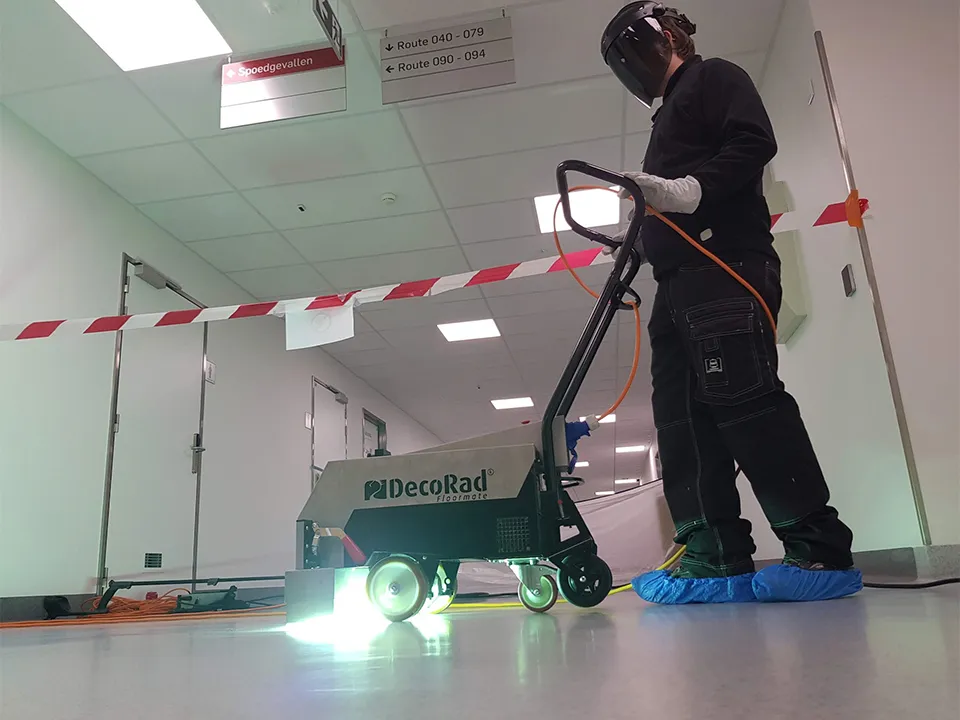
Floors in hospitals and care facilities are subject to stringent criteria to ensure they meet all hygiene and infection prevention requirements.
Waterproof, impermeable, with as few seams or joints as possible, resistant to disinfectant cleaning agents and often antistatic too…these are all requirements that come at a price.
A highly specialised approach
Floorcure, based in Maldegem, specialises in cleaning, maintaining, protecting, repairing and treating soft and hard floor coverings. The company also has a department dedicated to floor repairs and treatments in the hospital and care sector.
With their expertise and professional service, they ensure that every hospital floor quickly meets hygiene requirements again. FloorCure has built up extensive expertise in the wide variety of flooring types used in healthcare, including PVC, linoleum, rubber and ESD flooring.
The importance of a flawless surface layer
With intensive use, the surface layer inevitably becomes damaged over time, making the floor harder for in-house cleaning teams to clean and disinfect. Microscopic damage and scratches in the surface layer allow dirt and bacteria to adhere more readily to the floor, compromising hygiene. Timely repair of the surface layer extends the floor’s lifespan and prevents it from becoming a source of infection in the short term rather than protecting against it. These hygiene considerations are even more important during the coronavirus pandemic.
Practical treatments for PVC, linoleum and rubber floors
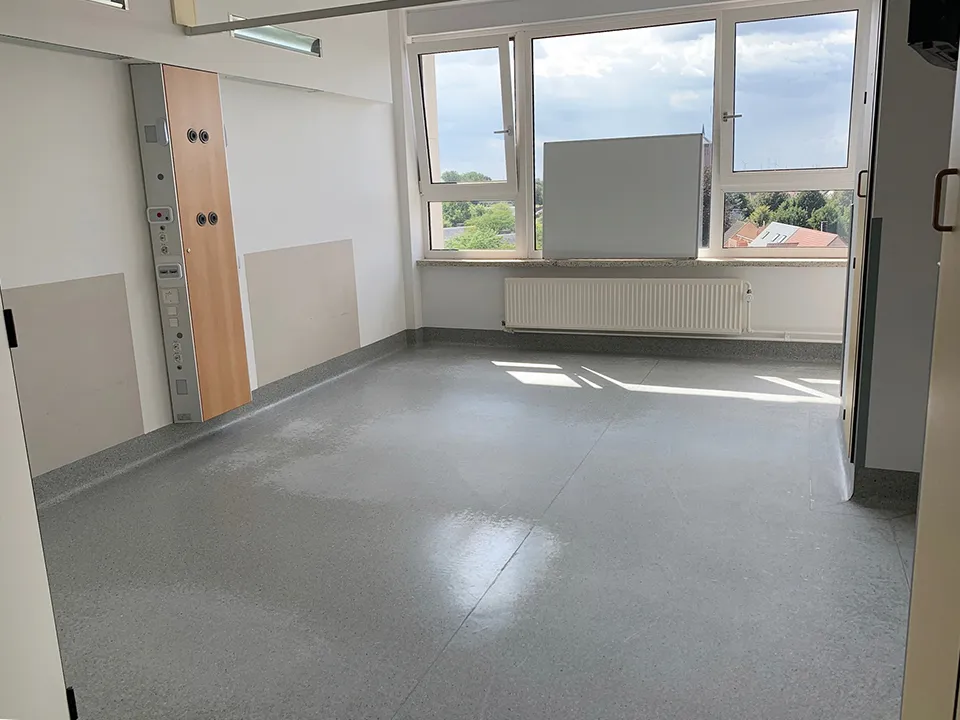
New floors, or floors following construction or refurbishment work, may have been affected by the work, making an initial deep clean necessary to remove all construction dirt. The cleaning team can then begin routine maintenance. The surface layer can also be repaired if it has been damaged.
For older PVC or linoleum floors, they renovate the surface layer using a fast-curing, easy-to-maintain UV coating. Intensive use can quickly lead to scratches and dents. This coating is highly resistant to disinfectants and cures quickly, allowing the space to be used again within 1 to 2 working days. Hospitals cannot afford to wait for a traditional, full week-long curing cycle. The coating used is the closest match to the manufacturer’s original coating.
For new rubber floors, the paraffin layer is removed before use and initial maintenance is carried out, among other steps, making the floor easier to maintain. Older rubber floors can also be treated with a PU coating to make maintenance easier.
Conductive ESD flooring
Because of the conductive properties of ESD flooring, Floorcure works closely with the facility’s safety or prevention adviser. Poor conductivity can have serious consequences for equipment and for the safety of both staff and patients. Floorcure works to the DIN EN 61340-5-1 standards in ESD application areas, such as operating theatres and dental practices. For these applications, Floorcure offers specially developed conductive coatings, including coloured options.
Minimal disruption
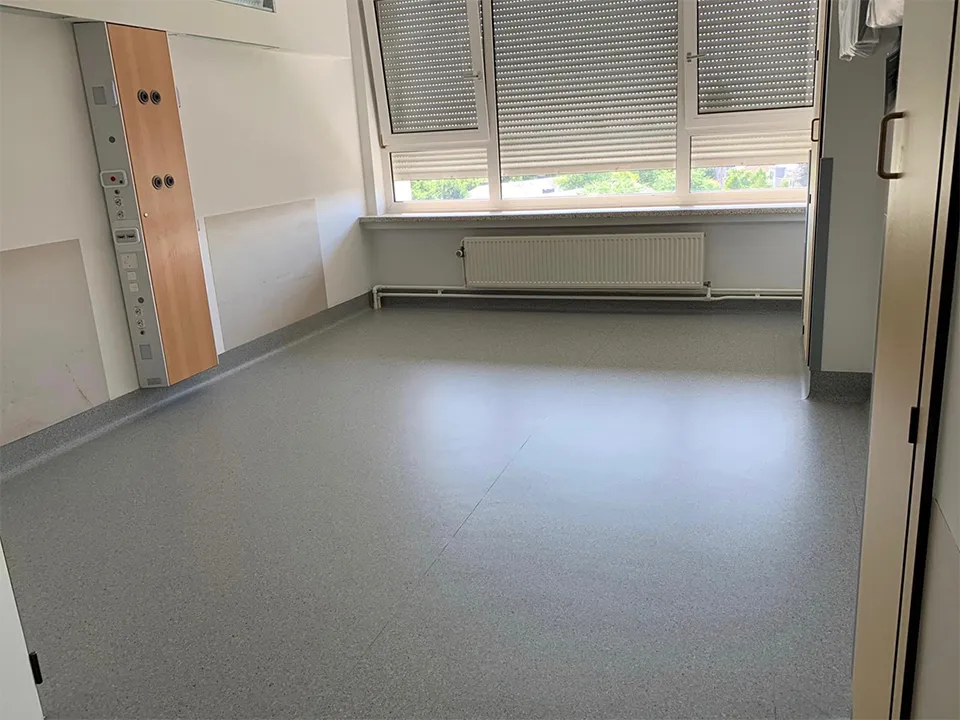
A recent Floorcure project in the healthcare sector involved the complete floor renovation of an entire wing (550 m2) at Ziekenhuis Geel. As part of extensive refurbishment work and upgrades to the building services, they chose to renovate the existing floor covering. This was half the cost and took less time than removing the old floor and installing a new one. The floor was thoroughly machine-cleaned and matt-finished (sanded), after which 2 coats of UV coating were applied. After a drying time of approximately 2 hours, the coating was fully cured using UV light. The entire operation across the wing took just a few days. The rooms could be used again the following day, keeping disruption to a minimum.
Satisfied customers
Danny Van Reeth, Director of Technical and Facilities Services at Ziekenhuis Geel: “After our first positive experience with Floorcure, we decided to work with them again to renovate the floors in several nursing departments. The renovations were carried out in summer, in tropical temperatures, which are not ideal for applying the protective coating. To avoid putting the renovation schedule at risk, Floorcure suggested carrying out the work at night, when temperatures were lower. Mission accomplished: the end result was excellent once again.”
For more information, visit www.floorcure.be
Question about this story? Ask your question
Keep following this
Get an email when a new story is published. No account needed.
- ThemeInteriors for housing and care
- SubjectGeneral







