











New-build residential care facility ’t Boveneind
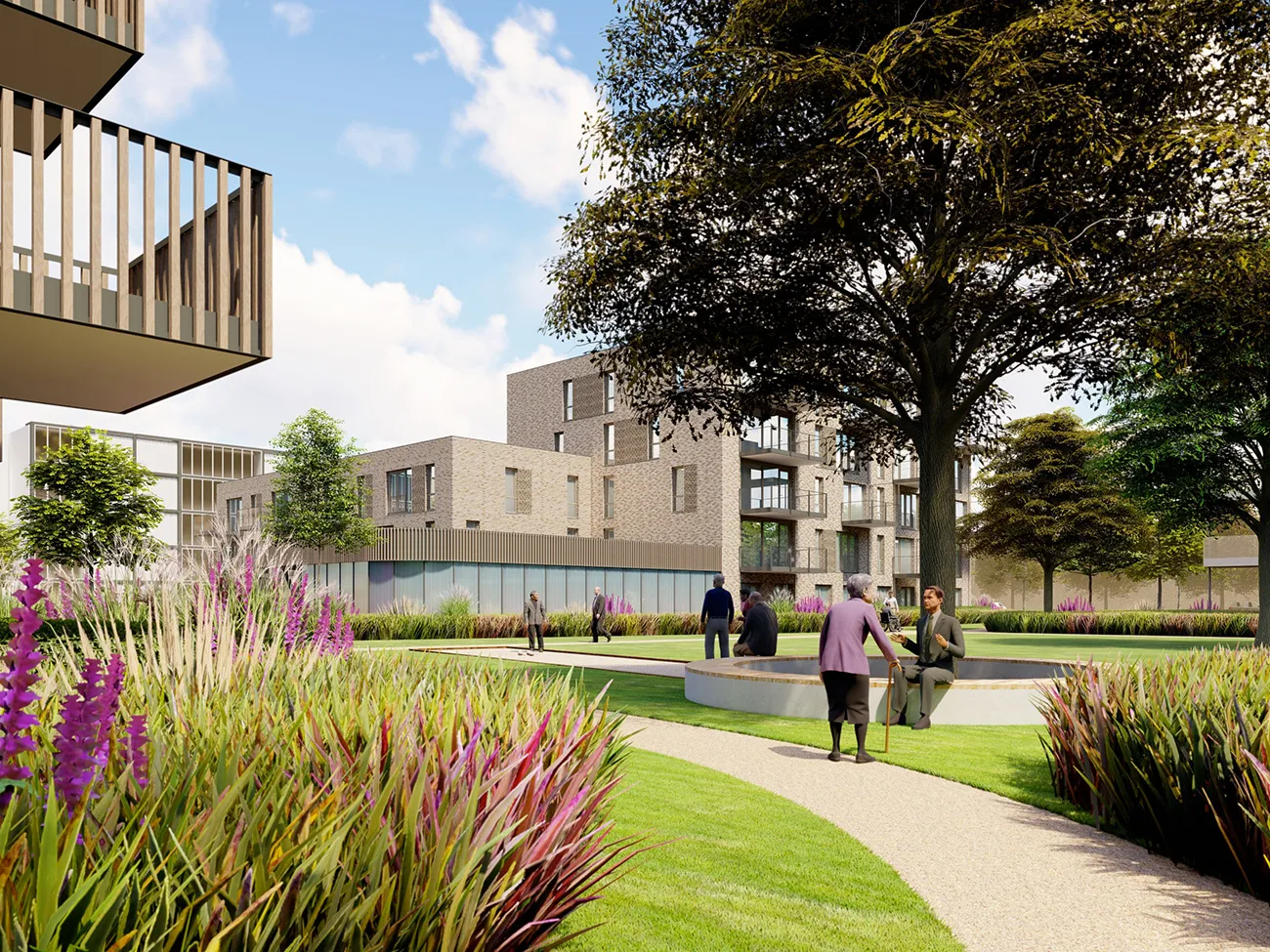
In autumn 2021, Zorggroep Charim is halfway through the construction of ’t Boveneind, a residential care facility for older people in Veenendaal. The first 55 homes have just been completed. A further 49 homes are due by spring 2023. Van Wijnen’s experience in care-related construction is helping the project progress smoothly and efficiently. Collaboration, flexibility and mutual understanding are key.
The starting point: people live here
Building for the care sector is not an expertise that can be taken for granted. It takes considerable flexibility and logistical skills to keep the process on track. Above all, the care of clients comes first. Or, as Evert Stumpel, project developer at Van Wijnen, puts it succinctly: “Our starting point is: people live here.” Together with Helen Geurts, property project manager at Zorgroep Charim, Fabian Bovenlander, director of Van Wijnen Arnhem, and Evert Stumpel, we look at how the process has gone so far.
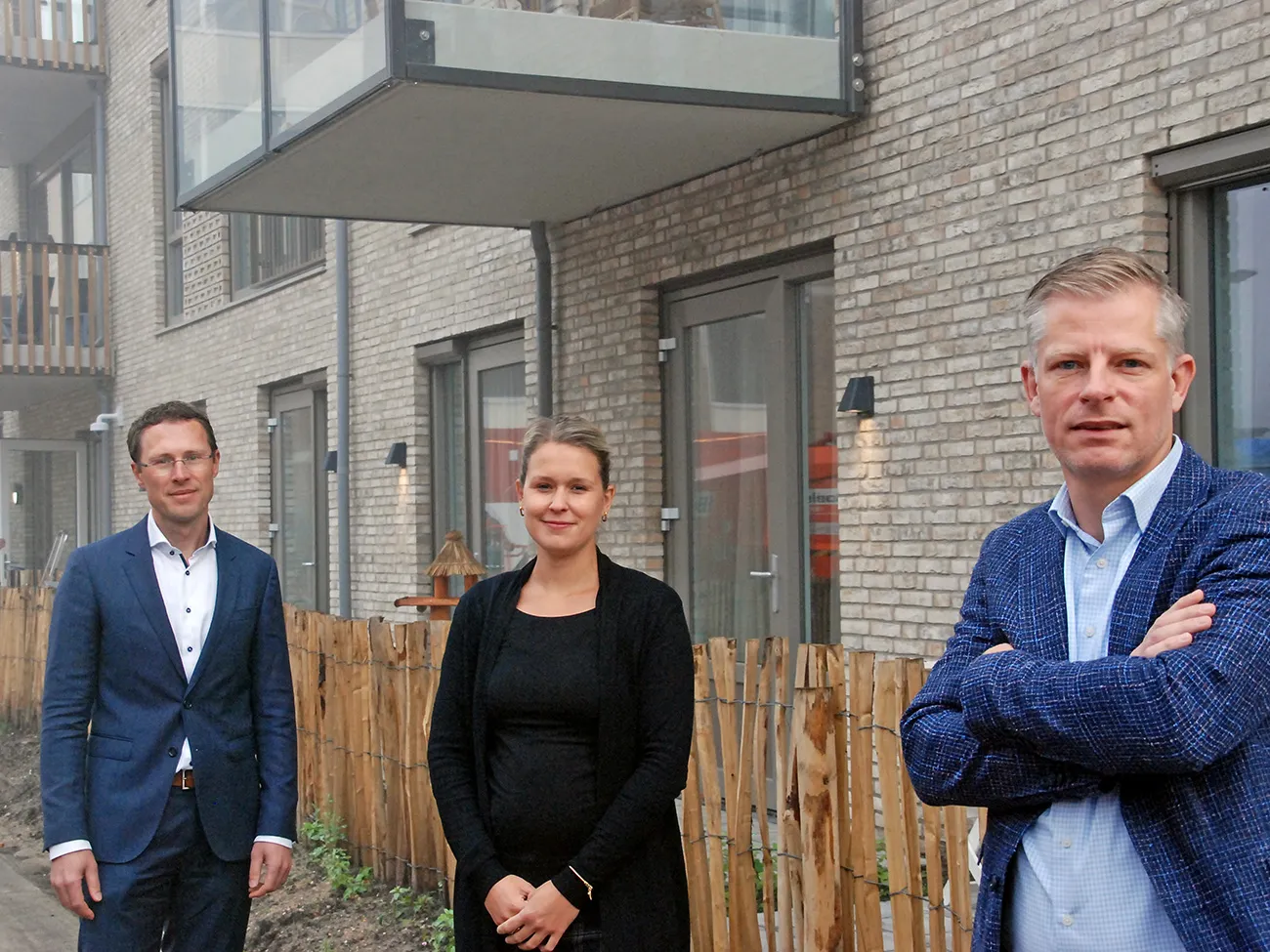
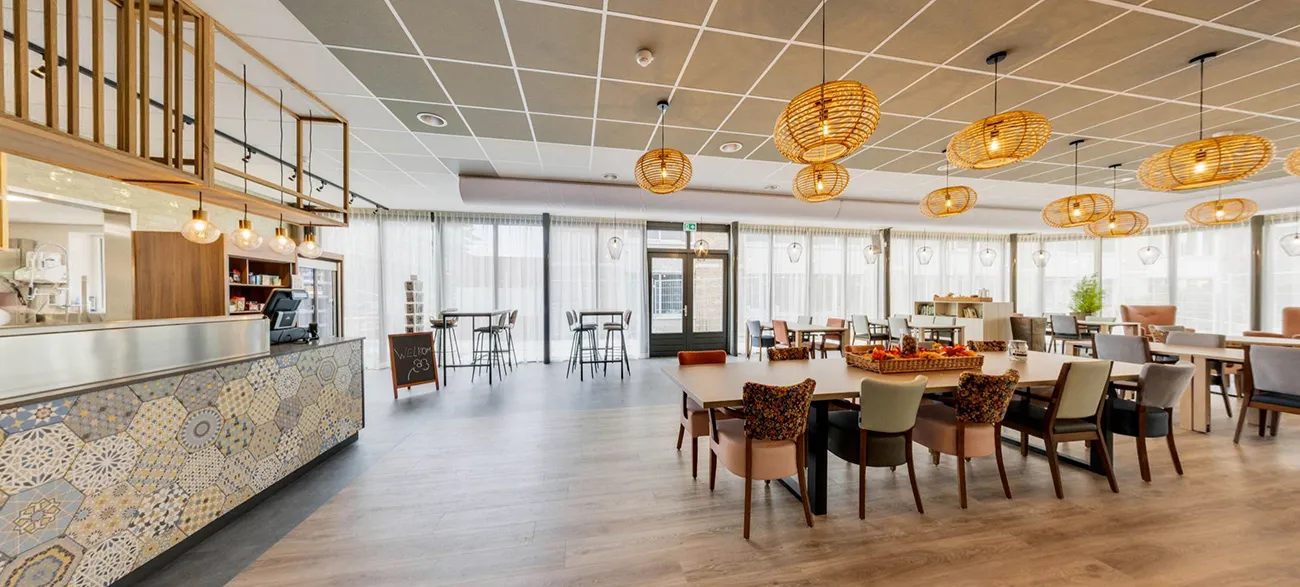
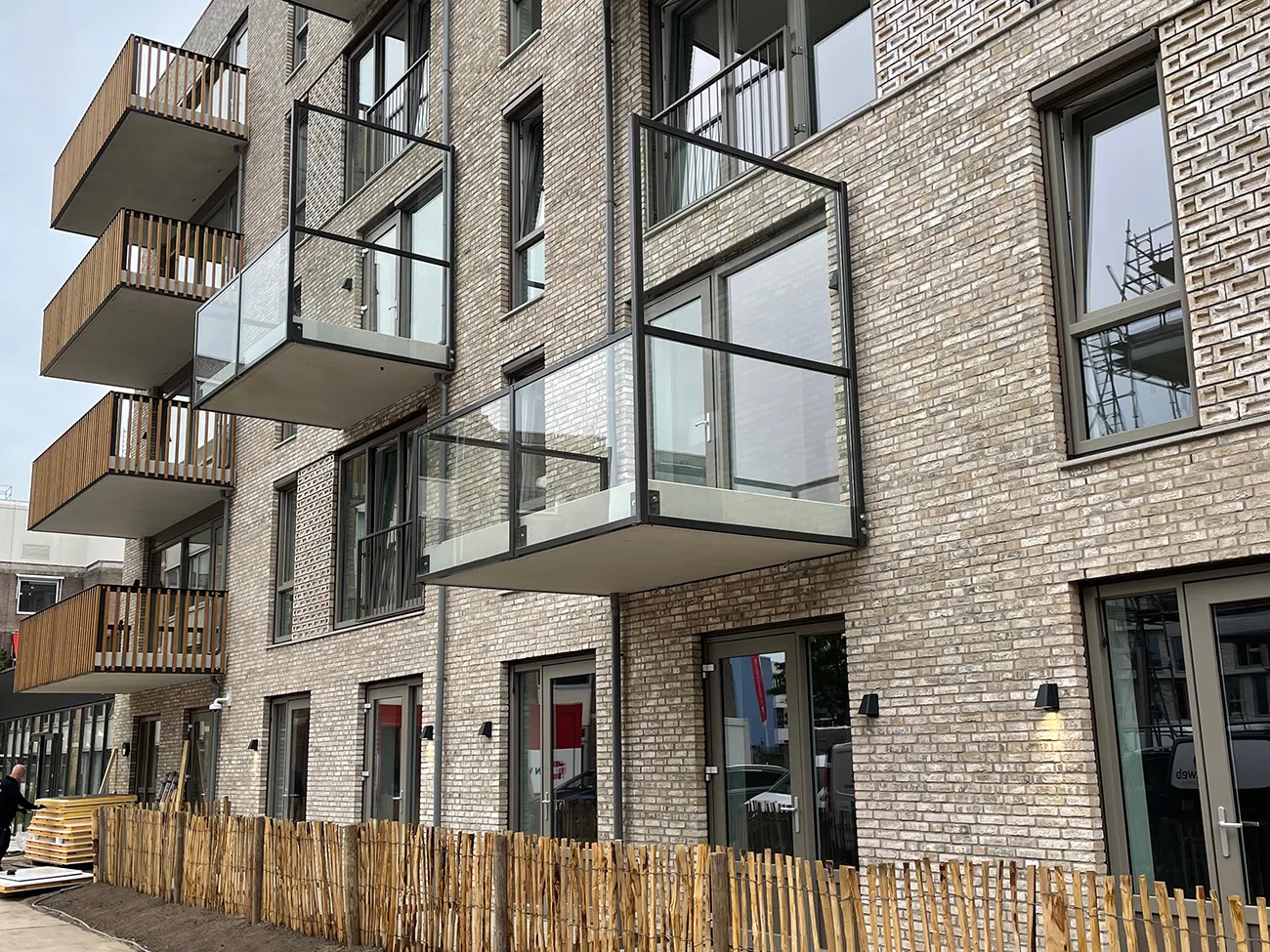
The new-build development at ’t Boveneind consists of two buildings. The first contains 55 homes, a spacious restaurant and communal areas on the upper floors. The second building looks more or less the same, but has 49 homes. Both buildings are part of a larger area development involving new-build projects by several parties. “Van Wijnen was the driving force behind the wider area plan. ’t Boveneind accounts for almost half of the total area. The previously continuous built-up area is being transformed into a neighbourhood park with detached buildings, where living, care and socialising are central,” says Stumpel.
Construction phasing
Van Wijnen’s plans were presented in early 2017, and Charim’s decision to appoint the developer and contractor was significantly influenced by Van Wijnen’s proactive role in the area development. “Van Wijnen has extensive experience in the care sector and understands what it entails.
In this environment, the care of our people comes first. That has to be taken into account during construction, and the contractor has to understand that too. For example, no piles were driven into the ground; instead, the foundation piles were screwed into the soil. This significantly reduced noise nuisance,” says Geurts, before highlighting the phased approach. “The first building is complete, and our clients have now moved from the old building into the new one. The old building is now being demolished to make room for the second building on that site. A logistical process like this involves a lot of work, but Van Wijnen gave it careful consideration too. Phasing the construction also means extra effort for the contractor, who effectively has to mobilise twice.”
Retaining value and future-proof
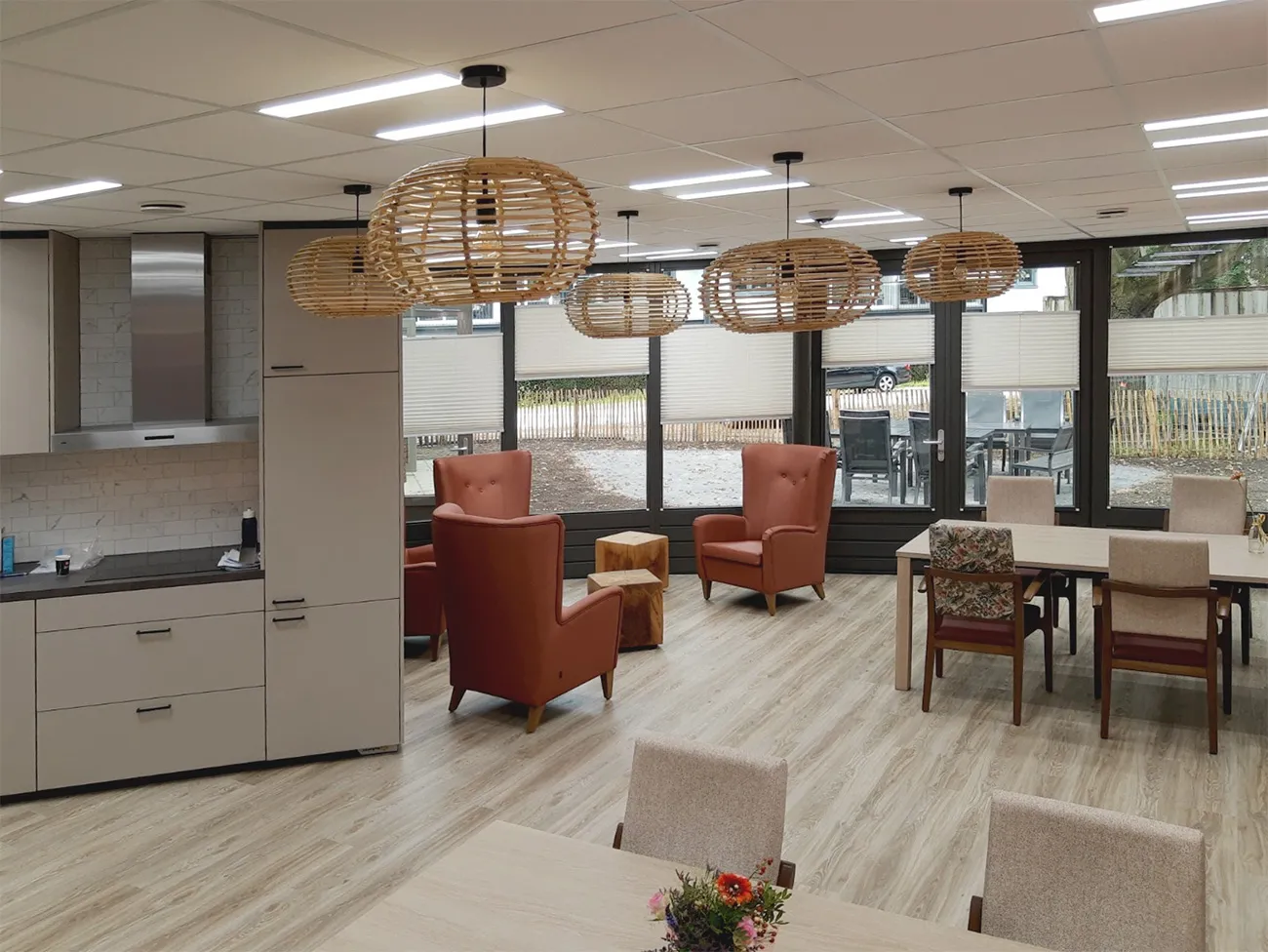
As well as putting clients’ care first, Charim had another requirement. “The buildings had to be designed so that they could be used for a different purpose in the future. It is now relatively straightforward to convert them into flats for single-person or two-person households. In this way, Charim has opted for sustainability and flexible housing options in different sizes to suit different needs. Charim has created a building that retains its value and is future-proof,” says Bovenlander, adding that the roof is covered with solar panels, making the building almost energy-neutral.
Flexibility
Building for the care sector also requires flexibility. These projects often run for a long time, and all parties have to deal with changing perspectives. Bovenlander gives an example: “There are sixteen studios on the ground floor. They are slightly smaller than the flats on the upper floors. At one point, we suggested to Charim that the bathrooms be replaced with prefabricated units featuring a pivoting wall system. That meant a substantial investment for Charim, but the result has made everyone happy.” Geurts describes it as a good example of a contractor who thinks along with the client. Other aspects were also adjusted as the project progressed, often at a detailed level. “We held regular meetings where we put forward our wishes. They were always listened to carefully, without either side overstepping its role. It is about mutual trust and understanding of each other’s position.”
Although the project as a whole is only halfway complete, it is worth taking a moment to look back. Is there anything that could have been done differently? Stumpel has an answer: “One thing you keep learning during a complex development and construction process is that you need to invest a lot of time in preparation. Talk to the users and clients, or their representatives. Understand what is going on, because no two care buildings are the same. The questions and wishes are different every time.” Bovenlander adds: “We build a lot for the care sector, so it is easy to think you know it all. You make a lot of assumptions, and that is dangerous.” Geurts agrees: “We consulted extensively with everyone involved, from senior management right through to the housekeeping team. A seemingly offhand comment can lead to a new insight.”
A business enquiry for Van Wijnen? Get in touch
Companies in this story
Keep following this
Get an email when a new story is published. No account needed.
- SubjectGeneral
- CompanyVan Wijnen







