











System integration of imaging equipment leads the way in Erasmus MC’s multimedia system for operating theatres
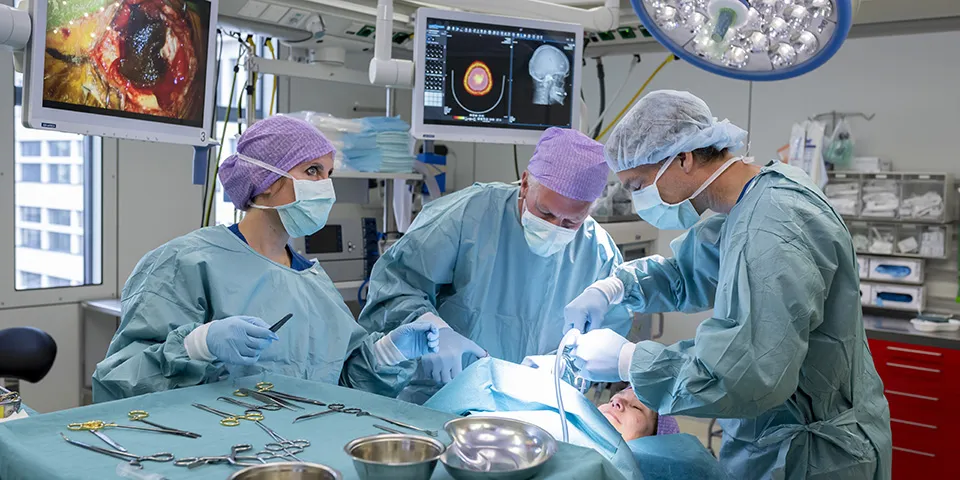
Last spring, Erasmus MC in Rotterdam opened a completely new operating theatre centre with 26 operating theatres. Its aim of making as much analogue image information as possible available digitally has been realised with a single solution from INTER. ORflow, with integrated image routing, allows all available image sources to be loaded onto every operating theatre screen, with monitors in the surgical area controlled from a large touchscreen outside it. One user-friendly solution, based on digital image routing from the central ORflow information screen.
A large central ORflow information screen hangs outside the surgical area in each operating theatre. (image: Paul Jaspers)
System integrator INTER, based in Duiven, was awarded the contract and developed a bespoke multimedia system for the 26 operating theatres (19 general, 2 hybrid, 1 brachytherapy and 4 interventional rooms) in collaboration with the hospital and application partners Advantech (surgical monitors with integrated encoder and decoder technology) and Technolution (SigmaXG video-over-IP technology). Anaesthetic practitioner and operating department practitioner Dave Gonlag was the user coordinator during the design and implementation process, and as such was part of the technical design team for Erasmus MC’s new-build organisation. “A few years ago, we already established some basic principles for the requirements. The basis of this multimedia system is an IP-based fibre-optic network, monitors that interfere as little as possible with air handling in the operating theatre, and multiple screens in each theatre onto which all possible image sources can be loaded, from photographs and scans to live streams.” This means there is no longer any need to walk over to a screen in the operating theatre: the required image is immediately available within the surgical team’s field of view, and third parties can follow the operation from another room if needed. “A professor can follow an operation from another location, while students and assistants who would otherwise be at the operating table can in some cases now follow it remotely. The fewer people in the operating theatre itself, the better from an infection prevention perspective. The screen systems have been designed with smooth surfaces for hygiene, and the monitors have no fans, so they do not interfere with the operating theatre’s air-handling system.”
Audio and video can be streamed from any operating theatre. (image: Paul Jaspers)
Digital image routing and switchable image control
A large touchscreen hangs outside the surgical area in each operating theatre. It runs the central ORflow information screen. This workflow and information management system supports the operating theatre team by displaying the right information at each stage of the surgical process. All information can be requested from this screen and displayed on a number of monitors within the surgical area. Gonlag: “Audio and video can be streamed from any operating theatre, allowing assistants to observe from outside the theatre for training purposes and specialists to provide remote consultations during an operation. Images can also be sent or streamed from one operating theatre to another. The system is connected to all our endoscopic equipment, overview cameras are installed, and it is linked to X-ray machines for live X-ray images.” This makes it possible to display any source, including photographs and CT and MRI scans from the patient record. “The multimedia system is connected via a server to our quality information system. Certain ‘critical images’, such as clipping during gallbladder surgery, must be recorded and linked to the patient record.” All operations can be followed from the central control studio, which is staffed by a director with an IT background when in use. “It’s a kind of television studio from which broadcasts can be made to conferences or partner hospitals abroad.” Gonlag gives just a few examples. “The options are being carefully discussed, and the technical resources are now available in any case. At Erasmus MC, we do not routinely record all operations, and images that are not added to the patient record are destroyed after two months. What is certain is that we can now use and request images centrally in the operating theatre, and save new image information on a server for later viewing. We developed this system to meet our needs in collaboration with the parties mentioned: one user-friendly solution for all operating theatres.”
Question about this story? Ask your question
Keep following this
Get an email when a new story is published. No account needed.
- ThemeHospital construction and refurbishment
- SubjectGeneral







