











Woonzorg Nederland, Alzheimer Nederland and KAW launch Dementia-Friendly Residential Building toolkit
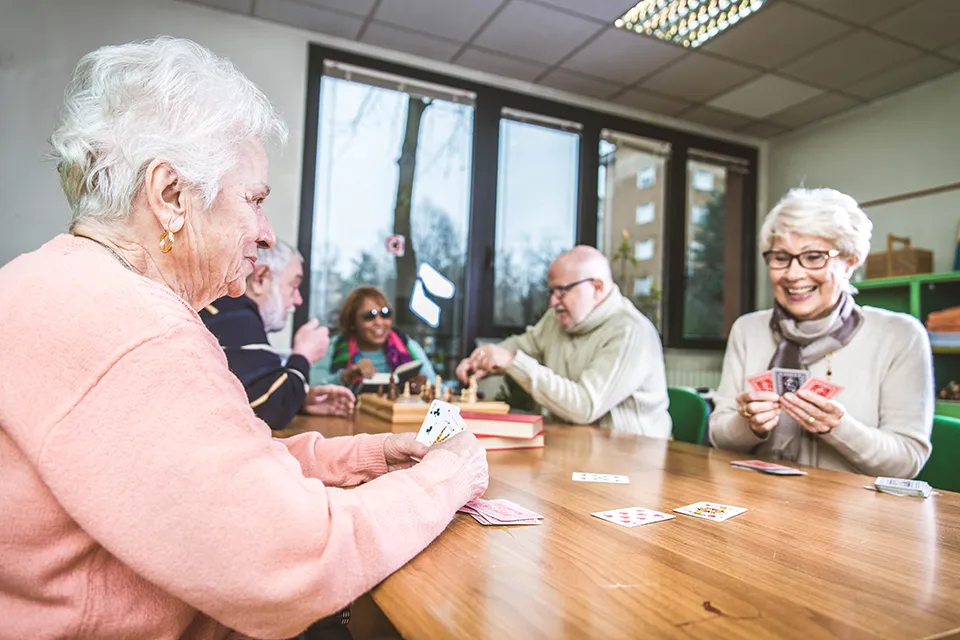
Commissioned by senior housing provider Woonzorg Nederland and developed in collaboration with Alzheimer Nederland and KAW, the Dementia-Friendly Living toolkit has been updated. It focuses on the immediate living environment of older people and offers guidance for three target groups: (commercial) developers, building managers and tenants. Other parties involved in updating the toolkit are Aedes, ActiZ and the DEEL Academy at TU Eindhoven.
Pooling expertise
The previous dementia-friendly design toolkit, published by the Kenniscentrum Wonen-Zorg in 2018, needed updating in response to changes in the care landscape. As well as updating the existing toolkit, a wealth of new information focused on residential buildings has been added. This prepares us for the care challenge ahead. By pooling the expertise of all the parties involved and drawing on each one’s specialist knowledge, we have produced an excellent end result. The toolkit is available digitally on Alzheimer Nederland’s platform, and the partners will also actively promote it through their own networks.
Initiative
As a result of factors including an ageing population and a shortage of care places, older people are living at home for longer, and the number of tenants with dementia is increasing. One of the challenges in the years ahead is the sharp rise in the number of people with dementia, which is expected to exceed half a million by 2040. This is the reality for all housing associations, as well as in our everyday living environment. A dementia-friendly building and support from building managers, fellow tenants and the wider community are essential to help this group of older people live independently. Woonzorg Nederland therefore took the initiative to work with Alzheimer Nederland and KAW to revise the ‘Dementia-Friendly Living’ toolkit and bring together all the knowledge gained by the partners in a new toolkit. The toolkit has been expanded with additions relevant to housing associations, (commercial) developers and building managers.
Social impact
Given the toolkit’s significant social impact, there has been extensive contact with the Ministry of Health, Welfare and Sport (VWS) and the Ministry of the Interior and Kingdom Relations (BZK). They have expressed their support for the initiative and its rollout. “As a senior housing provider, we look beyond the buildings themselves to how we can ensure that tenants enjoy living together and independently, and what they need to do so. Alongside suitable housing and communities, we are now taking things a step further by adopting a structured, dementia-friendly approach. This means factoring in adaptations for this group when designing our buildings, as well as training our resident liaison officers to recognise behaviours and symptoms. We are now sharing this knowledge in the toolkit, which provides useful guidance for housing associations, (commercial) developers and building managers,” says Willemijn Souren, Programme Manager for Housing Models at Woonzorg Nederland.
Gerjoke Wilmink, director of Alzheimer Nederland, says: “The design and layout of a home make a world of difference to a resident with dementia. Making a home and its surroundings dementia-friendly can help people with dementia live independently for longer and enjoy a better quality of life. Dementia-friendly choices benefit everyone, including people without dementia. We can’t wait to put this into practice on a broad scale: it is important and necessary! One in five people will develop dementia, and ageing is the greatest risk factor. That is why making dementia-friendly choices is particularly important when building homes for older people.” Alzheimer Nederland welcomes the dementia-friendly residential building toolkit. “It will help us support builders and building managers in making dementia-friendly choices. This isn’t always about doing more or spending more, but about making the right basic choices. It’s great to be able to offer practical tips,” says Wilmink.
“Our society and our living environment are changing. Dementia-friendly design is of great social importance, as anyone may be affected by dementia at some point. It is part of making our homes and living environment more socially and ecologically sustainable. We were delighted when KAW was asked to adapt the earlier ‘Dementia-Friendly Design’ toolkit to focus more closely on the role of housing associations,” says Hilda Hoekstra, adviser at KAW. The challenge is to keep making suggestions that result in an aesthetically pleasing, functional residential building while also meeting the specific needs and abilities of residents with dementia. Our aim is to create a living environment that does not immediately look like a dementia care facility, but still offers subtle support, enabling people with dementia to act independently and feel safe and at home. The toolkit helps users weigh up the options and understand how small but well-chosen decisions can make a big difference.”
A business enquiry for Woonzorg Nederland? Get in touch
Companies in this story
Keep following this
Get an email when a new story is published. No account needed.
- SubjectGeneral
- CompanyWoonzorg Nederland







