Building across the gap
Text and images Jan-Kees Verschuure
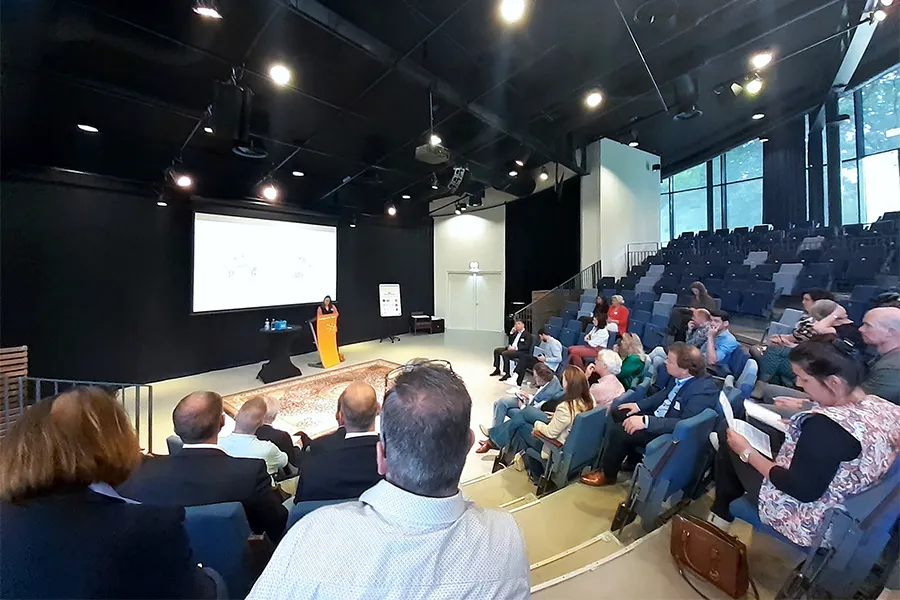
A closer look at the IVVD Healthcare Real Estate Day
Staff shortages and an ageing population, too few building sites, high investment costs and rising interest rates. Anyone who saw the facts and figures at the latest IVVD Healthcare Real Estate Day might have thrown in the towel before even starting. Yet the discussions were positive, thanks to the many good examples of how it can be done: through collaboration. Doing what is needed and transforming healthcare real estate for a sustainable future.
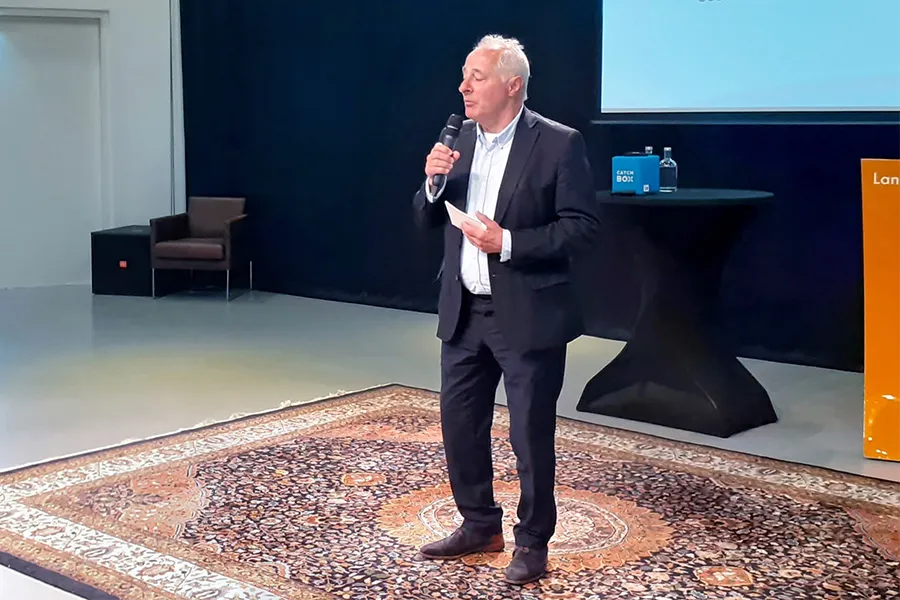
The gap is what they call it: the gap between supply and demand. Healthcare real estate managers face such a barrage of wishes, requirements and obstacles that the figures can make the head of even a seasoned professional spin. Yet on Thursday 25 May 2023, the only people at Landgoed De Horst in Driebergen were those with the best of intentions, from mental health service directors to bankers. There is a strong, and growing, willingness to find common ground, as each edition of the annual conference organised by the Instituut voor Vastgoed en Duurzaamheid (IVVD) has shown. Once again, the event was expertly moderated by radio presenter and former GP Tom van ’t Hek.
Separating housing from care
When the new healthcare system was introduced, healthcare real estate managers became responsible for funding their own capital costs (2008). Banks and financial institutions were expected to make up the difference. Care was seen as a reliable long-term investment, but they pulled back after the stock market crash and the euro crisis. Investment levels fell sharply, while the government pressed ahead with separating housing from care. Residential care homes disappeared and multi-occupancy rooms became a thing of the past in long-term care; the sector collectively shifted towards community-based care. In 2023, the energy transition is forcing these major energy users to prepare for the future, even as staff shortages and growing demand for care increase pressure on services and financial resources dwindle.
Tailored solutions
It is a formidable challenge. Tailored solutions are essential: an investor’s new-build housing-with-care scheme in Amsterdam-Oost is completely different from a care organisation’s transformation of 20 listed buildings on the Veluwe. Each is doing its utmost in its own way. Hans Hoepel, director of property development at GGZ Centraal, is transforming the Veldwijk site in Ermelo into a ‘care park’ in partnership with the municipality. Listed buildings are being repurposed and brought to market. Daan Tettero of investor Syntrus Achmea stressed that pension fund investment also has a social dimension. For this financial institution, that means investing in community spaces in developments with more than 100 homes.
Collaboration
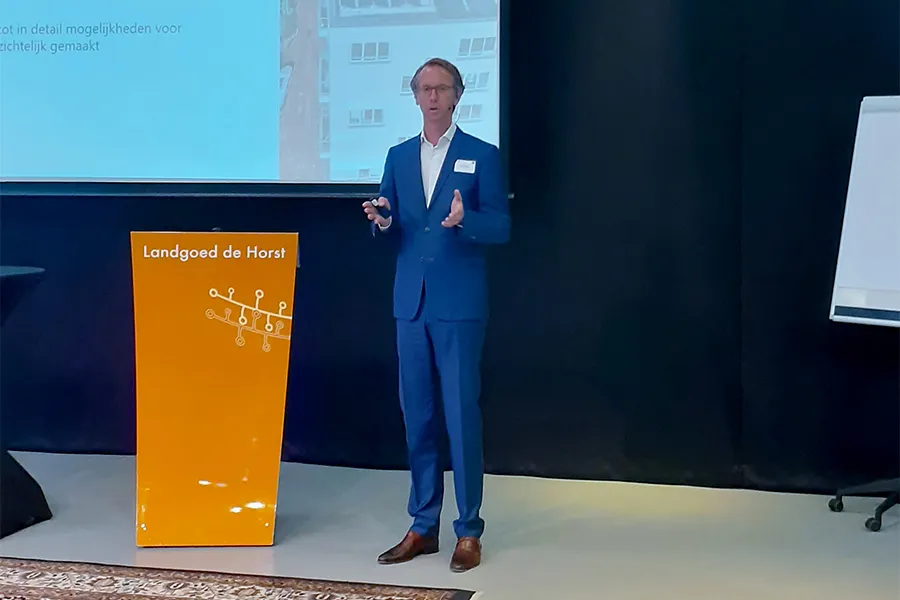
Idealism? Yes and no. In every case, building for care means investing in a long-term residential use. In Friesland, care providers are working with the 18 municipalities to coordinate housing needs without competing with one another. The Dutch tradition of consensus-building is still working, although shortages of sites and places for clients remain a nationwide problem, as shown by the collaboration between the provinces of Friesland and Utrecht on this issue. Collaboration between regional care offices and providers offers valuable insights, regional coordinator Jildou de Jong and property manager Hans van Esschoten of provider Patina explained. Friesland has many small communities, but “there is no point in developing a facility for 15 dementia places.”
Interactive sessions
The afternoon included interactive sessions, including one run by consultancy Draaijer, which helps facilities management organisations transform. Participants’ contributions were just as important as those of the speakers. The conclusion: never lose sight of your organisation’s mission. In one case, the person responsible for facilities is a head of technical services within a property department; in another, the accommodation manager sits directly at the table with the chief executive. But your organisation’s goals must remain central. The transfer of healthcare real estate to housing associations needs attention, as they often lack specialist knowledge of care provision. The same applies to municipalities when it comes to developing and operating multifunctional buildings.
The additional cost of sustainability
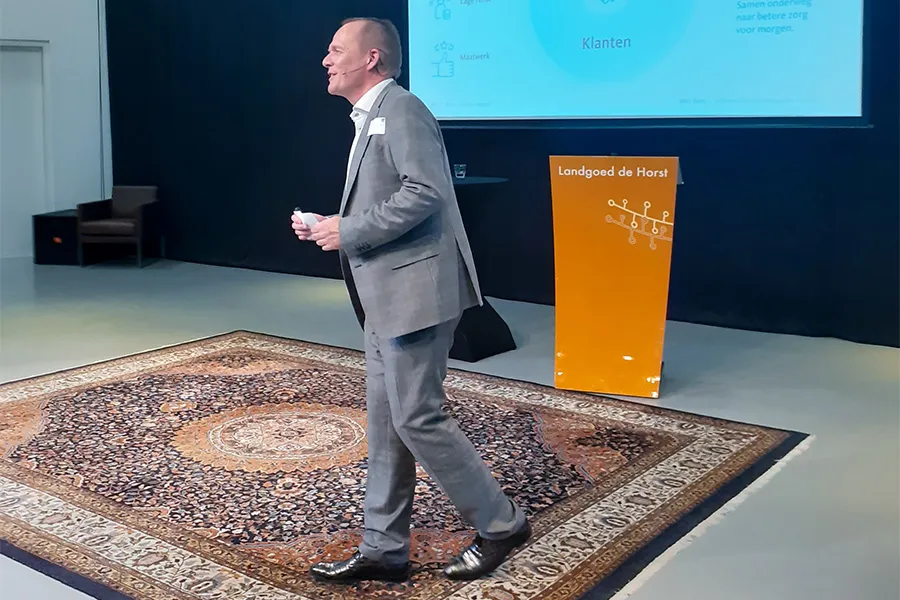
Kees-Jan van Lier, property director at care and welfare organisation Fundis (formerly Vierstroom, active in the Groene Hart), left us reeling with figures on the cost of the transition. Circular real estate comes with 24% in additional costs, lifelong homes require an extra 320 m² per site, energy-neutral construction is 40% more expensive, and building services costs also rise by 30 to 50%. Meanwhile, mortgage interest rates are rising. Van Lier presented the figures neutrally, but stressed that investment by housing associations is essential to sustaining the Long-Term Care Act.
Reduction in the NHC
Freek Koersvelt, a fellow professional at Woonzorg Nederland, agreed. The country’s largest provider of healthcare real estate has a portfolio with an average age of 30 years, and the investment costs to match. Koersvelt warned about the impact of the reduction in the normative housing component (NHC), by 7 to 8% from 2024. This daily payment per resident covers property costs, but he argued for ‘building despite a challenging business case’. The condition is that projects are developed jointly with care providers, whether it is the large-scale Huis aan de Vecht housing-with-care centre in Utrecht or a couple running a small-scale care facility under a franchise in Midden-Limburg.
Sustainable lending
Different interests and perspectives, but always collaboration and goodwill. That is the state of healthcare construction today, if this conference is anything to go by. The 2023 Healthcare Real Estate Day closed with Derk Jan Postema of BNG Bank. Formerly known as Bank der Nederlandse Gemeenten, it has long been a major player in getting public-sector property projects financed, but not without conditions. BNG Bank assesses loan applications on the basis of sustainability and innovation. “Climate risks are taken into account in the assessment.” Postema said applicants with a proposal ‘from the old world’ need not expect a loan from BNG Bank.
Have a business enquiry for IVVD? Get in touch
Companies in this story
Keep following this
Get an email when a new story is published. No account needed.
- ThemeFuture-proofing healthcare estates
- SubjectSustainability
- CompanyIVVD
- CompanyWoonzorg Nederland