HagaZiekenhuis uses ‘smart glasses’ in the operating theatre
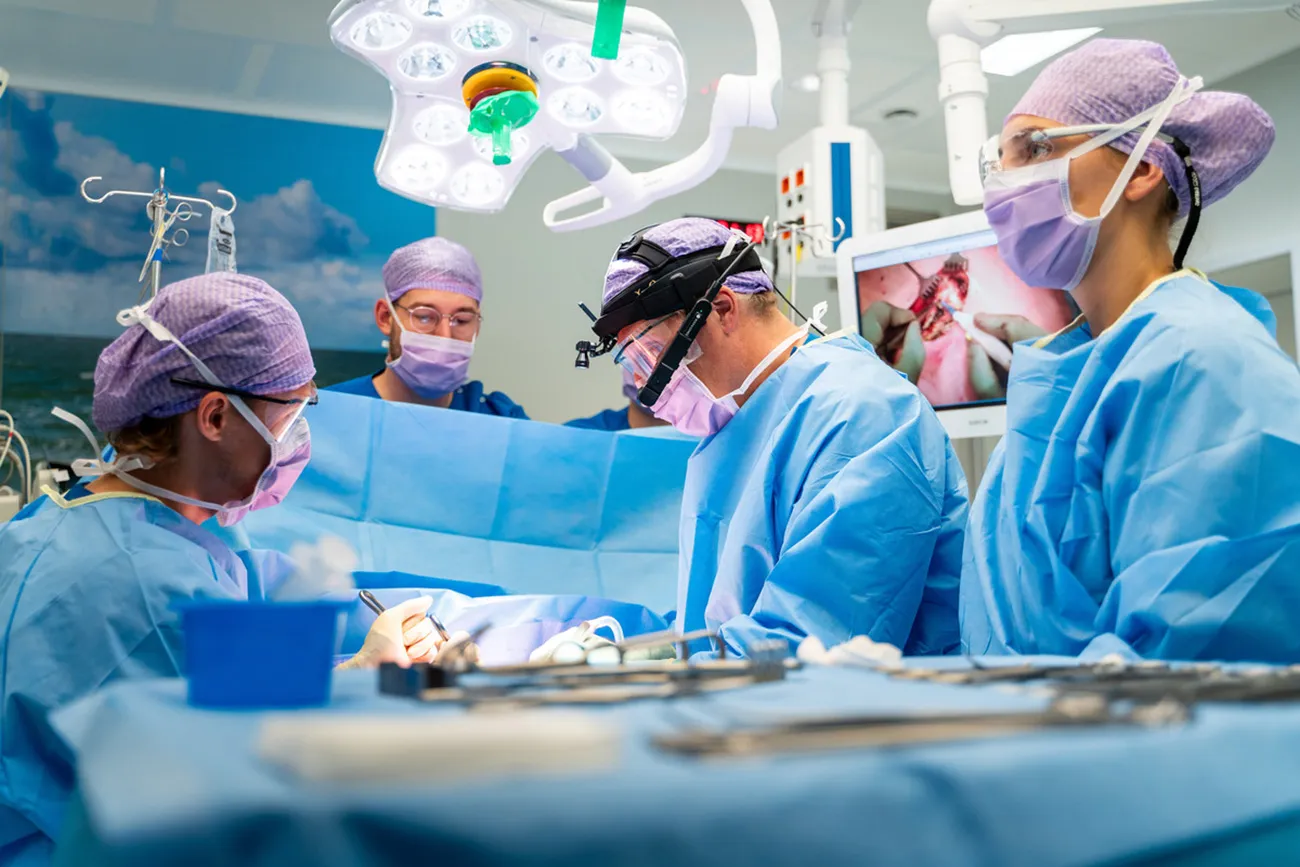
More efficient surgery, easier knowledge-sharing and greater engagement. These are some of the key benefits of operating with special glasses in the operating theatre at HagaZiekenhuis Den Haag. As a patient, you may not notice anything straight away, but in the operating theatre the ‘smart glasses’ used by surgeon Pieter Jan van Huijstee lead to better care. More operating theatre staff and nurses will be learning how to use the glasses in the coming period.
The smart glasses have video and audio connections. When a surgeon wears them, colleagues can watch along, either on the screens in the operating theatre or remotely via a dedicated secure online environment or app. The surgeon can also speak to someone watching remotely through the glasses. Images can also be sent to the glasses to draw the surgeon’s attention to something. Pieter Jan explains: “My specialities are thoracic and trauma surgery, but I can also perform emergency abdominal surgery. If I have a question during an operation like that, I call the colleague on call for abdominal surgery. In the past, someone in the operating theatre would hold a phone to my ear while I described the situation. That has worked well for a long time, but it is of course much easier to let someone watch along via the app or computer. I can do that when I wear the smart glasses.”
Efficient and engaging
The innovative glasses make surgery more efficient. Their use also increases engagement among colleagues. “Recently, we had to operate on both sides at the same time. I did one side, while a resident did the other. Because she was wearing the smart glasses, I could watch on the screen behind her while staying at my side. There are usually six or seven people in the operating theatre during an operation. In practice, you can only get a good view of what the surgeon is doing if you are standing beside or opposite them.” Thanks to the smart glasses, everyone can now follow the operation on the screens. “For example, the anaesthetist can see if there is sudden bleeding or if I am suturing. They can then respond accordingly, without me having to say anything. Medical students also get a better understanding of what is happening. The team is even more engaged. It is great to see,” says Pieter.
Operating independently
The glasses are also useful when training residents. Residents are doctors who have completed their basic medical training and are pursuing a specialisation. Wearing the glasses, they can operate independently while Pieter Jan watches from a room next to the operating theatre. The glasses make the transition from operating under supervision to operating independently less daunting. They also make it easier to share knowledge with colleagues around the world, who can follow an entire operation.
Nurses have also recently started observing an operation once a month. In practice, this helps nurses understand the patient’s situation better when they return to the ward after surgery. And this leads to better care.
Question about this story? Ask your question
Keep following this
Get an email when a new story is published. No account needed.
- SubjectHospitals