Designing laboratories for change
Text Tamara Brouwers Image Kropman Contamination Control , KuiperCompagnons
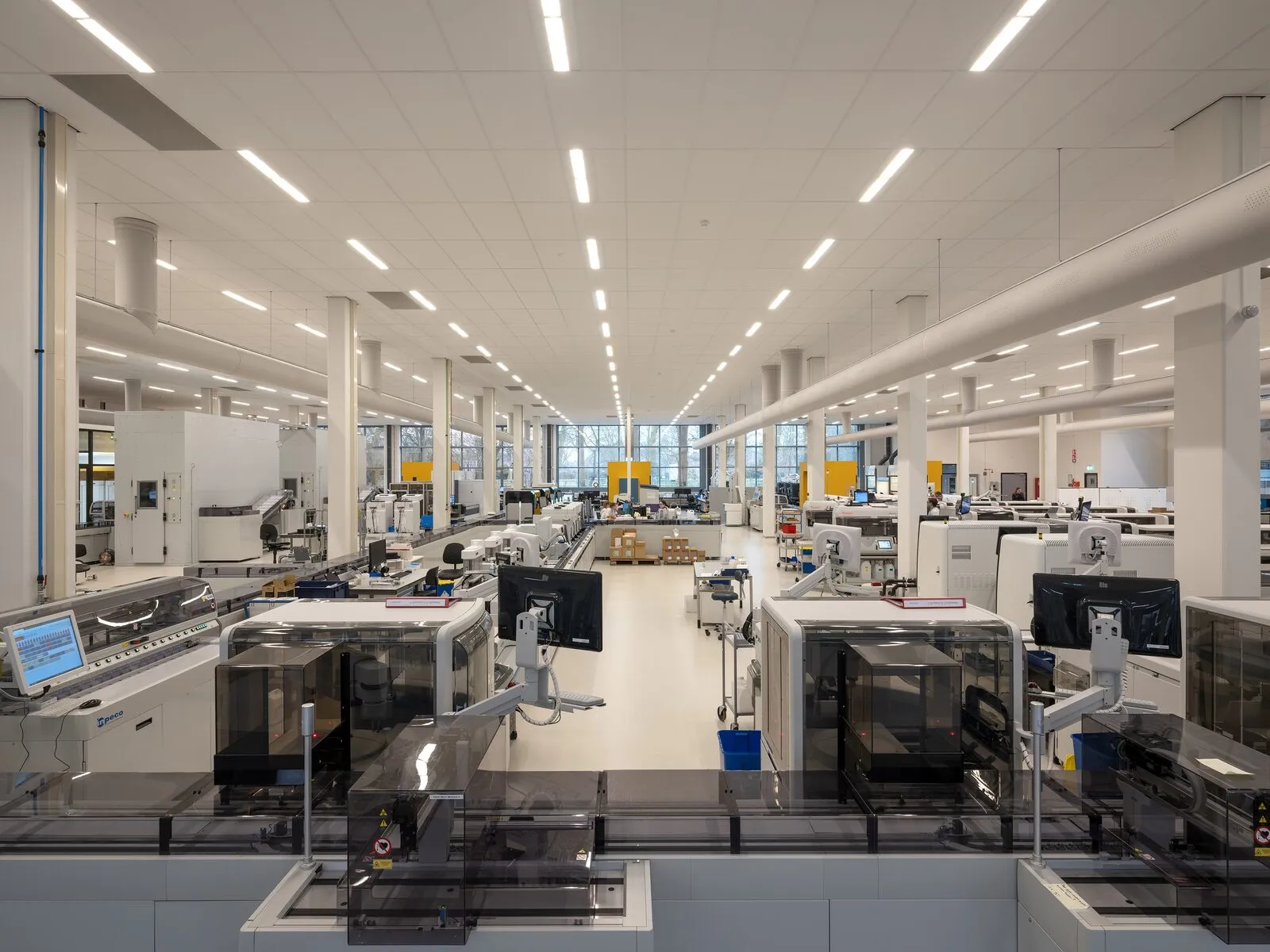
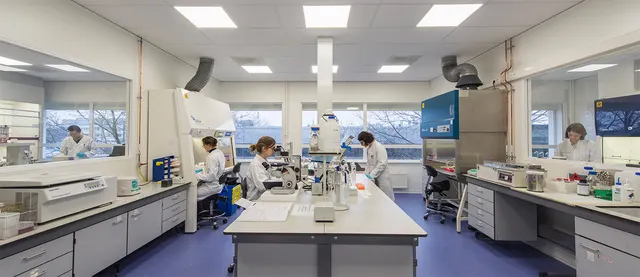
How do you fit out a laboratory for working processes that may be different again in five years' time? And how do you prevent technical choices from compromising safety? These questions were central to the VCCN mini-symposium "Designing and fitting out laboratories", held during the World of Industry, Technology & Science (WoTS) trade fair in Utrecht. Two speakers addressed the subject from the perspectives of architecture and building services engineering. The programme also included a practical session on testing microbiological safety cabinets.
According to Rob Kanbier of KuiperCompagnons, a good design does not begin with drawing rooms, but with the question of what the organisation wants to achieve. He referred to laboratories that contribute to cancer treatments and the development of vaccines. The underlying purpose should guide the layout and the choices that go with it. That is all the more important now that laboratory work is changing rapidly. Automation, robotisation and artificial intelligence are taking over tasks that were previously done by hand. Kanbier therefore sees a shift towards smaller laboratories and more office space. Certain risks can also increasingly be controlled inside equipment, rather than by requiring the entire room to meet the same standards.

Flexibility has its limits
A building must be able to absorb those changes. The load-bearing structure may stand for fifty to a hundred years, while internal walls, services and working processes change much sooner. Kanbier therefore advocates a modular approach, with spaces that can be reconfigured later. Full flexibility, however, is not always feasible or affordable. Making spaces with high cleanliness requirements flexible, for example, entails considerable costs. Designers must therefore determine in advance which elements are likely to change and which can be given a fixed position.
In his design methodology, Kanbier first maps out the organisation, processes and circulation routes. The spatial layout and technical detailing follow. He looks not only at current activities, but also at possible future uses. A common mistake, he says, is cutting short the consultation with users. It is precisely over several conversations that bottlenecks come to light and support for the final layout is built. The third conversation is therefore just as important as the first two.
More ventilation is not always safer
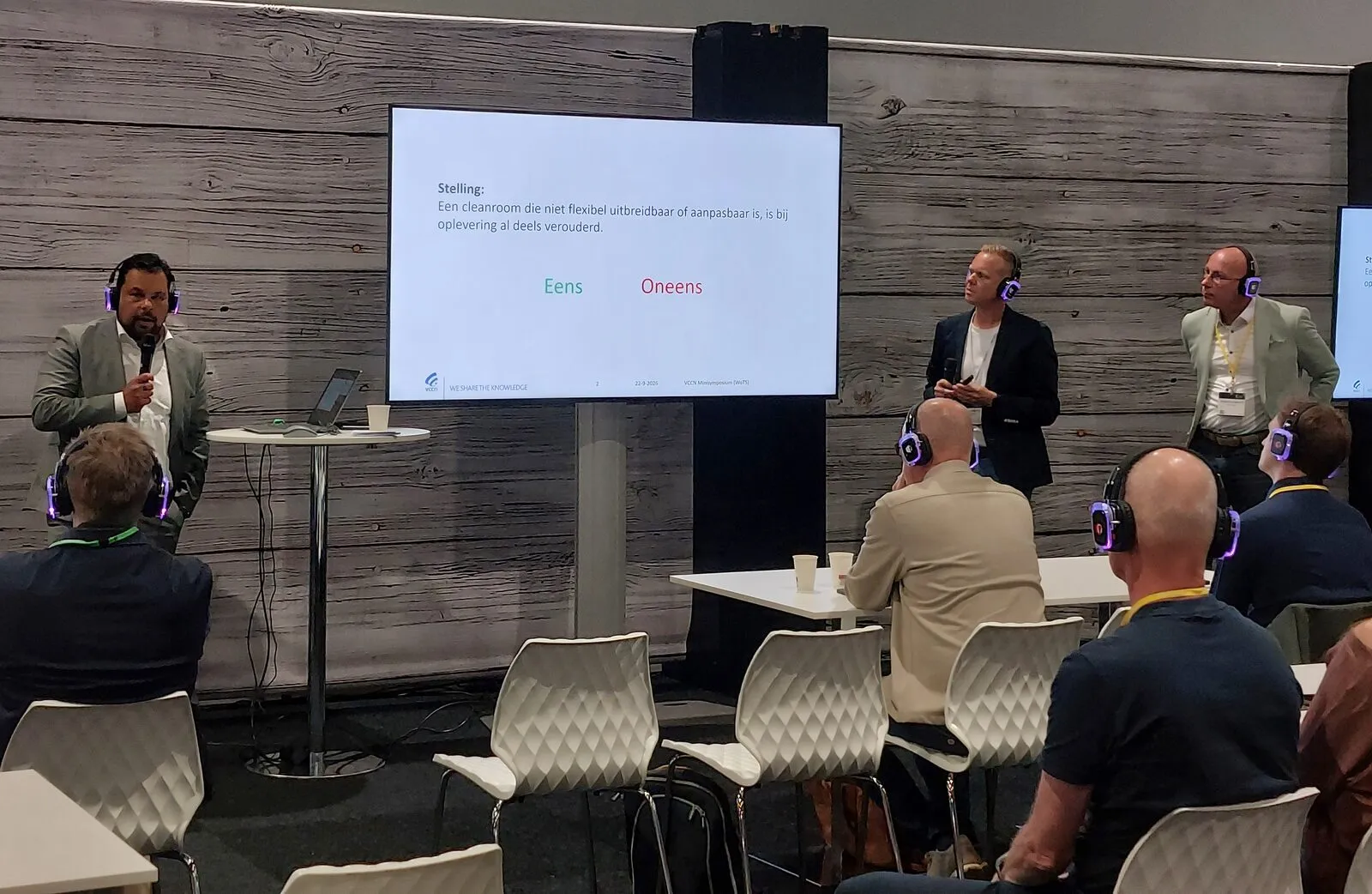
Derek Vissers, contamination control consultant at Kropman, showed how closely the architectural and building services design are interrelated. Whereas a cleanroom generally protects the product against contamination, laboratories handling hazardous substances or biological risks are about protecting staff and the environment. More air changes do not automatically mean more safety. The airflow within the room matters too. Incorrectly positioned air supply can disrupt the operation of a fume cupboard, allowing harmful substances to enter the working area. Airflow simulations allow designers to investigate such risks in advance. At the same time, ventilation consumes a great deal of energy. According to Vissers, a laboratory does not need to run at maximum capacity all the time. By matching air supply and extraction to actual use, for instance by turning them down outside working hours, energy can be saved. Naturally, only if the required level of safety is maintained.
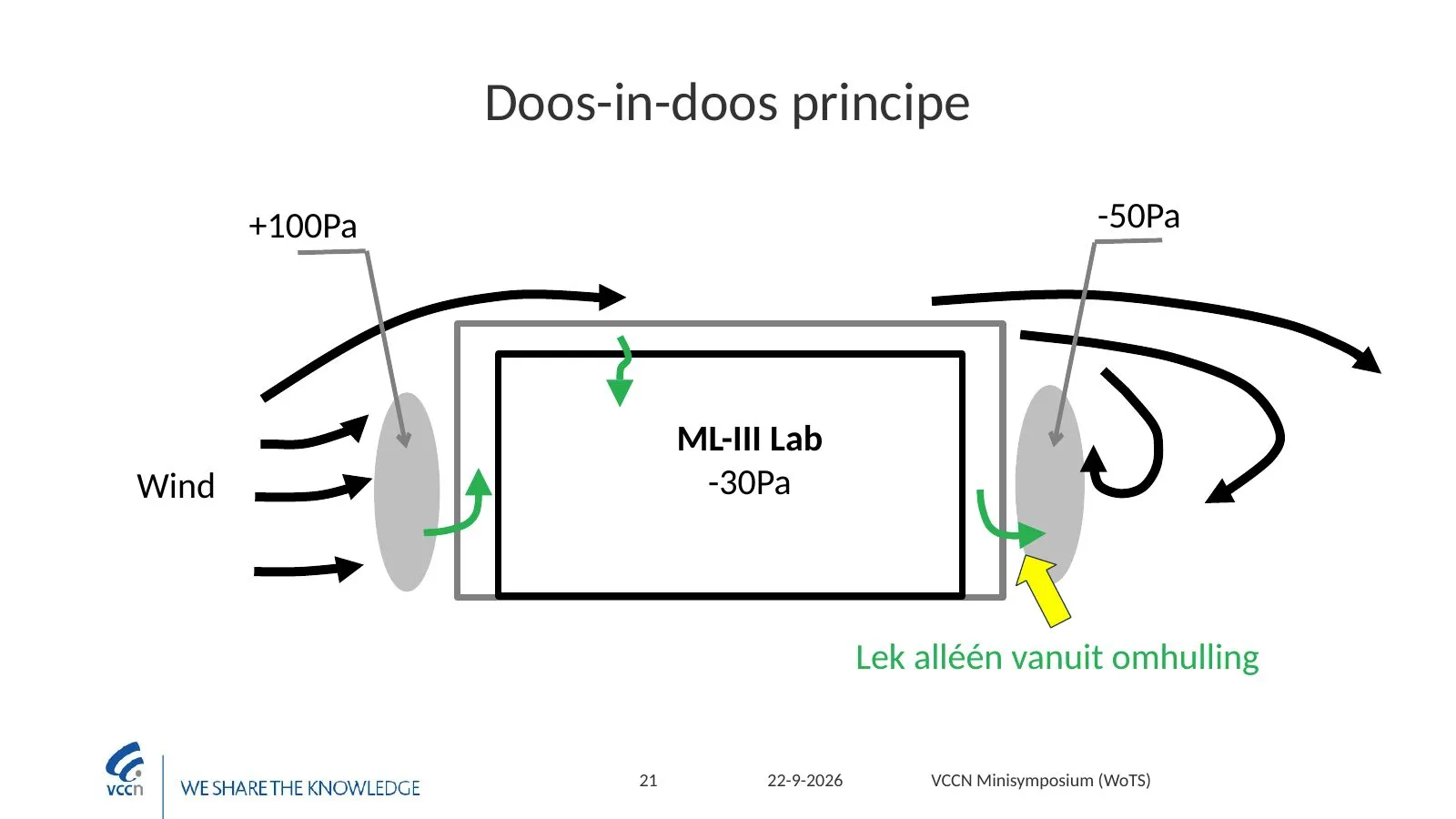
In laboratories with a high containment level, pressure control also demands attention. Vissers discussed the box-in-box principle, in which the laboratory sits within a separate, airtight enclosure. Reliable measurement of pressure differences requires a stable zero reference. A measuring point in an unsuitable location can give incorrect readings because of pressure fluctuations. The surrounding space can serve as the reference, provided it is suitably designed.
The laboratory must also remain safe in the event of a fault. Key facilities, such as extraction units and safeguarded air dampers, can therefore be duplicated or given a backup. That way, the failure of one component need not immediately result in a loss of protection.
Question about this story? Ask your question
Keep following this
Get an email when a new story is published. No account needed.
- SubjectLaboratories