Residential care & nursing homes
Anna Heide: Greater freedom and quality of life thanks to living environments and living circles
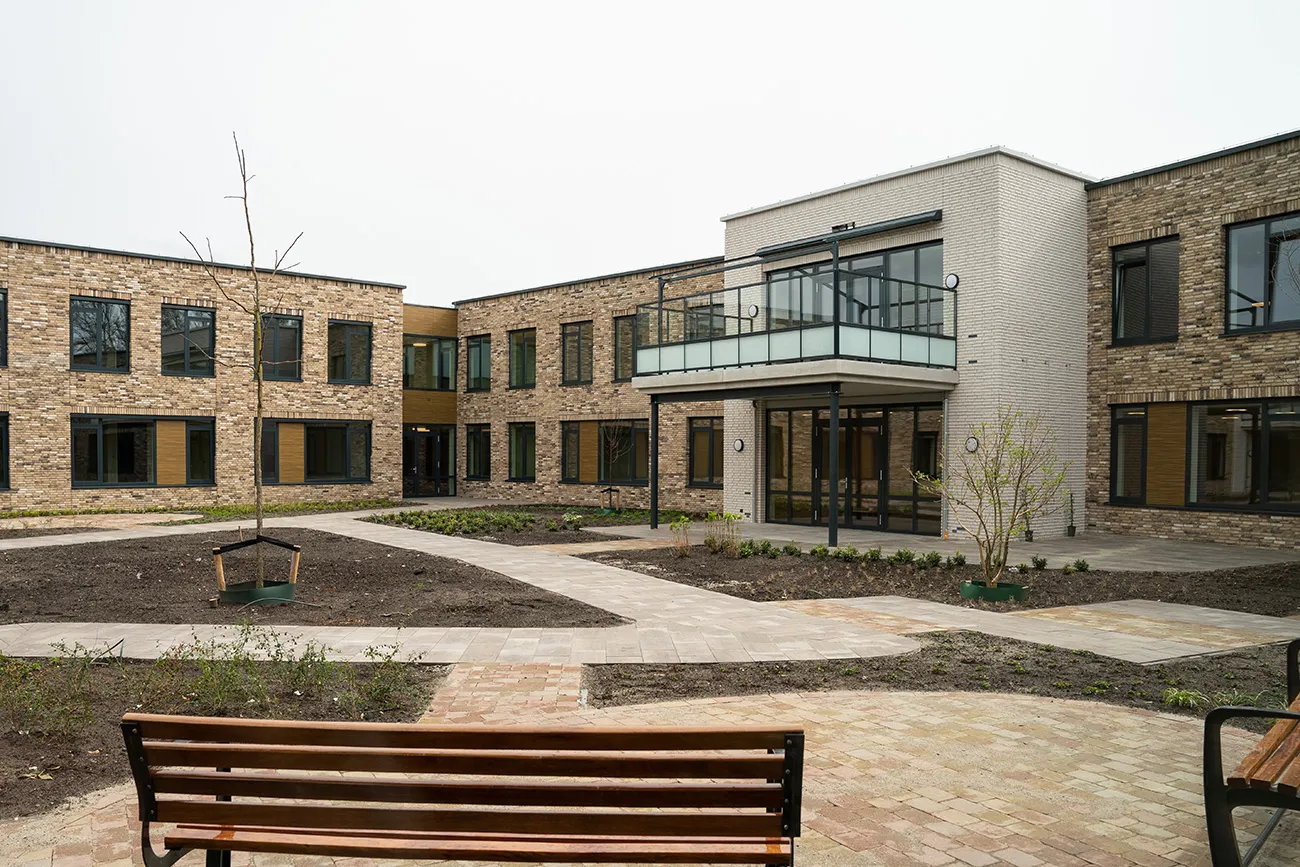
At Anna Ouderenzorg’s new Heide residential care complex, residents’ wellbeing comes first. Residents can be themselves because they live in an environment that reflects their identity, individual needs and abilities. Their needs and care requirements are the starting point. At Anna, these are known as sociotherapeutic living environments. Smart care technology using living circles also keeps the area in which residents can move around freely as large as possible.
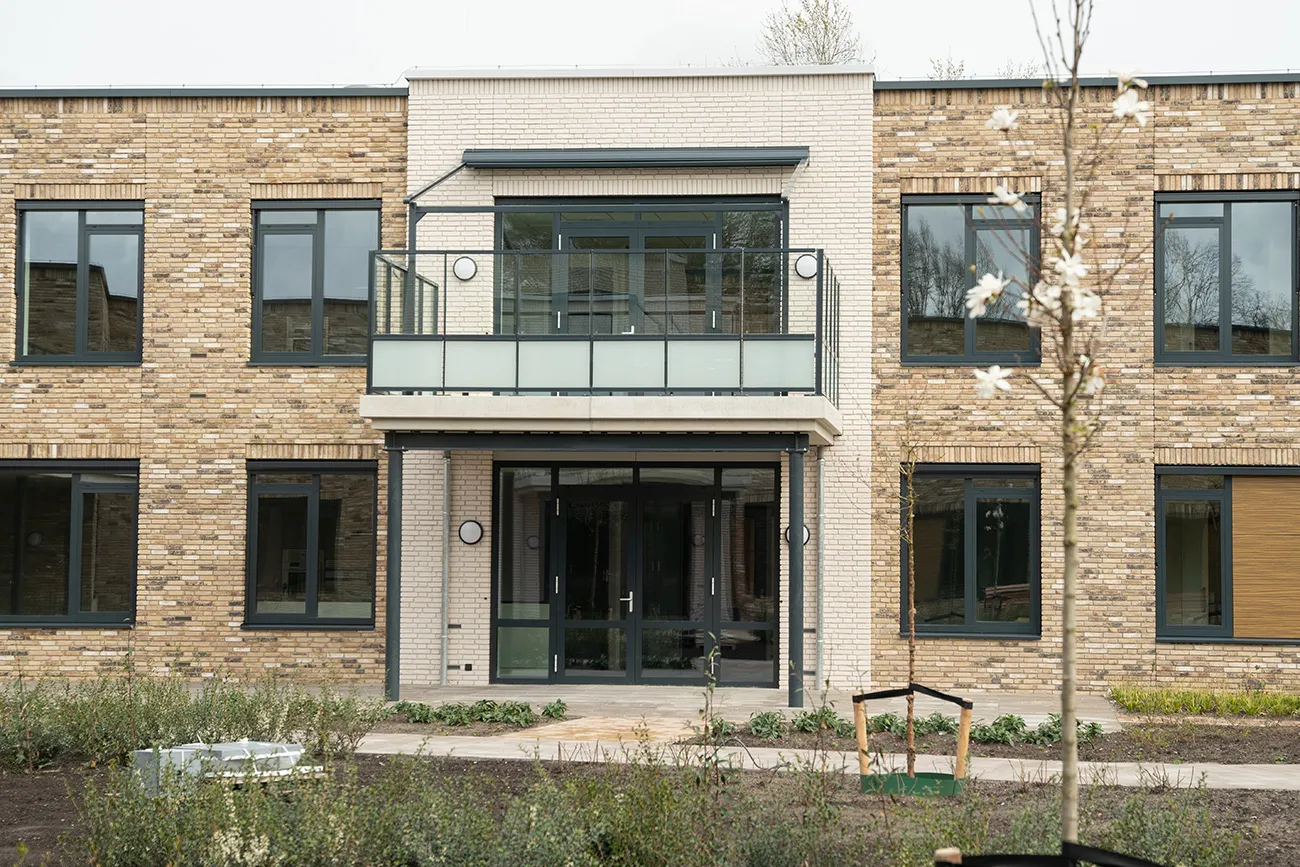
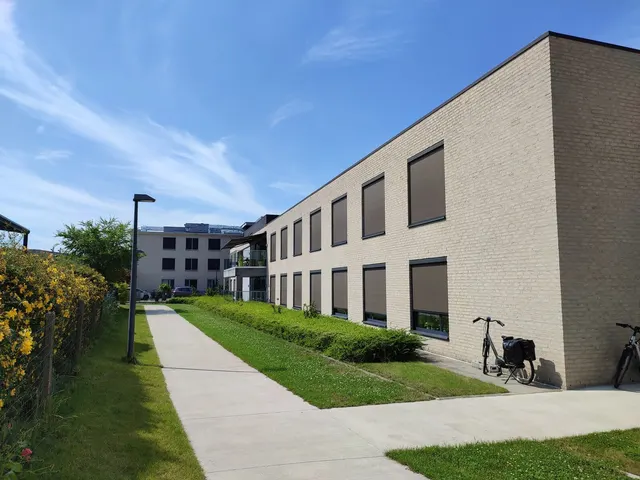
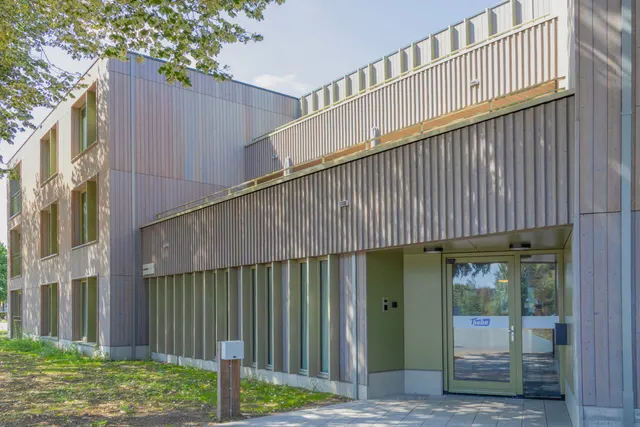
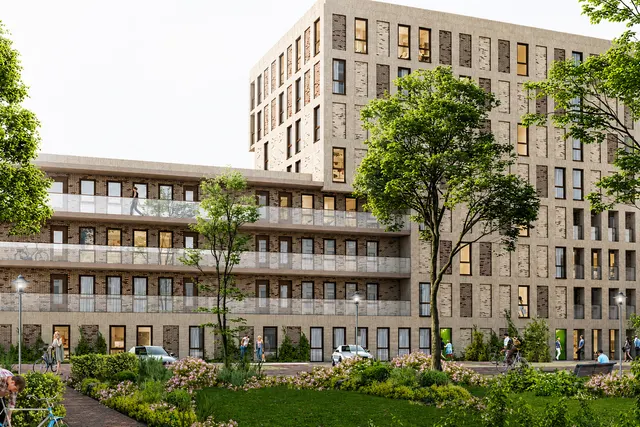
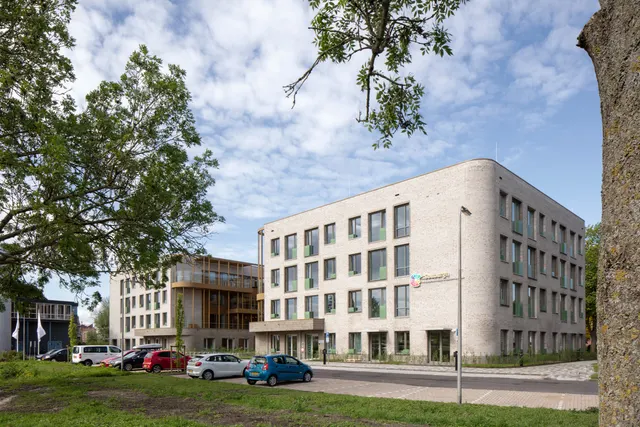
Heide replaces Anna Ouderenzorg’s Akert site. “The old building dates from 1965 and had simply reached the end of its life,” begins Nicoline Pruijsen, project manager for facilities and the Heide new-build project at Anna Ouderenzorg. “For many years, there had been talk of replacement construction, with a temporary emergency facility to be built on the vacant land near our Berk and Heuvel sites. As the project progressed, the plans changed and it was decided to build a new facility on the vacant land. That became Heide, a completely new residential care facility for 84 people with physical disabilities and/or dementia. This means we now have three residential care centres on one large site on Grote Bos in Geldrop.”
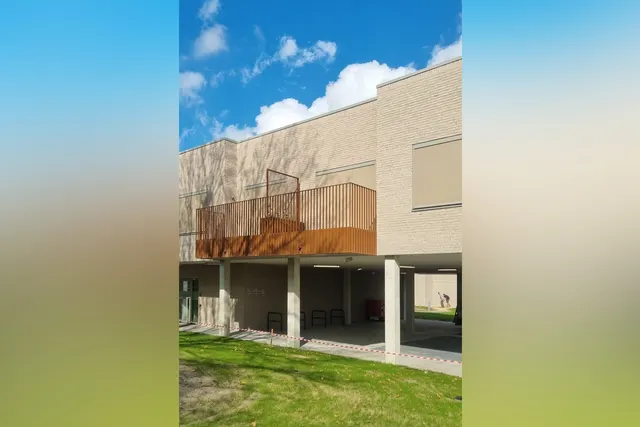
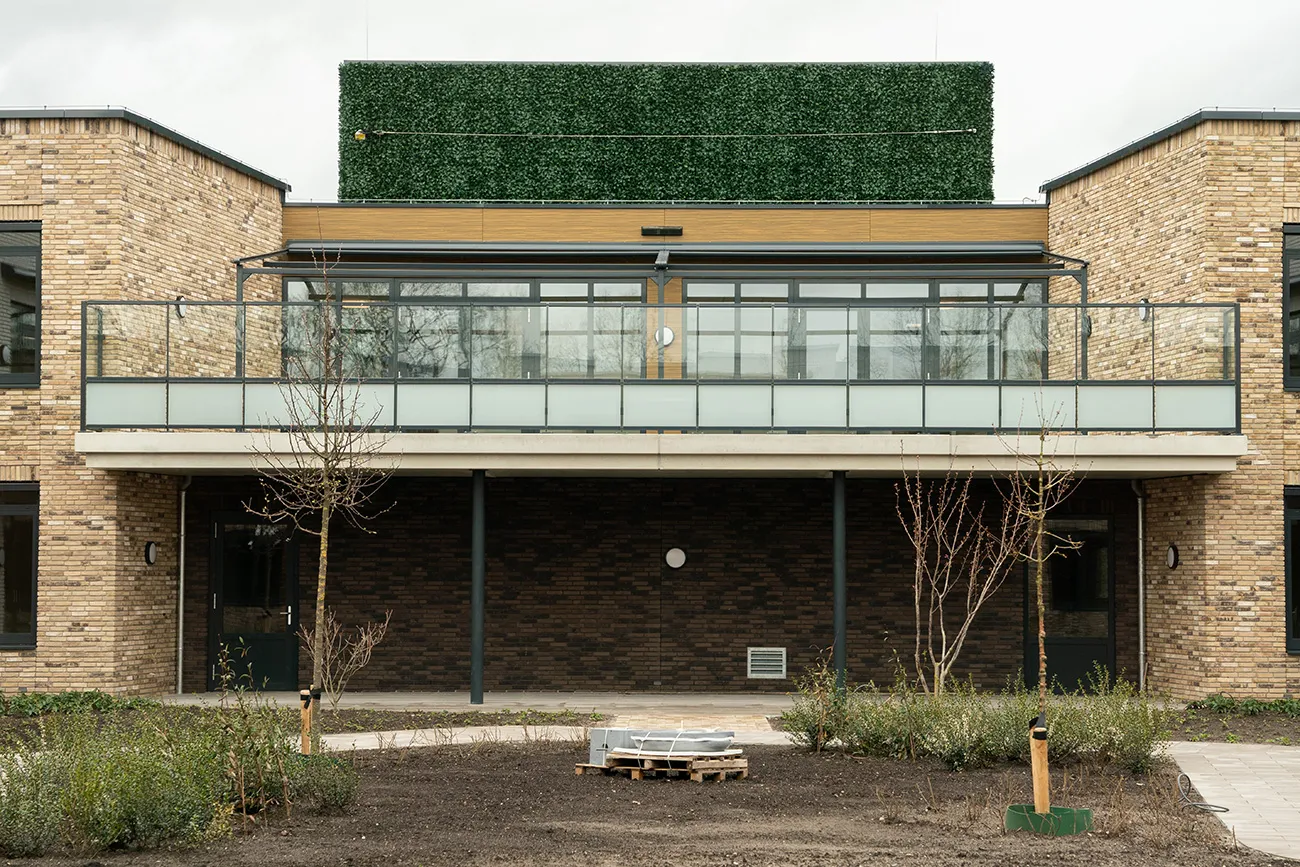
Heide has a square floor plan over two storeys and a beautiful, large courtyard garden. “As far as possible, people with dementia live on the ground floor, while people with somatic care needs are housed on the first floor, with large balconies overlooking the courtyard garden,” Pruijsen explains. “Given the changes in care, we expect Heide will eventually become a home exclusively for people with dementia.”
Sociotherapeutic living environments
What makes the project unique for Anna Ouderenzorg is its use of so-called sociotherapeutic living environments. “When grouping residents, we take account of their identity, individual needs and abilities, so we do not select them on the basis of their background or socioeconomic status. Previously, a resident who benefits from a low-stimulation environment and enjoys peace and quiet might live in the same setting as someone who loves bustle and activity. Yet these residents need very different things in terms of room design, activities and the care staff’s service. At Heide, we therefore have three living environments: protective, stimulating and structured.”
Six communal living rooms
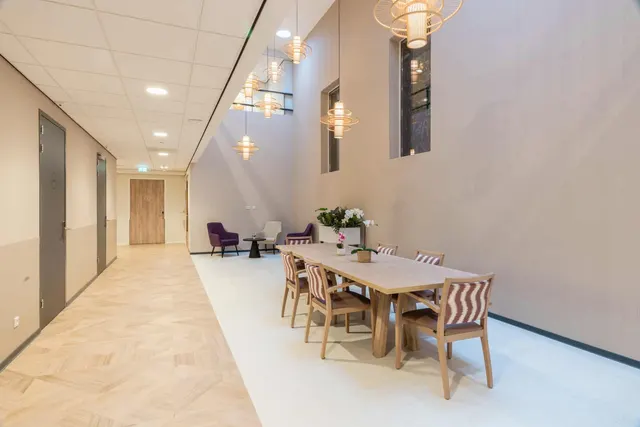
The new building has 84 apartments and six communal living rooms, three on each floor. “The living environments have informed the design of the communal living rooms and the sensory corners in the corridors,” Pruijsen continues. “A stimulating environment means busier wallpaper, larger tables and a larger area for passive seating, with armchairs arranged around the television. This is markedly different from the protective living environment, which focuses on warmth and security, with a calm interior and smaller tables for two to four people.
Activities and arrangements with family members and informal carers are also tailored accordingly, so the communal living room never gets too busy. In the stimulating environment, by contrast, the whole family is welcome.” Finally, the structured living environment is intended for residents who benefit from a daily routine and an individual approach. Its interior is more like that of the protective environment. “Of course, we know the residents from Akert very well. Together with a psychologist and the family’s main contact, we have assigned residents to the different living environments. Our staff will also work in the environment best suited to them, with everyone jointly and gradually developing the new concept in greater detail. First, we will make sure that staff and residents get used to their new home.”
Unique care technology
Another new concept is Heide’s fairly advanced building automation system. “Smart sensors let us set, for each resident, what should and should not trigger an alert,” says Pruijsen. “At Akert, we used a basic installation with motion detectors, which led to a lot of false alarms because the system was responding to people’s natural behaviour.” She gives an example: “If Mr Jansen usually gets out of bed four times a night to go to the toilet, while Mrs Pietersen does not, then Mr Jansen’s four alerts are effectively false alarms, and you only want to receive an alert for Mrs Pietersen. With the new system here at Heide, we can set what should and should not trigger an alert at both resident and activity level. This gives both residents and staff much greater peace of mind. The system can even tell whether a resident is just shuffling around or whether something is really wrong. The same technology also gives residents a great deal of freedom. We do not lock doors; the building is open to everyone. The system automatically generates an alert if a resident leaves a designated zone, helping to improve quality of life. The wristband or pendant contains a tag that stays connected to the system. It also serves as a ‘key’ that gives access to the resident’s own room.”
The 84 rooms/apartments at Heide are 36 m2 and are almost all furnished identically. Each has its own bathroom with shower and toilet, a small kitchenette, a nursing bed with wardrobe and an overhead patient hoist. The residents of Akert all moved to Heide on 20, 21 and 22 June.
Comfortable care beds
FMB care supplied the new Heide site of Anna Zorggroep with 84 new Formidabel Pro care beds. After an extensive process and a full presentation day, Anna Zorggroep deliberately chose the Formidabel Pro care bed in combination with Solide side protection and an additional feature: a removable footboard.
Anna Zorggroep opted straight away for the standard length of 210 cm, so that residents of average or greater height can make the most of the Formidabel Pro care bed. With its extensive range of features, including an active chair position combined with a dynamic virtual pivot point and an integrated exit position, the Formidabel Pro offers an optimal solution for both active and less mobile residents. With 100 mm castors and a central brake, the Formidabel Pro can be moved easily both inside and outside residents’ rooms.
Question about this story? Ask your question
Who worked on it
Heide in Geldrop-Mierlo
- clientAnna
- architectPeters & Lammerink architecten
- floorGerflor
- care bedsFMB care
Keep following this
Get an email when a new story is published. No account needed.
- ProjectHeide
- SubjectResidential care & nursing homes
- CompanyAnna
- CompanyPeters & Lammerink architecten
- CompanyGerflor
- CompanyFMB care