











Congress, OR Transparent
Data capture in the operating theatre: the search for an implementation model
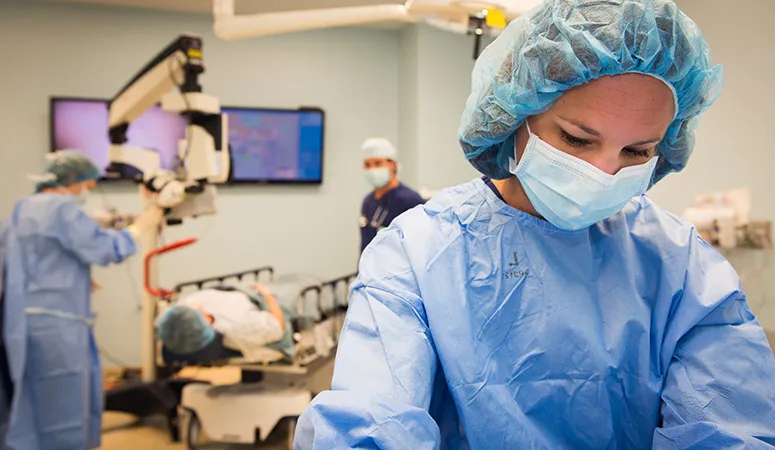
In 2016, AMC launched a pilot to capture data during operations using an advanced Surgical Black Box. Following the example of aviation, all operation-related data generated by equipment are analysed together. At the ‘OR Transparent’ congress organised by Professor of Surgery Marlies Schijven (31 October/Amsterdam UMC, AMC location), professionals from the medical, legal and technology sectors met to share their initial experiences. ‘There is still much to gain, particularly in the area of communication in the operating theatre.’
The Surgical Black Box, developed from an idea by Professor Teodor Grantscharov of the University of Toronto, brings together data from the anaesthesia equipment and the surgeon’s laparoscopic tower, as well as temperature, door movements and noise levels in the operating theatre. Video footage and audio recordings supplement the analysis. Professor Schijven of AMC helped develop the system and implemented it as a pilot in one of the hospital’s operating theatres. The Black Box software flags moments that may be considered unusual, which are then analysed by experienced surgeons at the University of Toronto. The report is sent back to the AMC surgical team and discussed by the team.
Together with findings from a similar trial at Radboudmc (video and audio only), and perspectives from, among others, a professor of health law and the Health Care Inspectorate, the congress sparked lively debate about data capture in the operating theatre. The project initiators often draw comparisons with aviation. “Data are shared with everyone, which has significantly improved flight safety,” says Professor of Surgery Jeroen Meijerink (Radboudmc). “It is completely different in hospitals. Post-operative debriefings lack objectivity. Reviewing the footage is more valuable.” Radboudumc wants to use the footage and audio ‘for learning purposes only’, to improve surgical care. “Operating theatre staff may have concerns, and hospital management wants a comprehensive legal framework, but organisations’ fears must not stand in the way of improving patient safety.”
Consent
The legal framework is clear, says AMC Professor of Health Law Johan Legemaate, who believes there is a good chance of further implementing (video) recording in the operating theatre. “Recording clinical practice is a quality system, and we implement systems that are clearly valuable. This can be done on the basis of presumed consent from patients and staff. Presumed consent is not even required to analyse incidents.” Legemaate advocates ‘blame-free reporting’: data should not be used in proceedings against individuals. That is not what the Medical Data Recorder is used for, says Schijven. “Data relevant to patient care belong in the patient record.”
Footage from the laparoscopic camera and anaesthesia data are added to the patient record. If an incident or adverse outcome occurs, the Black Box analysis can be used to strengthen an internal investigation. Such an investigation can be documented in a report. “This report is therefore expected to be considerably better quality: more objective and reliable. As is currently the case, an investigation report can be requested. But that does not apply to the original Black Box results. We must treat those as confidential.”
Do operating theatre staff feel 100% safe with this analysis? Senior inspector Ian Leistikow says the IGZ is supportive of the pilots, and seeks to allay some concerns. “In the Netherlands, there is a healthy level of trust between medical professionals and the Inspectorate. We are not the police. Unfortunately, we mainly make the news when something goes wrong.” However, that applies to only a ‘small proportion’ of cases, and, like Legemaate, Leistikow argues that policy should be geared towards ‘the 99.5%’ of cases in which no incidents occur. “The Black Box or Medical Data Recorder is for learning purposes and belongs to the hospital, which reports to us. I therefore prefer to call it a ‘virtual coach’. It is extremely important that staff can also be open about their vulnerabilities.” Leistikow is less comfortable with the term ‘blame-free reporting’. “There is no such thing as blame-free.”
Multidisciplinary knowledge centre
Professor of Anaesthesiology Gert Jan Scheffer helped develop Radboudumc’s ‘Medical Data Recorder’ and explained why the trial focused on video and audio only. “Human actions appear to be the main cause of incidents in the operating theatre: briefings and following procedures. Improving communication in the operating theatre offers the greatest potential for improvement.” This is a common theme across the various pilots. Teodor Grantscharov, developer of the Surgical Black Box, has seen growing enthusiasm among staff both at the University of Toronto’s hospital and at AMC, which he supports: from ‘denial’ to ‘full support’.
The Surgical Black Box was developed in close collaboration with Air Canada, which analyses all flight data to detect anomalies, and is intended to lead to a multidisciplinary knowledge centre, says Grantscharov. “It is performance management based on big data. This requires a cultural shift. Surgery has always been characterised by secrecy, which stopped us learning from our mistakes. The initial scepticism has been overcome. We are moving from safe to ultra-safe, just as in aviation.” ‘Toronto’ processes the collected data only to address a specific question. “For example: how can we improve communication in the operating theatre? Among other things, we use audio analysis to improve speech intelligibility.”
Learning or condemning
Participation by operating theatre staff in the AMC pilot was voluntary, says Anne-Sophie van Dalen. Her doctoral research included an analysis of complications during operations; in 53% of cases, ‘communication’ was found to have caused the incident. According to Van Dalen, post-operative debriefing is an especially important quality tool. The AMC Black Box pilot involved 81 operating theatre staff, and Van Dalen studied 35 gastrointestinal operations during the sessions. No fewer than 98% of staff said they would recommend Black Box debriefings to colleagues. Notably, the team in Canada monitoring the AMC data identified more threats to patient safety than the operating theatre staff themselves. “It is incredibly difficult to perceive what is happening around you accurately when you are focused on a task.”
“The perspectives of operating theatre staff can already differ considerably at the operating table,” says Martijn Kriens, business development director at the Amsterdam Health & Technology Institute. Kriens notes that a cultural shift has been under way for some time. “Checklists are becoming increasingly important, while hierarchy in the operating theatre is diminishing.” Learning or condemning, that is the question. Do you choose the future or the past? Kriens argues for focusing on successes. “Not ever more paperwork, no use of data in disciplinary proceedings, but improved performance through cultural change.” He illustrated his point with an everyday anecdote. “Most people park their car facing forwards, even though you have a much better view of the people around the car if you reverse in.”
Words | Jan-Kees Verschuure Image | pxhere.com
Question about this story? Ask your question
Keep following this
Get an email when a new story is published. No account needed.
- SubjectGeneral







