Designing for geriatric care: How to create dementia-friendly interiors
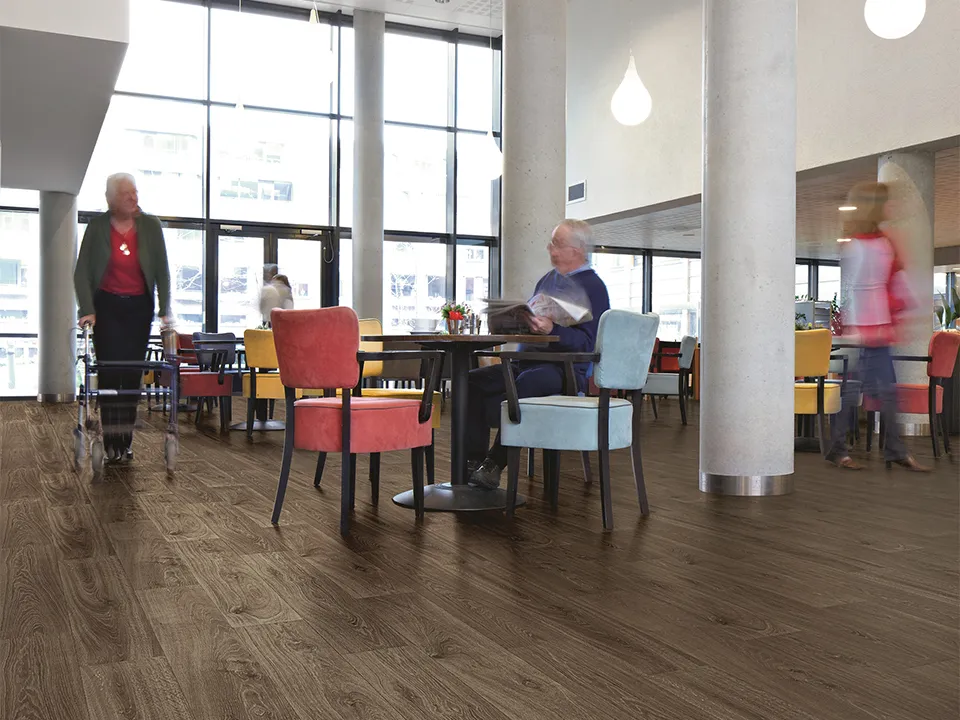
People with dementia function better in spaces designed around their experience of the world. This calls for specialist knowledge from interior designers, architects and healthcare fit-out specialists. According to experts, ‘sensory design’ could be the answer.
It is difficult to imagine how someone with dementia experiences their day. They can no longer explain for themselves what they feel or need. However, it has been shown that a familiar, recognisable and predictable environment promotes their wellbeing. These three conditions provide a compass, guiding them through an increasingly foggy world. Do the residential settings in care homes meet these needs?
Most interiors are functional and safe, but also rather anonymous. As a result, residents may feel like strangers in their
own rooms. A lack of colour, or its inappropriate use, can also cause confusion. The same applies to lighting, unexpected sounds and/or noise in the corridor. While the cognitive abilities of people with dementia steadily decline, their emotions are amplified. This means stimuli have a particularly strong impact, even though this may not be immediately apparent to those around them.
ANCHOR POINTS PROVIDE REASSURANCE
A symposium organised by Forbo Flooring focused on design for people with dementia. Speakers made the case for a new way of building: ‘sensory design’. The aim of a sensory space is for residents to feel intuitively at home in it. In short, everything is where it should be and looks as they would expect. Anchor points provide reassurance, such as furniture, armrests, windows, doors and lighting. Colours and contrasts provide the right accents. Icons point the way to the kitchen, toilet and restaurant, while acoustic flooring, suspended ceilings and curtains help prevent noise disturbance. “For us designers, it may take some getting used to, but style and aesthetics are less important to people with dementia,” says Anja Dirks of design agency Studio id+. “We need to learn to think in archetypes. A table has four legs, a chair has a comfortable seat. A lamp should look like a lamp, not a design statement. Anything that deviates from this can cause confusion and distress for people with dementia.”
SAFE FLOORING
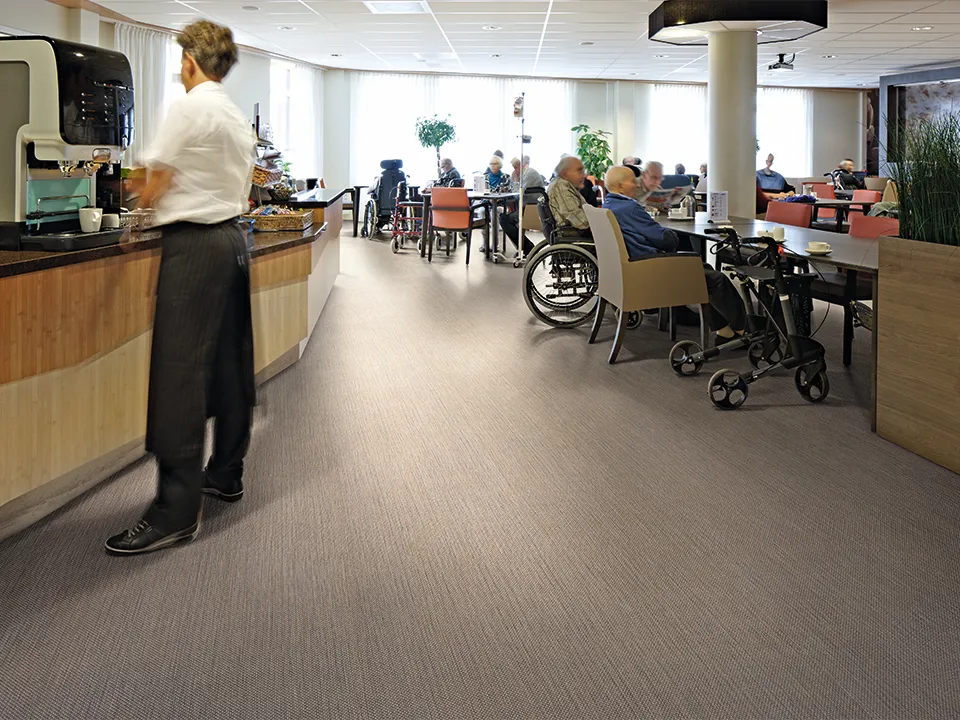
Flooring is also an important factor. People with dementia are often older and have difficulty walking, which can result in an unsteady shuffling gait. Falls can be prevented by applying an anti-slip coating to the floor, as well as by using uniform shades in the design.
Striped floors and patterns can cause confusion because they may appear to indicate changes in level. In addition, floors in adjoining rooms should be similar in tone: the light reflectance value (LRV) should not differ by more than 10 degrees. If it does, the transition can look like a step, staircase or threshold. There are other risks too: a black entrance mat or a dark carpet tile on a light floor may be perceived as a hole. “People are afraid of falling into it,” says Beatrice Montesano of KAW Architecten. “A dark strip in the floor can therefore also be deliberately used to deter people from entering a particular space.” The texture of tonal flooring is important. Transitions are often too abrupt, for example, from a carpet tile straight to a smooth vinyl floor. Above all, matt flooring is preferable, such as Marmoleum. A glossy floor, particularly when reflecting light, can be mistaken for water or ice. ′
Question about this story? Ask your question
Companies in this story

Keep following this
Get an email when a new story is published. No account needed.
- ThemeInteriors for housing and care
- SubjectProduct information
- CompanyForbo Flooring