VCCN: ‘Improve operating theatre hygiene by monitoring during operation’
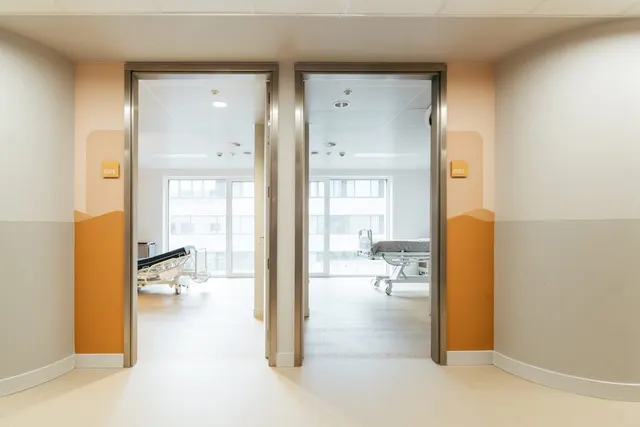
In hospital hot floors, building services and medical standards intersect at a high level. Since the closure of the College bouw zorginstellingen, there has been an urgent need to develop field standards, often based on existing guidelines. What requirements should an operating theatre meet in terms of ‘contamination control’?
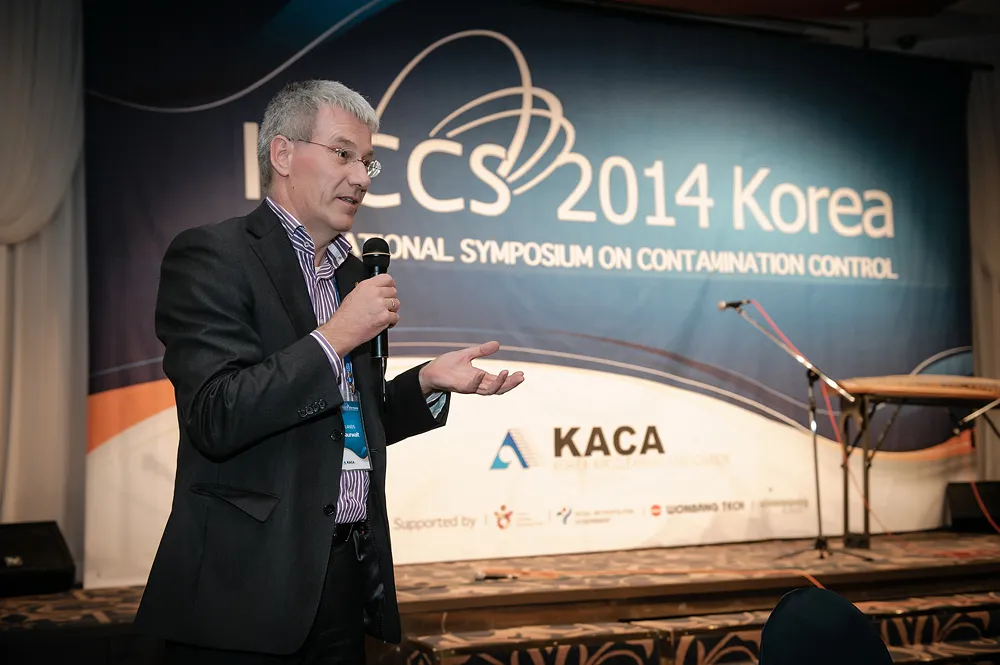
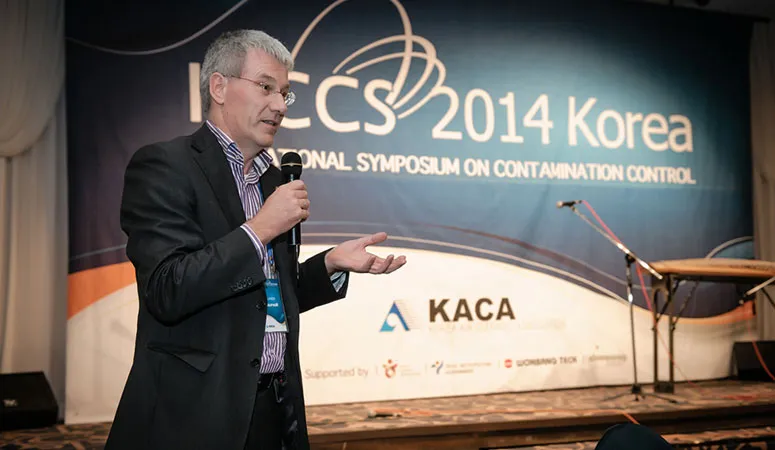
Frans Saurwalt, chair of the VCCN Healthcare project group.
Where should the sterilisation department be located? What level of hygiene is required for a particular medical procedure? All these aspects are interrelated, says Frans Saurwalt, former chair of knowledge platform VCCN. “We are increasingly moving towards measurable hygiene performance.” Vereniging Contamination Control Nederland (VCCN) brings together professionals from the broad field of so-called cleanrooms. Founded in 1988 out of TVVL, the ‘platform for people and technology’, VCCN develops guidelines in line with international standards such as CEN and ISO. For example, VCCN’s Healthcare project group is working on better guidelines for sterile environments in hospitals, with operating theatre hygiene as a key component. At the end of 2014, Guideline 7 (‘Method for testing and classifying operating theatres and preparation rooms at rest’) was submitted to the IGZ; Guideline 8, currently in development, focuses more on ‘monitoring during operation’, that is, measurable performance. “This will include measuring the number of microbes in the operating theatre environment,” Saurwalt begins. “Microbes in the air, on surfaces, or both. Historically, a great deal of attention has been paid to ‘blown air’, but human behaviour is, of course, a key factor. Its effect can only be observed ‘during operation’; only then can we properly assess where the points of concern are and what improvements are needed.”
‘Developing a standard’
Testing during operation concerns everyone involved in operating theatre hygiene and should deliver significant benefits, says VCCN honorary member Saurwalt, who works in installer Kropman’s Contamination Control business unit and chaired the association for the past ten years. He calls it ‘remarkable’ that hospitals have not jointly established a hygiene standard since the abolition of the building college, which had approved building and technical requirements in advance. For every professional working in sterile hospital environments, the search for field standards is still a matter of pioneering. “We need to move away from the uncertainty created by old, uncoordinated guidelines and towards harmonised standard performance requirements for contamination control. Every hospital is still trying to reinvent the wheel.”
For Saurwalt, this is not just about minimum technical hygiene requirements, but also about sound specifications from the medical perspective to support differentiation. “Not every operation requires the highest level of hygiene, so it should also be possible to tailor requirements better at the other end of the scale, avoiding overinvestment.”
Sterile cluster
As a well-organised knowledge platform, VCCN plays an important role in integrating knowledge and expertise in this field, says Saurwalt. The latest WIP guideline for operating theatres would have been difficult to develop without VCCN’s complementary guideline, the former chair explains. “As I said, we bring together input from different perspectives: market players can learn from hospital professionals, and vice versa. It is a matter of ‘taking’ and ‘giving’.” The participation of stakeholders from the medical, technical, facilities and construction sectors is essential to developing expertise in contamination control in cleanrooms. VCCN contributes to guidelines and standards not only through its project groups, but also through regular member meetings, symposia, workshops and training, keeping its broad membership informed and involved.
Integrated concepts
A key focus for the current VCCN Healthcare project group, chaired by Saurwalt, is the integrated design of sterile hospital environments. “In our view, the sterilisation department could be combined more effectively with the operating theatre complex, creating a sterile cluster within the hospital building whose construction is also very different from the rest of the hospital. In practice, this is still too rarely the case. There is much to learn in this area from pharmacists.” Finally, what can Saurwalt contribute from his own building services engineering expertise? “We need to move towards integrated concepts for operating theatre construction. At present, we mainly build from concrete floor to concrete floor, rather than creating a true box-in-box structure. For example, if the technical space is routinely located above a fully sealed operating theatre ceiling and kept accessible, building services renovation and maintenance can be better separated from clinical operations.”
About VCCN
The use of dust- and microbe-free spaces, such as cleanrooms, is becoming an essential part of business processes in an increasing number of sectors. These range from the semiconductor industry, life sciences, and the pharmaceutical and biochemical industries to medical technology and the food industry, as well as their suppliers. Technological developments in contamination control are advancing rapidly; requirements and processes are becoming more stringent, particularly in quality management. Vereniging Contamination Control Nederland (VCCN) was founded in 1988 for anyone who works professionally in contamination control and the associated facilities. Through the sharing of up-to-date knowledge and experience, VCCN seeks to improve professional competence in contamination control. Its primary aim is to enhance expertise through the development and transfer of knowledge. In this context, VCCN organises the annual Nationale CleanroomDag, among other events. (Source: www.vccn.nl.)
Text and photos: Jan-Kees Verschuure
Question about this story? Ask your question
Keep following this
Get an email when a new story is published. No account needed.
- ThemeSafe and reliable healthcare buildings
- SubjectInteriors