The growing importance of energy and technology
Text Koen MortelmansImage Koen Mortelmans, VK architects & engineers
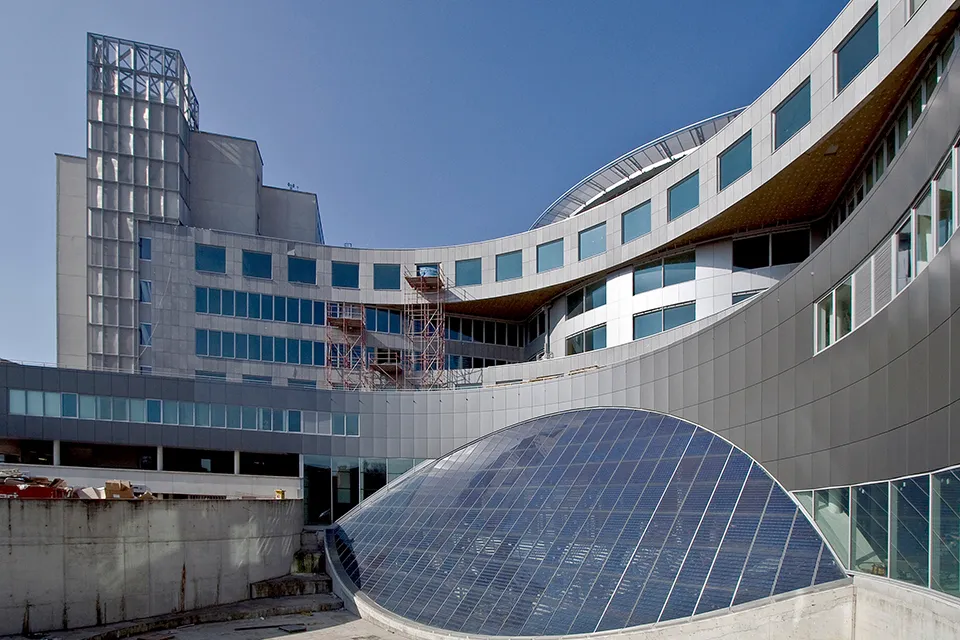
Evolution in Flemish healthcare construction
Over the past 25 years, the healthcare landscape in Flanders has undergone major changes. These changes have affected architecture and technology, as well as policy and funding. They have been characterised by a shift in focus towards sustainability, technology, inclusivity and the wellbeing of patients and healthcare professionals.
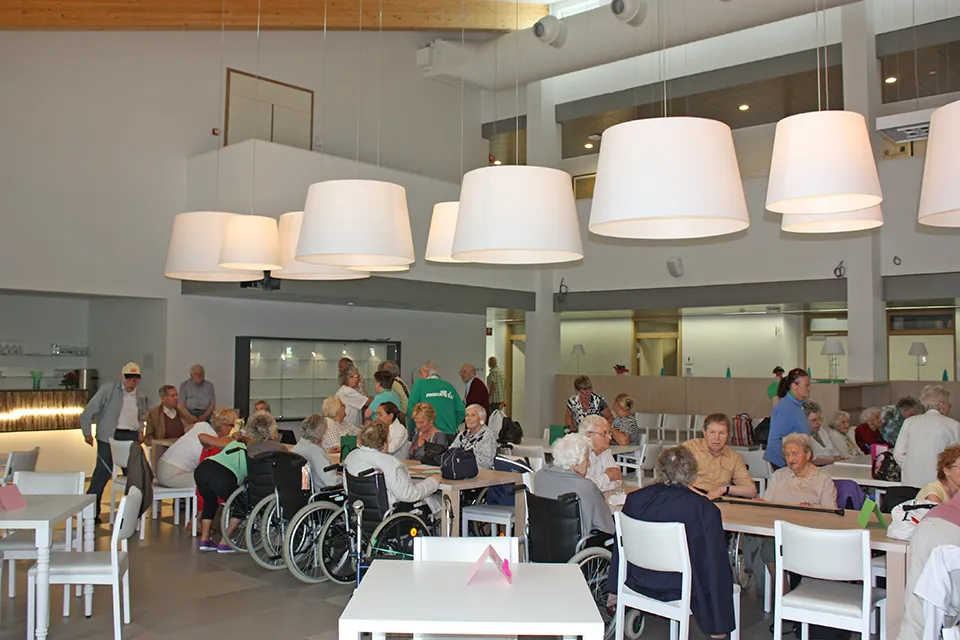
A major driver was demographic change. An ageing population and shrinking household sizes made, and continue to make, it necessary to consider alternatives to traditional elderly care. Some alternatives, such as intergenerational living, remain marginal. Others, such as combining living at home or in assisted living accommodation with a range of services at a service centre located in a nearby residential care home, appear to be gaining traction. A more recent development is the integrated social care campus. These are particularly suited to spacious, centrally located sites, such as those of former monasteries.
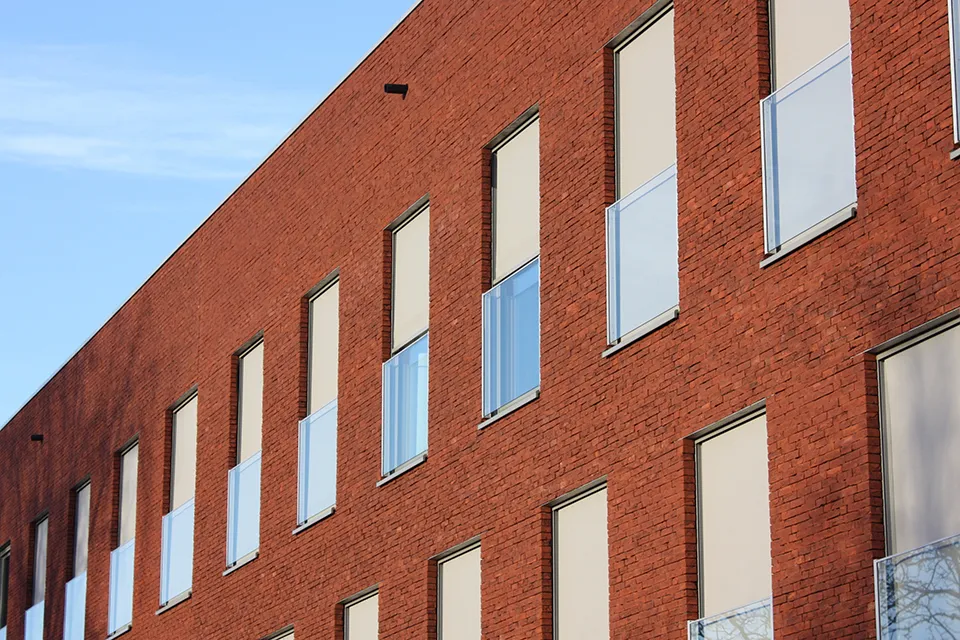
For now, the Covid 19 pandemic has mainly prompted a shift in thinking. It was already clear that Belgium’s existing system, in which the federal level (Belgium) is responsible for ‘public health’ and the regional level (Flanders) for ‘wellbeing’, residential care and home care is far from ideal. Hospitals have to turn to Belgium for their operating costs and to Flanders, Wallonia or Brussels for their infrastructure needs. During the pandemic, it became clear that no fewer than nine federal and regional ministers (public health, care, wellbeing, prevention) were responsible for aspects of the response. This did little to facilitate the practical response. A reorganisation seems a logical next step.
From pioneering technology to standard practice
At the end of the 20th century, solar roofs, green roofs and deep geothermal boreholes were still very uncommon in Flanders. Today, they are standard, and in some places even mandatory for new-build projects. The care sector was quick to embrace the trend towards green and solar roofs, but was not a pioneer. The first projects were relatively small-scale in solar energy and featured extensive green roofs. Deep geothermal energy (BEO) was a different story. Healthcare construction proved to be a true frontrunner in this field. Among the first Belgian BEO projects were Sint-Rembertziekenhuis in Torhout, AZ Damiaan in Oostende, AZ Sint-Vincentius (now part of ZAS) in Antwerpen and residential care home De Nieuwe Notelaar in Beveren-Waas. Today, everyone involved in major construction projects is familiar with Building Information Modelling (BIM), but when AZ Sint-Maarten (Mechelen) drew up its first plans for a new building in 2007, it was an ‘early believer’.
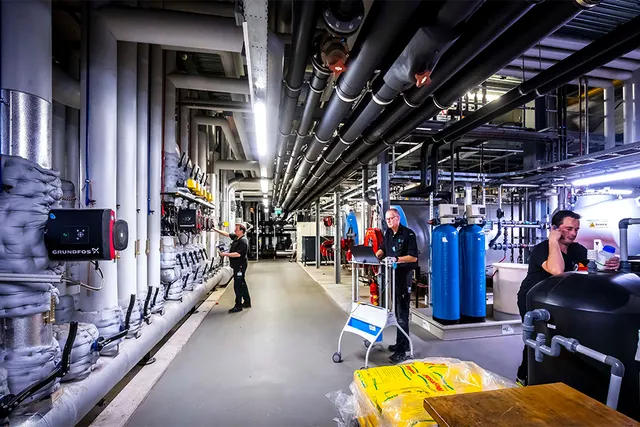
New residential care homes and hospital buildings aim to be as close to energy neutrality as possible. Renovations of older buildings also seek to reduce energy consumption through better insulation, LED lighting with motion sensors and smart HVAC systems. Flanders is currently lagging behind the Netherlands in the use of biodynamic lighting. Schools have taken the lead here.
Growing involvement
Technical departments, staff at various levels and patient organisations were initially cautious, and only gradually took the opportunity to become actively involved in construction and renovation projects. This is a missed opportunity, as such involvement brings significant long-term benefits, particularly for the organisation of internal circulation, staff comfort and the efficiency of maintenance and cleaning. A more visible development to the outside world was the trend towards consolidation. More and more residential care homes became part of larger groups, while hospitals merged to form extensive hospital networks. Today, Flanders uses healthcare strategic plans to guide the further development of hospital infrastructure. These plans describe the role of hospitals and hospital networks in the healthcare provision of their catchment areas. To apply for Flemish government subsidies for new construction projects, they must have an approved healthcare strategic plan. This is intended to ensure a broad basic offering and concentrate expertise and high-tech care provision.
Further developments
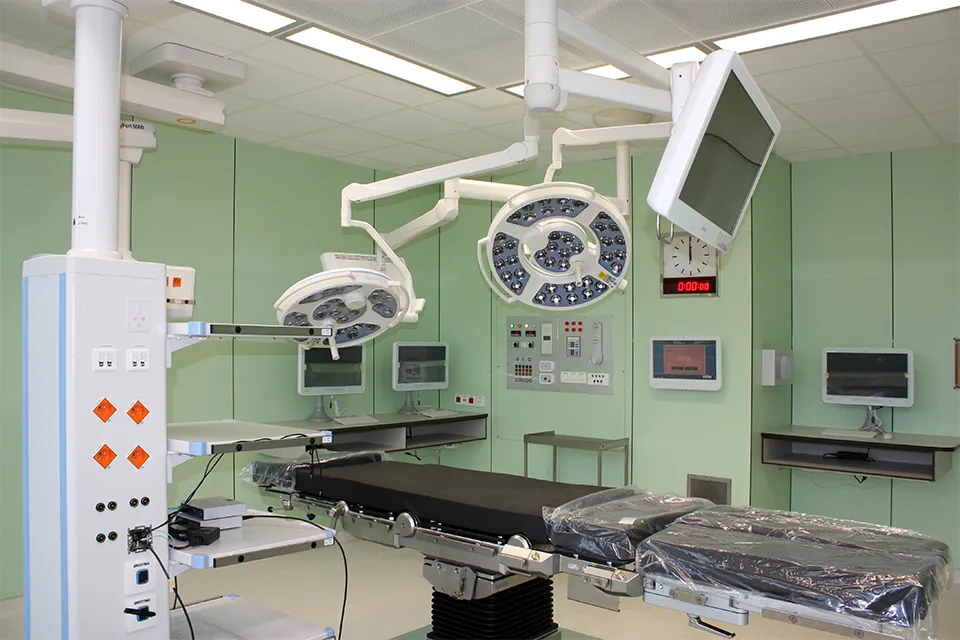
In future, a hospital is likely to have much deeper roots in society. This means that practices already commonplace in other sectors will become so here too. Examples include hotel-style check-in, with personalised information about procedures and treatment and a real-time appointment schedule displayed on the room’s TV. Or a digital connection with the patient’s home environment and other care providers. This requires the smooth and secure exchange of data between different systems and the provision of preventive as well as curative care.
Question about this story? Ask your question
Keep following this
Get an email when a new story is published. No account needed.
- ThemeSustainable healthcare buildings
- SubjectAnniversary